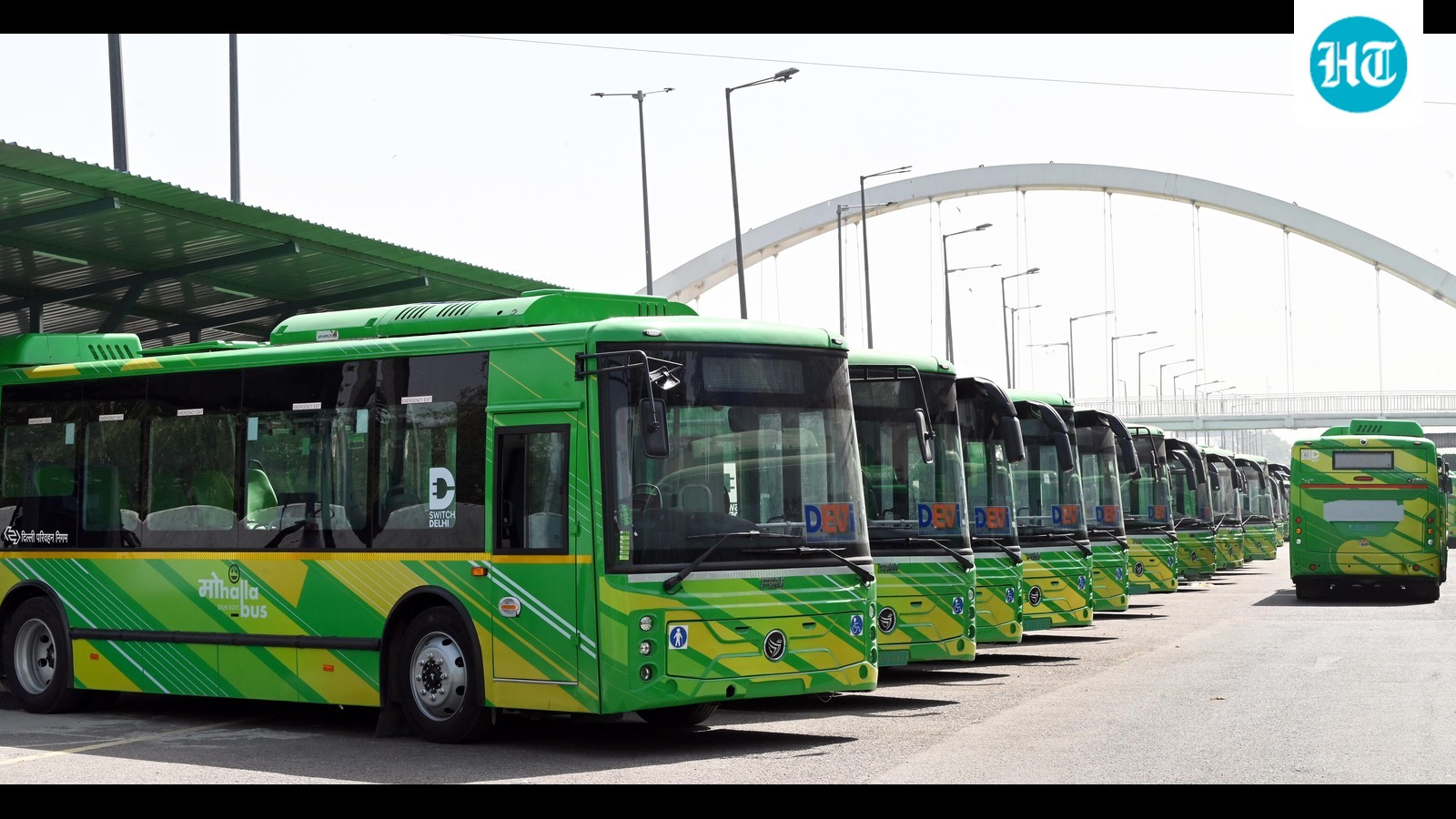
Financing hurdles stall e-buses, trucks adoption
With fuel prices and energy security in focus amid the ongoing West Asia crisis, the case for shifting commercial fleets to electric vehicles has grown more urgent, but access to finance continues to be a major hurdle, particularly in the heavy commercial vehicle segment.A total of 4,904 electric vehicles were registered in the combined truck-and-bus category in October, a 161% increase from 1,882 in October 2025, yet they accounted for only 4.1% of all trucks and buses registrations for the month, according to VAHAN data analysed by VehicleStats India.The category includes electric buses and goods carriers of different sizes.
The gap between rising registrations and the required scale of adoption is also reflected in the Centre’s electric truck support programme.The government had allocated ₹500 crorein 2024 under the PM Electric Drive Revolution in Innovative Vehicle Enhancement (PM E-DRIVE) scheme to support 5,643 electric trucks. However, only 55 had received support as of July 22, 2026, according to a Lok Sabha reply.
The scheme’s overall outlay for vehicles including electric two-wheelers, three-wheelers, buses and trucks was subsequently increased to ₹11,900 crore and its implementation extended until March 31, 2028.The challenge is particularly visible in the electric bus segment, where the higher upfront cost of vehicles makes financing critical. An electric bus costs nearly ₹1 crore, compared with ₹40 lakh to ₹60 lakh for a conventional internal combustion engine bus.Around 5,400 electric buses were registered in 2025-26, accounting for about 4% of all bus registrations, according to an analysis of VAHAN data by the Institute for Transportation and Development Policy (ITDP) India.In its report, Accelerating Clean Mobility through India’s ZEV Opportunity, ITDP projected that registrations would rise to 17,814 in 2030-31, accounting for 11.4% of annual bus registrations, based on the 32% compound annual growth rate recorded between 2022 and 2024.
This would remain well below the 62,352 annual registrations required to meet the EV30@30 goal of 40% electric bus sales by 2030.The report also said private operators account for 93% of the country’s bus ecosystem but face higher borrowing costs because there is no established resale market or residual-value framework for electric buses.Higher costs, limited experience of the tech part of constrainsThe financing constraints extend beyond buses to electric trucks, where lenders remain cautious about the risks associated with newer vehicle technology and uncertain resale values.
“Conventional lenders are often reluctant to finance these vehicles because of their higher upfront costs, uncertain residual values and limited experience with the technology,” said Harsimran Kaur, a researcher at the International Council on Clean Transportation (ICCT). Smaller fleet operators may struggle to absorb the initial investment even when electric trucks offer lower operating costs over their lifetime, she said.Kaur said longer loan tenures, residual-value guarantees and buyback arrangements could help lenders manage these risks.
Better assessment of vehicle utilisation, long-term freight contracts and predictable cash flows could also give lenders greater confidence in repayment.One way to reduce the initial investment is to lease vehicles rather than require operators to purchase them outright. Gunjan Jain, chief financial officer of Mufin Green Finance Limited, said the company’s finance-lease model requires borrowers to provide a security deposit of 10-15% of the vehicle’s cost, while the financier pays the remaining 85-90% directly to the manufacturer or dealer.
The vehicle’s registration certificate remains in the lessee’s name. At the end of the 36 to 60-month tenure, the lessee is expected to buy back the vehicle, with the initial deposit adjusted against the buyback price.The financier targets a minimum return of 16% under the arrangement, Jain said, to cover its borrowing and operating costs. “We don’t want to be in the operational hassle that after the lease and your vehicles are parked in our yards and we need to sell them,” she said, explaining why the company offers finance leases rather than taking responsibility for vehicles returned at the end of a lease.But Mufin’s experience also illustrates the limits of the market.
Its commercial vehicle portfolio was above ₹300 crore, against total assets under management of ₹1,700 crore. Its exposure to heavy electric buses remains small. Jain said Mufin had financed only two borrowers in the segment, one an e-bus major and another company which had won the tender to provide buses for passenger movement within Bengaluru airport.Leasing, however, has found a more established application in the deployment of electric vehicles for government departments.
Energy Efficiency Services Limited (EESL), a public sector undertaking that aggregates demand for products and services for central and state government departments, has been bringing private leasing companies into its electric-vehicle-as-a-service arrangements over the past two years.“Earlier, electric vehicles were procured using government’s capital expenditure and leased them to government departments.
Under the arrangement now being used, private leasing companies provide the vehicles, while EESL aggregates demand from departments and acts as an intermediary. So high capex outlays are being replaced by manageable opex,” a senior EESL official said. The official estimated that around 6,000 vehicles were currently leased to government departments through these arrangements.Earlier in June, HT had reported how a pilot showed EV operating costs for India Post were three to four times lower than diesel equivalents, prompting the department to procure electric vehicles for about 10% of its owned light commercial fleet.Lesser flexibility, infrastructure shortfall reduce demandThe institutional model, however, may not translate easily to private comme…