Wyoming boys' school ordered to pay $6 million over student's isolation
A former student at a state-run boys' school in Wyoming has been awarded $6 million after a federal jury ruled in his favour over claims of prolonged isolation. Blaise Chivers-King spent more than 75 days in detention rooms at the Wyoming Boys' School, where some rooms had no windows facing the outside. The verdict was delivered on November 19 after an eight-day trial in Casper.The award includes $5 million in punitive damages and $1 million in compensatory damages.
Chivers-King had accused school employees of keeping him confined for extended periods, even when his behaviour had improved. His case was among six lawsuits filed by former residents against the state and staff members over their treatment at the institution.The trial examined not only the length of his confinement but also the conditions in which he was held and the reasons staff gave for keeping him there.
Employees maintained that some restrictions were necessary because of concerns about safety. Chivers-King's lawyers, however, argued that confinement continued even after those concerns had eased.A report by Wyoming Public Media described the competing accounts presented during the trial. While school employees said they interacted with Chivers-King and offered him activities, his legal team questioned whether those claims were supported by the institution's records.More than 75 days inside detention roomsChivers-King's time at the institution included repeated periods in rooms used to separate residents from other students.
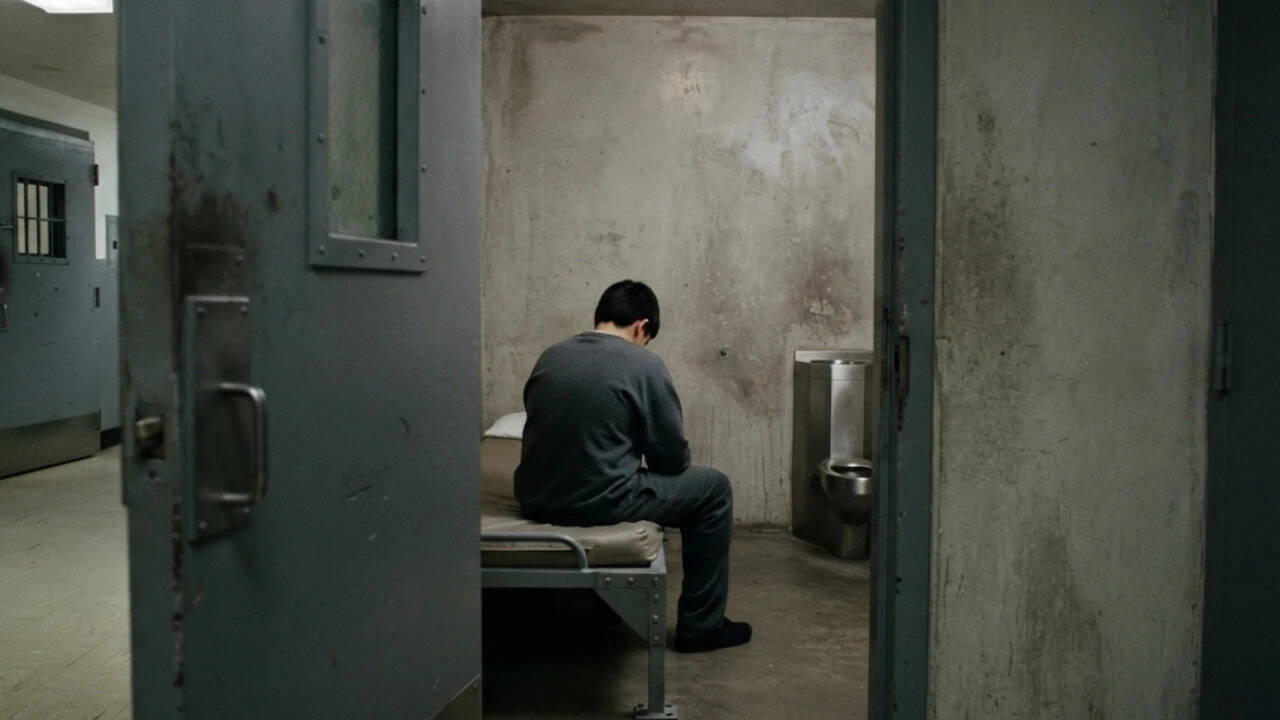
The rooms had cinderblock walls and measured approximately 7 by 10 feet. Each had a toilet and sink in a corner, while bedding was provided at night.There was little else inside these spaces, and they had no windows overlooking the outside. The school referred to the arrangement as being placed on detention status.Court records showed that Chivers-King spent more than 75 days in these conditions.
Some placements followed incidents in which he threatened employees, damaged property or attempted to hurt himself.The defence argued that staff had to consider the safety of everyone at the institution, including Chivers-King. Employees described incidents involving aggressive behaviour and damage to school property to explain why they believed separation was necessary.Chivers-King also acknowledged during his testimony that there had been occasions when his behaviour justified keeping him apart from others for some time.However, his lawyers challenged the length of certain placements.
They argued that the school continued to restrict him even after he had settled down. One example involved a four-day confinement period during which his behaviour had reportedly improved substantially by the evening of the first day.His lawyers maintained that a measure initially used to manage a safety concern became improper when the reason for keeping him confined no longer existed.Records questioned during the trialAnother important part of the proceedings involved the school's records of how employees monitored residents in detention rooms.Staff were required to check residents through cameras every five minutes and visit them in person every 15 minutes.
These observations were supposed to be entered into logbooks, along with details about the residents' behaviour and staff interactions.The entries relating to Chivers-King became a point of disagreement. His lawyers argued that the records showed he spent very little time outside the room on certain days. On some occasions, his only recorded time outside was a brief period for a shower.Employees who appeared as witnesses said the logbooks did not capture every interaction.
They described speaking with Chivers-King, checking on his well-being and offering him opportunities to exercise, read or complete schoolwork. They said such interactions were not always entered in the records.The jury also heard about incidents that led staff to seek help from the Washakie County Sheriff's Office.In one instance, Chivers-King damaged a sprinkler while inside a detention room.
Staff called the sheriff's office, and deputies took him to jail for some time. In another incident, he threw a water bottle at a window and broke it.Employees said these events contributed to their concerns about the safety of Chivers-King, other residents and staff members. The trial also took place during the Covid-19 period, when normal operations at the institution had been disrupted.Jury awards $5 million in punitive damagesChivers-King's lawyer, Ciara Anderson Boerman, said the larger part of the jury's award related to the claim of punitive isolation.The jury also found in Chivers-King's favour on a due-process claim.
However, the defendants raised an affirmative defence that prevented that finding from resulting in liability. The jury did not hold them liable on a separate claim involving excessive force.The $5 million in punitive damages was intended to penalise the conduct at issue, while the remaining $1 million was awarded as compensation.The money may not be paid immediately. The court must formally enter its judgment, and the defendants can ask the judge to overturn or reduce the award.
They may also challenge the decision through an appeal.Boerman said it was too early to determine whether the defence would pursue further legal action.Verdict renews calls for an investigationThe case has also brought renewed attention to concerns about how children are treated at the state-run facility.In a November 21 report, Cowboy State Daily quoted Wyoming Representative Karlee Provenza as saying that lawmakers had raised questions about isolation and restraints at the institution years before the verdict.Provenza, a Democrat from Laramie, said she began seeking answers in 2021 through discussions of juvenile justice in the Legislature's Joint Judiciary Committee.
She later filed a public records request to obtain information about how frequently children were placed in solitary confinement.She has now calle…