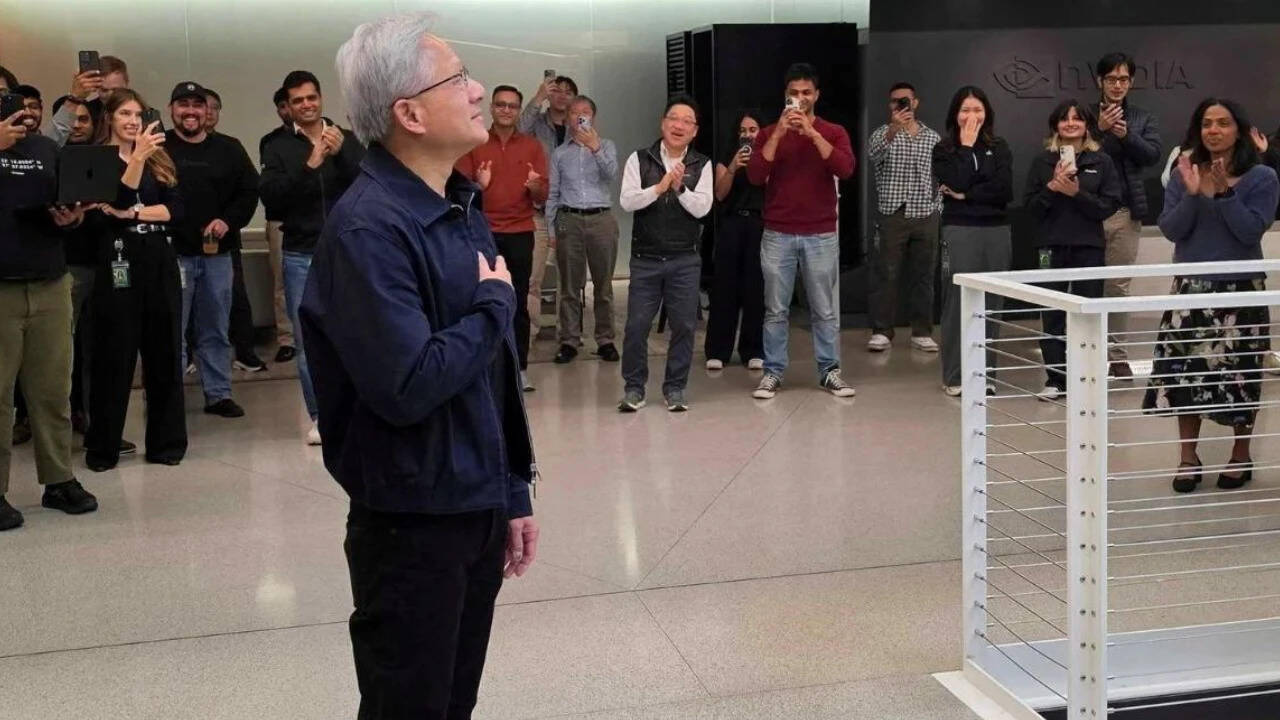
US considered using a Cold War law to bring back Nvidia CEO Jensen Huang
Senior Pentagon officials discussed invoking the Defense Production Act (DPA), a 1950 wartime law, to pressure Nvidia's board into reinstating Jensen Huang as CEO, The Washington Post reported. The talks took place over the weekend, before Nvidia announced Huang's return on Monday, according to three people familiar with the debate. The Pentagon has denied that they happened.Defense Secretary Pete Hegseth and his deputy Steve Feinberg reportedly discussed using the law as leverage, arguing that Nvidia was critical to US national security.
Emil Michael, the Pentagon's chief technology officer and a former Uber executive, was also part of the conversations.The DPA offers no clear route to installing a CEO, but it could have worked as a warning. One Trump administration official told the Post the government could use it to force Nvidia to shift more of its production to military projects. That could have dented the chipmaker's plans and profits.It is unclear what, if anything, reached Nvidia, or whether the idea made it to President Donald Trump and Vice President JD Vance.
A person familiar with the board's thinking said directors did not see the government's arguments as a threat."The conversations described between DOW senior leaders never happened and no such proposal was made by the Secretary, Deputy Secretary, or Under Secretary," a Pentagon official said. DOW refers to the Department of War, the administration's preferred name for the Defense Department.
Nvidia declined to comment.The Defense Production Act has never been used to put someone in charge of a companyCongress passed the DPA a few months into the Korean War. It lets the president push private companies to put military and emergency needs first. The first Trump administration used it to get General Motors making ventilators during the Covid-19 pandemic. It has never been used to install a leader at a private company.Bill Greenwalt, a DPA expert at the American Enterprise Institute, said the law essentially puts government orders ahead of everyone else's.
Nothing in it supports tying Nvidia up in contracts, he said, and export controls would have been a more effective lever.Pete Harrell, a visiting scholar at Georgetown, said the administration seems "interested in getting five companies in a room and kind of telling them what to do."The idea of using a wartime law for Jensen Huang started in Silicon ValleyThe pitch had been doing the rounds in tech circles for days.
Last week, investor Balaji Srinivasan posted that the Department of War could step in on Huang's side, calling it a "Defense Production Act, but for the restoration of Jensen Huang."A private push ran alongside it. The Financial Times reported that Huang's friends, including Travis Kalanick, Brad Gerstner and Marc Andreessen, set up a "war room" to lobby the board and eventually pulled in Trump and Vance.Jensen Huang says Trump did not pressure Nvidia's boardHuang resigned on November 12 after admitting to affairs.
One was with Alice Huang, a Megaspeed executive who US officials believe passed information to Chinese intelligence. Eleven days later, the board voted unanimously to bring him back. Nvidia shares jumped more than 30%, the biggest one-day gain in market value on record for a US company, according to The Wall Street Journal.Trump and Vance spent the weekend passing assurances on to directors, the Journal reported.
These included Attorney General Todd Blanche's word that Huang was not the target of any Justice Department probe. Semafor reported that Trump backed Huang's return because Huang supports US open-weight AI models.Huang, however, told employees at an all-hands meeting on Tuesday that claims of Trump pressuring the board were "completely untrue," The New York Times reported.He is due before the House Foreign Affairs Committee next Tuesday and the Senate Banking Committee on Thursday.
The Commerce Department blacklisted Megaspeed on Monday, and Nvidia has said it will hire a chief compliance officer.Fearless legend or grounded realist? Rate yourself on 11 categories in the Great Indian Confidence Survey – find out in 3–6 min