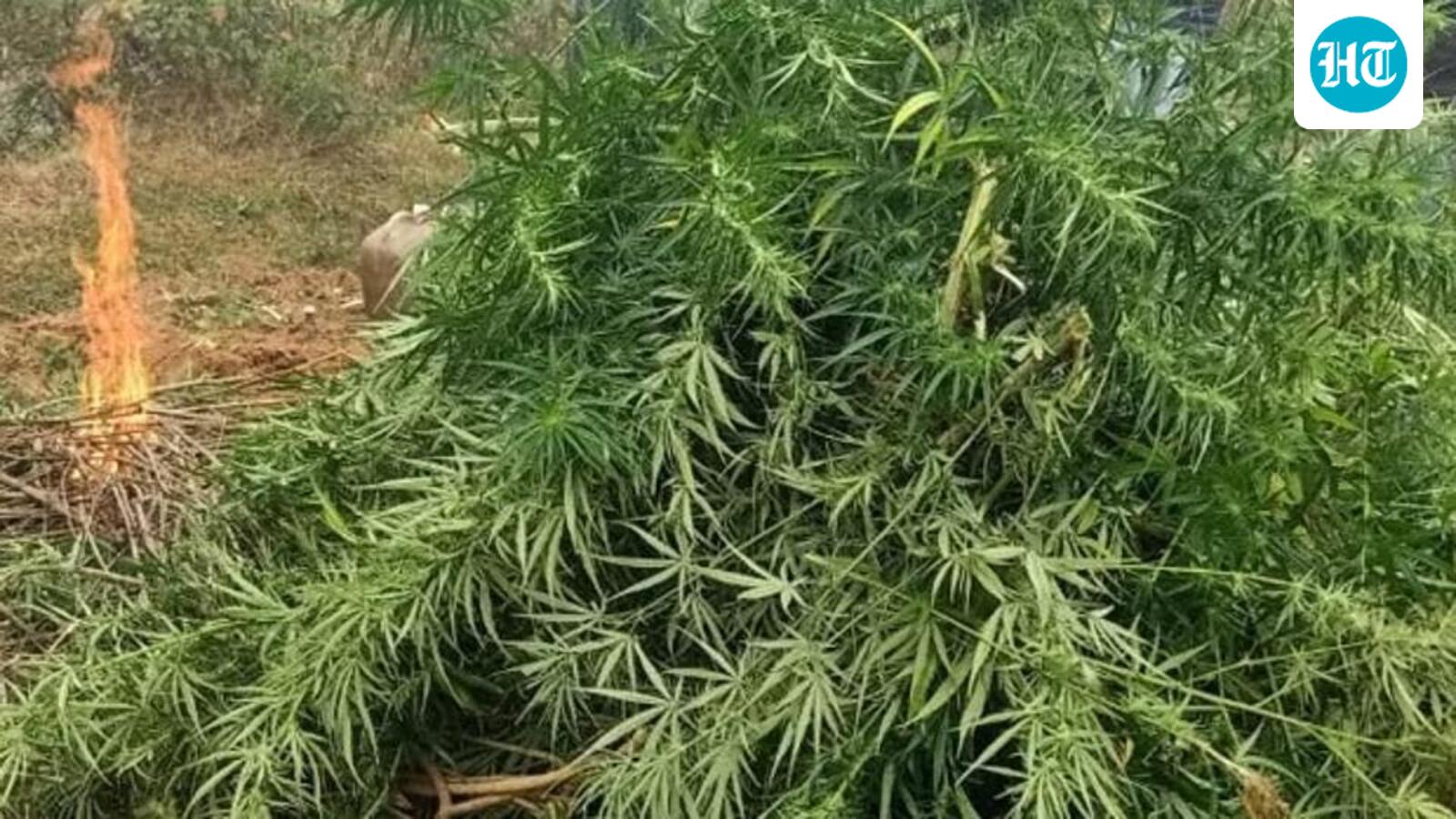
From cannabis to cash crops: Odisha plans livelihood shift for tribal farmers
Odisha plans to eliminate illegal cannabis cultivation in six former Maoist-affected districts by December 2029 by setting up a dedicated agency to help tribal farmers switch to profitable cash crops, backed by assured land tenure, agricultural inputs and market linkages.The initiative comes amid a major drive by the state government as part of its anti-narcotics campaign, following the Union home minister’s decision to set December 31, 2029, as the deadline to uproot the drug trade from the country.
The proposed agency will work in Malkangiri, Koraput, Rayagada, Gajapati, Kandhamal and Boudh, where illegal cannabis cultivation remains a major challenge.According to senior officials familiar with the developments, the agency will coordinate with the Agriculture, Horticulture, Soil Conservation and Forest departments to identify suitable alternative crops based on soil conditions, climatic factors and market access.
Turmeric, ginger, cashew, coffee, pineapple, other fruit crops, millets, vegetables and minor forest produce have been identified as potential alternatives.The government has also drawn up a time-bound action plan to ensure that every acre cleared of cannabis cultivation is brought under a legal and remunerative crop, backed by assured land tenure, agricultural inputs and market linkages.According to official figures, 63,720 acres under cannabis cultivation in Odisha were cleared between July 2024 and March 2026.
Of this, 36,508 acres were cleared during 2025-26 alone across 1,631 GPS-mapped land parcels.“Every acre destroyed must now become an acre under a legal, remunerative crop, with tenure, inputs and market assured. There have been proven workable models. In Alluri Sitarama Raju district of Andhra Pradesh, 20 hotspots covering 375 tribal villages now report zero cannabis cultivation after enforcement was combined with free seeds, counselling and joint village visits by officials.
In Thailand, opium hills were converted to coffee, macadamia and community enterprises with branded products and assured buyers under the Doi Tung Project,” one of the officials associated with the process said.District-level cells to monitor shift away from cannabisAs part of the strategy, the revenue and disaster management department has been asked to classify the land status of all 1,631 parcels within 30 days and examine the possibility of settling or leasing revenue land to bona fide landless tribal farmers.
Beneficiaries will have to give an undertaking that they would not return to cannabis cultivation, while field officials will be tasked with monitoring the cleared plots to prevent the crop from being sown again.The Forest Department will promote agroforestry, bamboo, fruit and minor forest produce plantations on forest land through village-level institutions. The Agriculture and Farmer Empowerment Department will prepare parcel-wise crop plans according to the slope and altitude of the land and provide free seeds, planting material and other inputs for two seasons.
The ST and SC Development, Minorities and Backward Classes Welfare Department will act as the nodal agency in each district and facilitate cluster-level processing and assured procurement through the Tribal Development Cooperative Corporation of Odisha Ltd (TDCCOL) and Farmer Producer Organisations.The Cooperation Department will help farmers obtain crop loans through Primary Agricultural Cooperative Societies and Large Area Multipurpose Cooperative Societies so that tribals do not depend on advances from cannabis traffickers.The government has also stressed that families abandoning illegal cultivation should not face financial distress during the gestation period of perennial crops.
They will be supported through VB-RAMG wages, intercrops and income-generating activities under self-help groups. A District Alternative Development Cell, headed by the Collector and comprising the Superintendent of Police, Divisional Forest Officer, Project Administrator of the Integrated Tribal Development Agency, Deputy Director of Agriculture or Horticulture and ANTF representatives, will be set up in each of the six districts.Officials said the first round of sowing and plantation would begin in the 2027 kharif season.
The government aims to bring at least 50% of the cleared parcels under legal crops by March 31, 2028, and 90% by March 31, 2029, with market linkages established in every cluster. Complete elimination of illicit cannabis cultivation in all six districts is targeted by December 31, 2029.Meanwhile, the ministry of home affairs is also planning to establish a National Coordination Centre in Odisha, which will be led by the Narcotics Control Bureau, to strengthen the fight against illegal cannabis cultivation and trafficking across the country.Equipped with modern technological facilities, the centre will facilitate real-time communication, intelligence sharing and operational coordination among central agencies, state police forces and anti-narcotics task forces.
It will help identify cultivation hotspots, trace supply networks and intercept consignments being transported to other states.