Isro’s NVS-03 launch successful: Navigation satellite placed in orbit; NavIC gets a boost
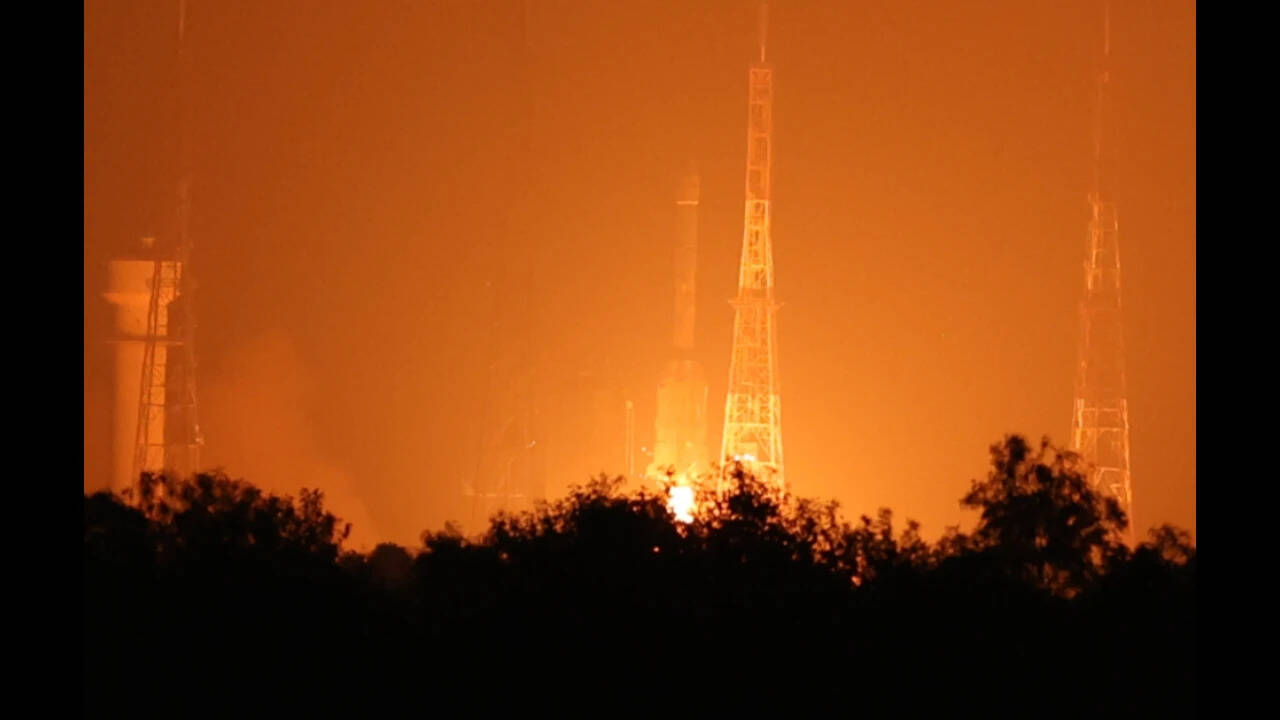
SRIHARIKOTA: India's regional satellite navigation system, NavIC, which was facing a shortage of operational satellites, got a boost with the successful launch of NVS-03 on the intervening night of Friday and Saturday by Indian Space Research Organisation (Isro).GSLV-F18 carrying 2,250kg next-generation navigation satellite -- NVS-03 -- lifted off from the second launch pad at the Satish Dhawan Space Centre (SDSC-SHAR) in Sriharikota at 11.51pm on Friday, as scheduled.
It was the 20th flight of the Geosynchronous Satellite Launch Vehicle (GSLV). Around 18 minutes later, NVS-03 satellite was placed in a geosynchronous transfer orbit (GTO) of 37,023km apogee and 170km perigee."The rocket has successfully and precisely placed the satellite into its intended elliptical orbit. It achieved a 170km perigee and 38,080km apogee. This is the 5th mission from Sriharikota this year.
GSLV has carried 34 tonnes of spacecraft to space so far. We achieved this mission with a turnaround time of just 56 days after the GSLV-F17/EOS-05 mission in September. With this launch, we have restored NavIC constellation operation as we need a minimum of four satellites to perform positioning, navigation and timing services," said Isro chairman V Narayanan.He said, “The satellite is healthy, and the solar panel has been deployed.
Already three pyro walls are operated, and we have lifted. Every system is totally healthy, and we are going to continue the operation and place the satellite in the intended circular orbit.”NVS-03 is the third satellite in Isro's next-generation navigation satellite system, designed to ensure continuity of services under the Indian Regional Navigation Satellite System (IRNSS), operationally known as NavIC.
The satellite carries an indigenously developed atomic clock along with procured atomic clocks. It also carries the L1 frequency signal in addition to the existing L5 and S-band signals.NavIC is India's independent regional satellite navigation system, designed to provide positioning, navigation and timing (PNT) services across the country and an area extending approximately 1,500km beyond the Indian landmass.
The additional L1 signal, alongside the existing signals, is expected to improve compatibility with other satellite navigation systems and widen the potential use of NavIC in civilian applications.The NVS-03 mission is part of Isro's plan to deploy five second-generation navigation satellites -- NVS-01 to NVS-05 -- to augment the existing NavIC constellation and improve continuity and reliability of navigation services.The launch assumes significance as NavIC was unable to provide standalone positioning services because of a shortage of operational satellites.
In a written reply to the Lok Sabha on July 29, Union minister of state for space Jitendra Singh said the constellation had only three satellites providing positioning, navigation and timing services, against the minimum four required for basic positioning services. While its timing service remains functional, the addition of NVS-03, once commissioned, could help restore standalone positioning capability."Since NavIC is being used in a multi-constellation environment for most of the use cases, there is no vulnerability for the users.
The next NavIC satellite, NVS-03, is ready for launch and two more satellites, NVS-04 and NVS-05, are in an advanced stage of realisation," the minister had said then.The setback to the constellation followed the failure of NVS-02, launched on Jan 29, 2025, to complete its orbit-raising manoeuvres. An Isro review committee found that an electrical signal had failed to reach a pyro valve in the satellite's oxidiser line, preventing the propulsion system from firing and the satellite from reaching its intended orbit.
The failure prompted Isro to undertake corrective measures for subsequent missions.The first satellite in the second-generation series, NVS-01, was launched aboard the GSLV-F12 on May 29, 2023. It was also the first satellite in the series to carry an indigenous atomic clock.The Isro chief said five more launches are planned this financial year. “We are moving closer to Gaganyaan G1 uncrewed flight,” he added.Get the latest India News and Live updates.
Download the TOI app.