Manhattan's 'turtle lady' helps save hundreds of turtles from New York streets
Most New Yorkers probably spend their days navigating crowded pavements, squeezing into packed subway carriages and trying to find a little space in an apartment that is already too small. Lorri Cramer, however, has a rather different problem. Her Manhattan home has to make room for turtles, lots of turtles.Known as the Turtle Lady of Manhattan, Lorri Cramer is a wildlife rehabilitator who has spent decades nursing sick, injured and abandoned turtles back to health from her apartment on the Upper West Side.
Her living room has, at various points, looked more like an aquarium than a place to entertain guests, with tanks and plastic tubs occupying the spaces around her furniture. Even the bathroom has had to pull its weight. And while most people might hesitate before bringing home one rescued animal, Cramer once found herself looking after more than 600 baby turtles at once.It is an unusual arrangement, to say the least.
But when New York's turtles need help, Cramer is often one of the first people authorities call.An unexpected life with turtlesCramer's relationship with turtles began long before she became the city's unofficial turtle rescue hotline. Growing up in Queens and on Long Island, she spent summers on a boat with her father and grandfather, where she became fascinated by the diamondback terrapins living around Jamaica Bay.
She eventually became an art teacher, but her interest in turtles never quite went away.Her rehabilitation work began with the pet turtles belonging to her children. One of her earliest rescues was a North American box turtle named Lavinia, who had been injured after two boys used him as a ball, throwing him back and forth. The turtle arrived with broken legs and a cracked shell.
When Cramer took him to an animal hospital, she discovered that nobody there knew how to treat turtles.It was a rather telling introduction to the problem she would spend the next several decades trying to solve. There were plenty of people who could help dogs and cats, but very few who knew what to do with an injured turtle.Cramer eventually became a state-licensed wildlife rehabilitator and the director of turtle rehabilitation at the New York Turtle and Tortoise Society.
Her apartment became a place where turtles seized by authorities, abandoned by owners or found injured in the city could receive care. Some arrive after being smuggled into the country, while others are dumped in parks once their owners realise that the tiny pet they bought has grown into a rather less manageable adult.The turtles are not always found in particularly good shape.
Some are injured during transport, including those hidden in suitcases or shipped in the cargo holds of aeroplanes. Others are released into unsuitable environments, where they struggle to survive.And then there are the unexpected deliveries.When hundreds of baby turtles arrivedIn 2015 as New York Times reports, Cramer received a call from New York State environmental officials after they seized a shipment of red-eared slider hatchlings from a warehouse in Chinatown.
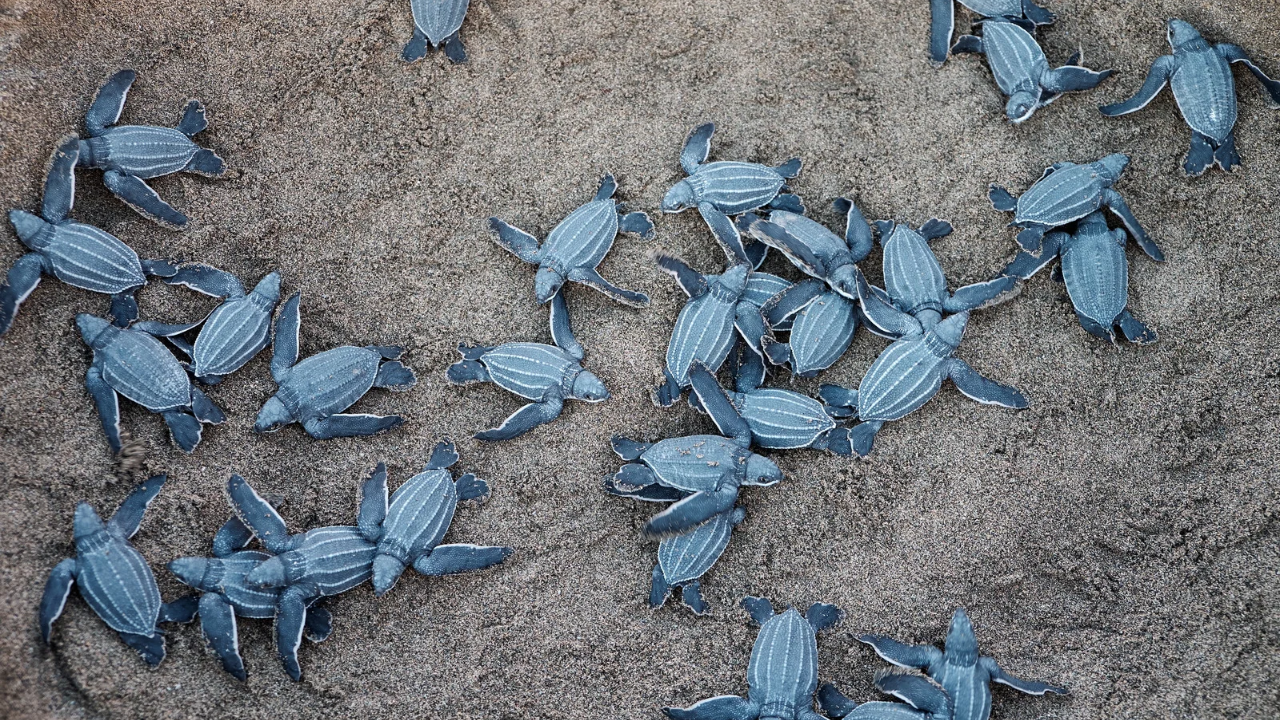
She expected around 50 turtles. Instead, more than 600 arrived at her apartment.The tiny reptiles had to be housed in plastic containers, with Cramer and other volunteers working through the rather enormous task of checking their health and arranging care. Her bathroom became a temporary turtle nursery, with tubs and bins taking over the space.Red-eared sliders are freshwater turtles native to the southern United States and northern Mexico.
They are also popular pets, often bought when they are small enough to fit comfortably in someone's palm. The trouble begins when they grow. Owners who are unprepared for their size, needs and long lifespans sometimes abandon them in local ponds and parks.That is not just a problem for the individual animal. Releasing non-native turtles into unfamiliar ecosystems can put pressure on native wildlife, introduce disease and create competition for food and habitat.
A turtle that has spent its life in captivity may also have little chance of surviving in the place where it is abandoned.Cramer has seen the consequences first-hand. Turtles have turned up in saltwater, in fountains and in ponds that are entirely unsuitable for their species. Freshwater turtles, for instance, cannot simply be released into the ocean and expected to manage.She has also worked with the New York Turtle and Tortoise Society to address another source of the problem: the practice of releasing captive animals as part of Buddhist fangsheng, or life-release ceremonies.
The intention is to save animals and bring good karma, but releasing non-native turtles into the wrong environment can do more harm than good.Rather than dismissing the practice, Cramer worked with Buddhist leaders and wildlife rehabilitators to develop a more responsible alternative. Under the Compassionate Release Life programme, animals that have already been rescued and rehabilitated are blessed before being released into appropriate habitats.
It allows the ceremony to continue while giving the animals a much better chance of survival.A home that makes room for everyoneOf course, rehabilitating turtles in a Manhattan apartment comes with its own logistical challenges. There are tanks to clean, food to prepare, injuries to treat and, occasionally, hundreds of hatchlings to find homes for. Cramer has described turning her living room into a makeshift treatment area, with volunteers working in a line to administer eye drops, injections and other care.Her family has had to adjust, too.
Her husband, Mitch, reportedly drew the line at having turtles in the bedroom, although he has been willing to buy their food. One of the apartment's bathtubs has also been reserved for human use, while the other has found itself occupied by turtles.Not every animal can be returned to the wild. Some have injuries that make survival outside captivity unlikely, while others are non-native species that cannot safely be released i…