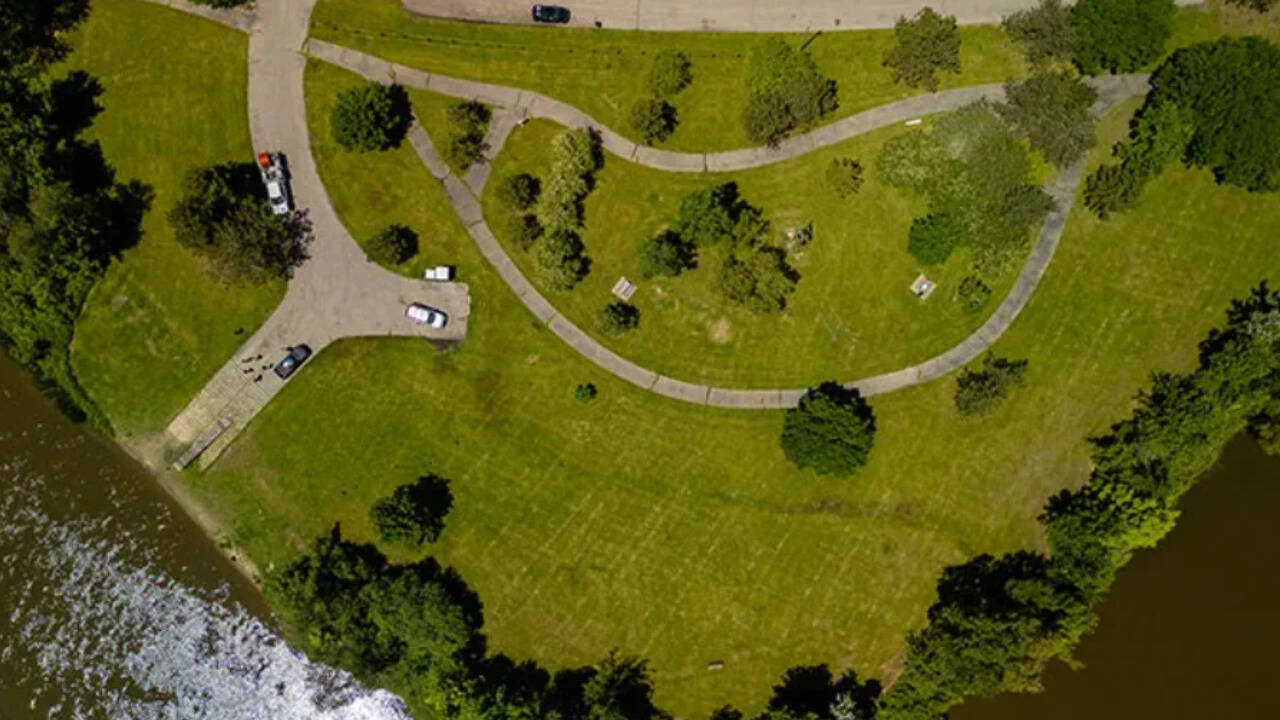
Michigan has dedicated a 230-acre state park along three miles of Flint's riverfront
Rivers are nature's go-getters. Come what may, whether species, rocks or reefs, they retain their movement, always flowing. However, one thing engineered to interrupt this movement is dams. While essential for managing water levels and flows, these constructions can limit the movement of myriad aquatic species.Flint, Michigan, however, has brought its waterways and recreational green spaces together to welcome a new state park.
The project is intended to give residents of the city a chance to reconnect with a river that has largely remained inaccessible, while creating more opportunities for aquatic species to move through the waterways.As reported in a press release issued by the Michigan Executive Office of the Governor on November 19, 2026, Governor Gretchen Whitmer joined state and local officials, community leaders and residents to dedicate Flint State Park.
This makes it Michigan's 104th state park and the first in Genesee County. Its expansive landscape covers nearly 230 acres, with the park stretching along three miles of the Flint River and a section of Swartz Creek, bringing together five existing parks and natural areas.The project has taken years of planning and investment, with more than $100 million secured through federal, state and philanthropic contributions.
Beyond creating a new recreational space, the development is part of a wider effort to restore the city's riverfront and make its natural surroundings more accessible to the people who live there.Bringing the Flint River back to lifeThe two dams in question, Hamilton Dam and Fabri Dam, were removed as part of the restoration work completed in 2024. This allowed the downtown stretch of the Flint River to be restructured, opening up approximately 25 miles of waterways for fish and other aquatic species to pass through.Dams can interrupt the movement of fish along waterways, separating habitats and restricting access to different parts of a river system.
Removing these barriers has now reconnected 25 miles of waterways, allowing fish and other aquatic species to move through the river system.However, to help manage water levels and maintain the river's flow, six riffles were constructed under the project. Riffles are relatively shallow sections of a river where water flows over stones, rocks or other uneven surfaces, creating fast-moving, rippling stretches of water.
In this project, the riffles are constructed in-water structures made to resemble naturally occurring rocky formations.Five park areas become one destinationThe five existing parks that Flint is bringing together are Riverbank Park, Chevy Commons, Mott Park Recreation Area, Vietnam Veterans Park and Happy Hollow Nature Area. Rather than functioning as separate green spaces, these five areas are being connected through trails and other improvements, creating a larger outdoor destination across the city.The park's layout follows a stretch of both the Flint River and Swartz Creek, with nonmotorized access allowing visitors to move between different areas.
Its connections to surrounding neighbourhoods, universities, local businesses and the state-managed Iron Belle Trail are also intended to make the riverfront easier to reach.Chevy Commons, a 67-acre park area with a history closely tied to Flint's industrial past, is one exciting element of this project. The site was once known as Chevy in the Hole and formed part of General Motors' major manufacturing presence in the city.
Established in the 1930s, the industrial facility once had 17 buildings and employed around 8,000 workers at its peak.Following plant closures and the demolition of buildings beginning in the 1990s, much of the site was covered with asphalt to minimise the movement of residual contamination.More than $100 million behind the transformationAccording to the November 19 announcement, more than $100 million has been secured to create and maintain Flint State Park.
This includes approximately $30.2 million in federal funding through Governor Whitmer's Building Michigan Together Plan, alongside more than $10 million in Michigan Natural Resources Trust Fund grants that supported early land acquisitions, development and river restoration.The Charles Stewart Mott Foundation has also contributed nearly $30 million to the project, including $18 million towards establishing an endowment for the park's continued maintenance.
This was matched by a $22 million one-time state general fund appropriation, creating a $40 million endowment managed by the Community Foundation of Greater Flint.The wider development involves more than $90 million in new construction, with improvements extending beyond the river itself. These include renovated public spaces, pedestrian bridges, lighting, pavilions, benches, restrooms and new play facilities.
A 15-mile network of mountain biking and multiuse trails is also being developed to connect different parts of the park.Future plans for the Flint State ParkAlthough the dedication marks an important milestone, the transformation is still underway. The Michigan Department of Natural Resources states that the park is open to the public, while construction and improvements in certain areas will continue through 2028.Work on the Riverbank Park renovations includes improvements to the amphitheatre and Market Stall blocks, with plans for new walkways, seating, lighting and improved access to the river.
At Chevy Commons, new play gardens are being developed with features such as a zipline, climbing structures, seasonal water play areas and picnic spaces.The 15-mile trail network is scheduled for completion in fall 2027, alongside the new play gardens. Future plans also include interpretive signage and experiences exploring Flint's history, including its significance to Indigenous tribes, industry and organised labour.
These will be developed in collaboration with tribal partners, historians and other representatives.As of now, Genesee County Parks is responsible for the park's ong…