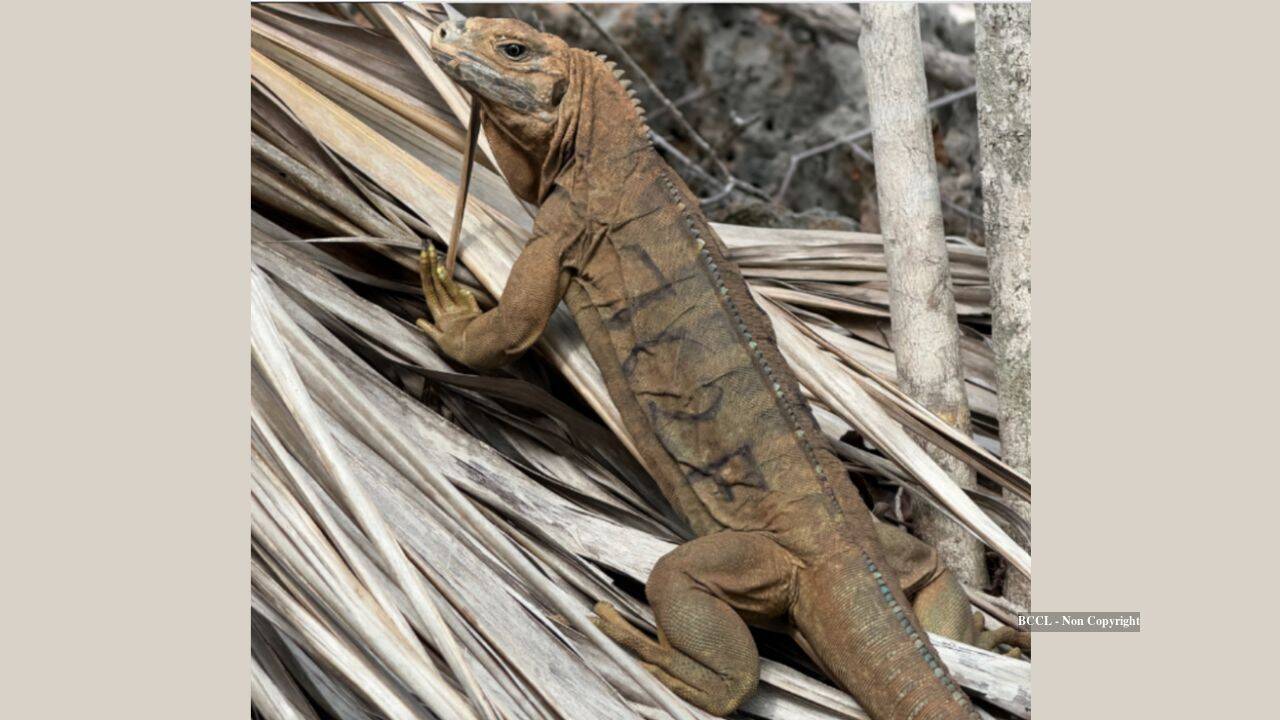
36 years after rediscovery, over 1,000 endangered iguanas returned to Jamaica
A lizard once believed extinct has reached a remarkable conservation milestone. On 14 November 2026, conservation teams released 33 Jamaican rock iguanas into the Hellshire Hills, bringing the total number reintroduced since the recovery programme began to just over 1,000. The achievement, announced by the Fort Worth Zoo and the Association of Zoos and Aquariums, marks decades of work to save one of the Caribbean’s most endangered reptiles.The Jamaican rock iguana was long thought to have disappeared until a small surviving population was rediscovered in 1990.
Since then, the Fort Worth Zoo, Jamaican agencies, local organisations and international partners have worked to protect the remaining animals, restore habitat, control predators and raise young iguanas until they are strong enough to survive in the wild.The 1,000th release is not the end of the story. The species remains critically endangered, and its future depends on continued protection of the Hellshire Hills, careful monitoring and sustained action against threats such as invasive predators and habitat loss.
Still, the milestone shows that a species once written off can be given a real chance at recovery.A species brought back from the edgeThe Jamaican rock iguana is a large, distinctive lizard found only in Jamaica. Its survival was uncertain for much of the 20th century, and conservationists feared it had vanished entirely before researchers rediscovered a small population in 1990.
That discovery changed the species’ fate from presumed extinction to an urgent recovery mission.The Fort Worth Zoo has supported the Jamaican Iguana Recovery Program since 1993. Its work has included scientific expertise, field support and long-term collaboration with partners in Jamaica, helping turn a fragile rediscovery into a programme capable of returning more than a thousand iguanas to their native landscape.The recovery effort is led by a broad coalition.
It includes the National Environment and Planning Agency, Hope Zoo, the Caribbean Coastal Area Management Foundation, the Urban Development Corporation, the Institute of Jamaica and the University of the West Indies at Mona. The Jamaica Defence Force Coast Guard also helped transport the release team and iguanas to the protected site.Why young iguanas need helpJamaican rock iguanas face serious dangers in the wild, especially when they are small.
Introduced predators, including mongooses, cats and dogs, prey on hatchlings and young iguanas, while habitat loss and degradation continue to limit the space available to the species. The remaining wild population is confined to a small area of Jamaica.To improve survival rates, the programme uses a method known as headstarting. Hatchlings are raised at the Headstart Facility at Hope Zoo in Kingston, where they can grow in a protected environment before being released into the Hellshire Hills.
By the time they return to the wild, they are larger and better able to defend themselves against predators.This approach has become central to the programme’s success. Rather than releasing vulnerable hatchlings directly into a dangerous environment, conservationists give them time to develop strength and size. The strategy does not remove every risk, but it substantially improves the odds that a young iguana will survive long enough to reproduce.A difficult journey to releaseThe latest release required more than scientific planning.
Nearly 30 representatives from partner organisations took part, and reaching the protected release site involved carrying the iguanas on foot for more than two hours through difficult terrain. The teams worked in exceptionally hot conditions, although calm seas made the coastal journey possible.The effort reflects how demanding conservation can be when a species survives in a remote and sensitive habitat.
Every iguana must be transported carefully, released in a suitable location and monitored afterwards. The work depends on people willing to travel long distances, navigate rough ground and coordinate across organisations.Dr Stesha Pasachnik, the Fort Worth Zoo conservation biologist leading its work with the species, said the programme had reached 300 reintroduced iguanas when she joined in 2016.
In the decade since, improved field efforts and expansion of the headstart programme helped push the total beyond 1,000.More than a lizardProtecting the Jamaican rock iguana also protects a wider ecosystem. The iguanas eat fruit and disperse seeds, helping support forest regeneration in the Hellshire Hills. Their role in the landscape makes them an important part of Jamaica’s tropical dry forest system.The Hellshire Hills contain the Caribbean’s largest intact dry forest.
The area supports nearly 400 plant species and 18 animal species, seven of which are found nowhere else. Conservation work that safeguards the iguana’s habitat therefore benefits many other plants and animals that share the same fragile environment.This connection is one reason the iguana’s recovery matters beyond the species itself. A healthy population can help maintain ecological processes, while protected forest can provide refuge for other rare and endemic life.
The iguana has become a flagship for a habitat that needs long-term attention.Signs of natural recoveryThe programme is also seeing encouraging evidence that the wild population is beginning to recover on its own. Researchers report that more females are nesting, additional nest sites are being protected and the number of hatchlings emerging each year continues to grow.They have also observed natural recruitment into the wild population, meaning young iguanas are surviving and joining the breeding population without relying solely on releases.
In addition, iguanas are dispersing over longer distances, giving researchers a clearer picture of how they move through and use the habitat.These signs suggest that the recovery programme is moving beyond simply adding animals to the landscape. The goal is a sel…