Alabama man wins $126k over stormwater damage, loses latest bid to collect award
A property owner in Alabama secured a six-figure court judgment after stormwater runoff from a neighbouring residential subdivision repeatedly damaged his land. However, winning the case did not mean he could easily recover the money. After encountering difficulties collecting the award and alleging that the homeowners' association had taken steps to avoid paying it, he launched another legal battle involving the association, its board members and residents of the subdivision.The Supreme Court of Alabama, in its November 13, 2026, decision in Carpenter v.
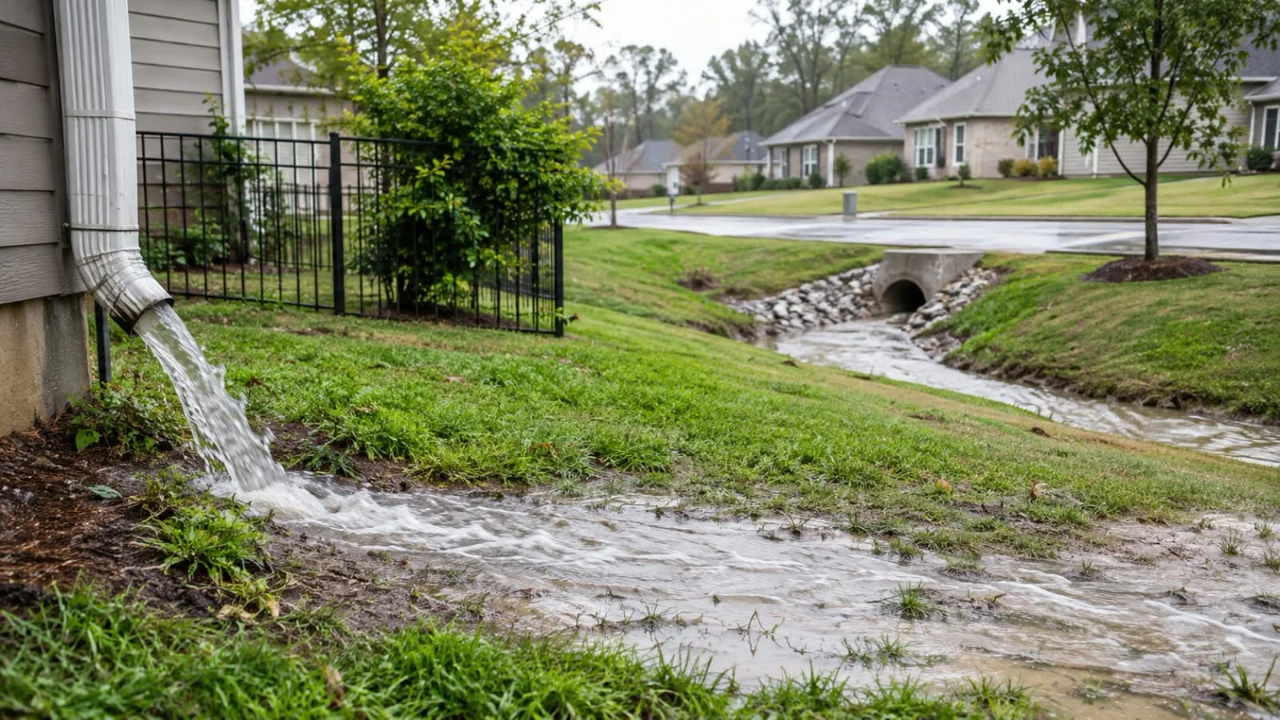
Jacobs, available on Justia, dismissed his latest appeal without examining the underlying claims. The court's decision centred on a procedural issue: whether the lower court had properly allowed an appeal to proceed before the remaining claims in the wider dispute had been resolved.Stormwater damage led to a $200,000 jury awardThe dispute dates back to 2018, when William D. Carpenter alleged that rainwater flowing from a drainage easement in the Crown Pointe residential subdivision in Mobile County, Alabama, was damaging his property.
He claimed that the runoff travelled downhill from the area behind four neighbouring lots and repeatedly affected his land.In July 2020, Carpenter filed a lawsuit against the Crown Pointe Owners' Association (CPOA) and four homeowners whose properties were closest to his. He accused them of negligence, trespass, nuisance, wantonness and negligent channelisation of water. Before the case went to trial, he reached settlement agreements with three of the homeowners, Janine Wallace, Betty Smith Lott and Myrtle F.
Smith.In April 2022, a jury awarded Carpenter $200,000 against the homeowners' association. However, the court deducted $84,000 received through the settlements, leaving him with a judgment of $126,504.64, including costs. Despite the favourable verdict, collecting the remaining amount proved difficult.Homeowners' association faced allegations of avoiding paymentAccording to the court record, Carpenter managed to garnish just $1,516.18 from the association's bank account in August 2022.
He subsequently alleged that the association's board had opened another checking account in the names of two board members, Barbara Cain and Mary Roberts, and instructed residents to pay their dues and assessments to them instead of the association.The CPOA filed for Chapter 7 bankruptcy in June 2023. Meanwhile, its board voted to establish another organisation, the Crown Pointe West Homeowners' Association (CPWHA), in August 2023.
Residents were subsequently instructed to make their payments to the newly formed association. The bankruptcy court dismissed the CPOA's bankruptcy petition in July 2024.Carpenter also alleged that the original association had arranged drainage work behind the four properties in an attempt to address the continuing water problem. The work was reportedly carried out in March 2023 after a contractor submitted a proposal for drainage improvements.
The association had also levied a special assessment on the subdivision's 21 lots to cover the expense.In August 2024, Carpenter filed another lawsuit against both homeowners' associations, their board members and the subdivision's lot owners. He sought to hold additional parties responsible for the continuing drainage damage and the unpaid 2022 judgment.Why the Alabama Supreme Court dismissed the appealThe second lawsuit involved several claims, including negligence, nuisance, trespass and allegations that the defendants had taken steps to prevent Carpenter from collecting his earlier judgment.
He also argued that the individual lot owners had an undivided interest in the subdivision's common property, including the drainage easement, making them potentially responsible for its maintenance. However, several homeowners challenged the claims, arguing that they did not own the drainage easement and had not personally contributed to the alleged water damage. Wallace and Smith also relied on their earlier settlement agreements, which contained provisions restricting future water-related claims against them.In February 2025, the Mobile Circuit Court enforced the settlement releases involving Wallace and Smith, dismissing Carpenter's claims against them.
In February 2026, it separately dismissed his claims against the non-board-member lot owners. On February 23, 2026, the court issued an amended order certifying the dismissals as final under Rule 54(b), allowing Carpenter to appeal before the entire case was concluded.The Supreme Court of Alabama examined whether this certification was legally appropriate. Under Rule 54(b), a court can allow an appeal involving some parties or claims to proceed before the remaining matters are resolved, but only when there is no just reason for delaying the appeal.
The justices found that the dismissed claims were closely connected to those still pending in the lower court. The outcome of the remaining proceedings could determine whether the individual homeowners had any responsibility for the drainage problems or the unpaid judgment. It could also make an appeal concerning their dismissal unnecessary.On November 13, 2026, the Supreme Court therefore dismissed Carpenter's appeal because the lower court had improperly certified its orders as final.
Importantly, the justices did not rule on whether the dismissed homeowners were liable, whether the settlement releases prevented further claims or whether the association had attempted to avoid paying the judgment. The underlying dispute against the association and its remaining board members was still pending. The latest ruling was therefore a procedural dismissal, not a decision overturning Carpenter's original $126,504.64 judgment.You use AI every day.
Now get your AI Quotient. Take the AIQ test.