From rare earths to trade and the Global South: What Lula’s re-election in Brazil means for India
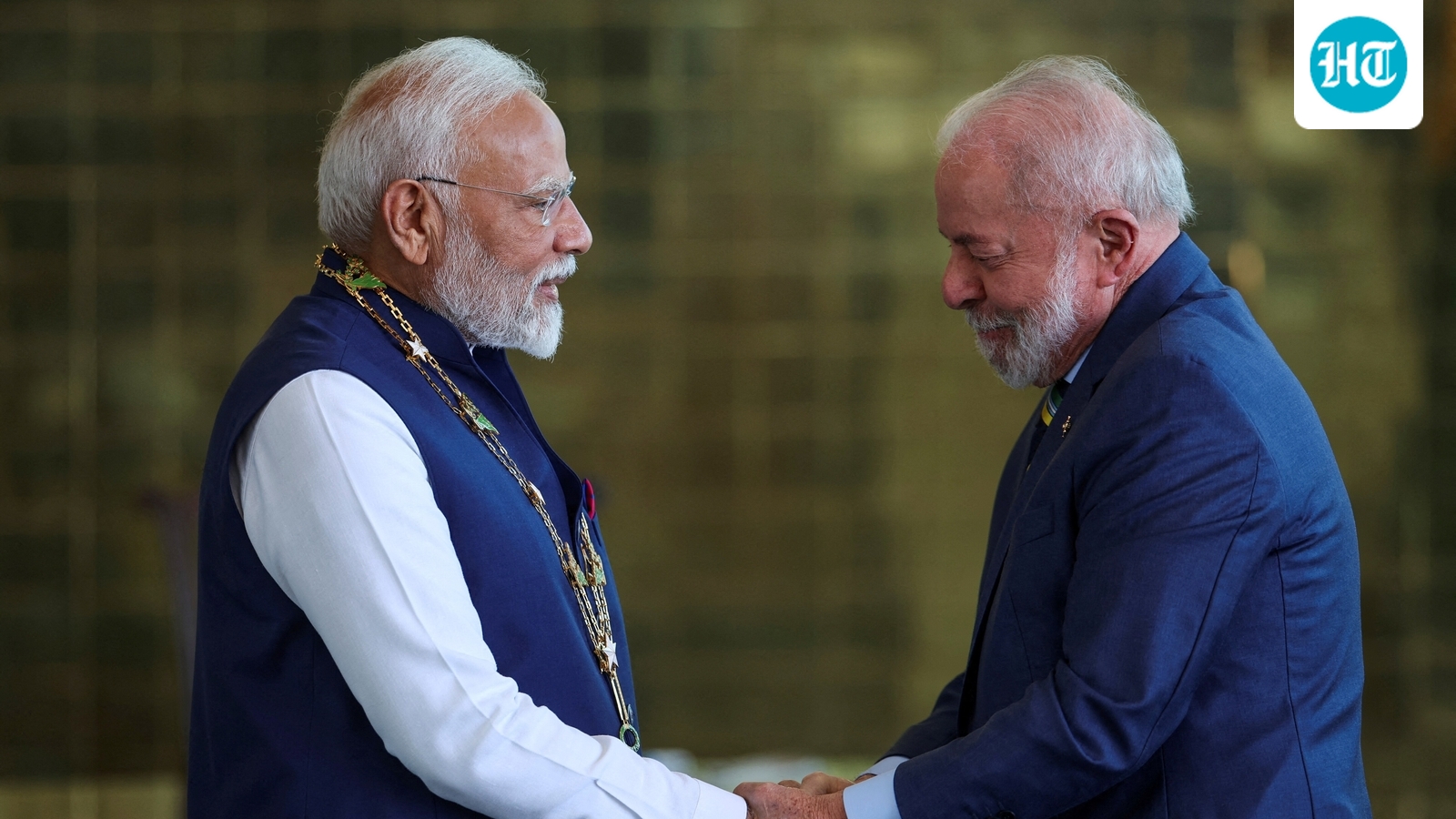
Prime Minister Narendra Modi was quick to congratulate President Luiz Inácio Lula da Silva on his stunning victory in Brazil’s run-off election on Monday, saying he looked forward to working together on the priorities of the Global South and a more inclusive world order.Lula’s victory, which sets up a fourth non-consecutive presidential term days before the Brazilian leader turns 81, will ensure continuity with a country that has emerged as a key partner in India's efforts to forge a reformed multilateralism and to revamp global governance institutions such as the United Nations.Modi's messagePM Modi described Lula's re-election victory as remarkable in a congratulatory message on social media and said he looked forward to working closely with him to deepen and expand the bilateral strategic partnership.
“Together, we will continue to strengthen our cooperation across diverse sectors, advance the shared priorities of the Global South and work towards a more inclusive, equitable and sustainable world,” Modi said. Lula, who skipped the BRICS Summit hosted by India last month to focus on his election campaign, said on social media that the people of Brazil “made history in the streets and at the ballot boxes, with the people as the protagonists of a journey that still has a long way to go”.“Democracy prevailed, hope grew stronger, and Brazil moves forward,” Lula said after defeating right-wing senator Flavio Bolsonaro, with the loss of the son of former president Jair Bolsonaro also being seen as a repudiation by the Brazilian people of US President Donald Trump’s policies in South America.What the victory meansLula's victory will allow him to play a leading role in leftist politics in the region as the right makes gains across several South American countries.When Trump imposed 50% tariffs on both India and Brazil in 2025 – among the highest penalties levied by the US administration – Lula was quick to reach out to Modi to discuss ways to cope with the fallout.
At the time, Modi and Lula pledged to deepen bilateral cooperation between the two emerging economies in areas ranging from trade and energy to defence and technology.Trump had linked the punishing tariffs on Brazil to demands for ending the prosecution of former president Bolsonaro, and those on India to its Russian oil purchases. At the time, Lula had emphasised Brazil and India's commitment to "defending multilateralism".This was followed by Lula's visit to India with a large business delegation – seen as part of his desire to deepen greater economic integration between the two countries.
The two sides agreed to raise bilateral trade to $30 billion by 2030, reflecting their keenness to build on recent momentum in commercial ties, including a 25% increase in 2025 over the previous year.This is also in line with India's search for new markets in Latin America, a region that was not a focus for New Delhi in recent decades. The two sides have also worked together at forums such as BRICS and the G20 to build a more equitable new order, and Brazil played a key part in helping India achieve a unanimous joint declaration at the recent BRICS Summit amid sharp differences between Iran and the United Arab Emirates.The two sides also concluded agreements on rare earths and mining, perceived as crucial to New Delhi’s energy transition and infrastructure build-up, as well as the efforts to overcome China's grip on the supply of critical minerals.
Brazil is estimated to hold the world's third-largest rare earth reserves and could emerge as a key source of these commodities.On the other hand, Brazil stands to gain from India's experience in sectors such as defence manufacturing, space and digitalisation.