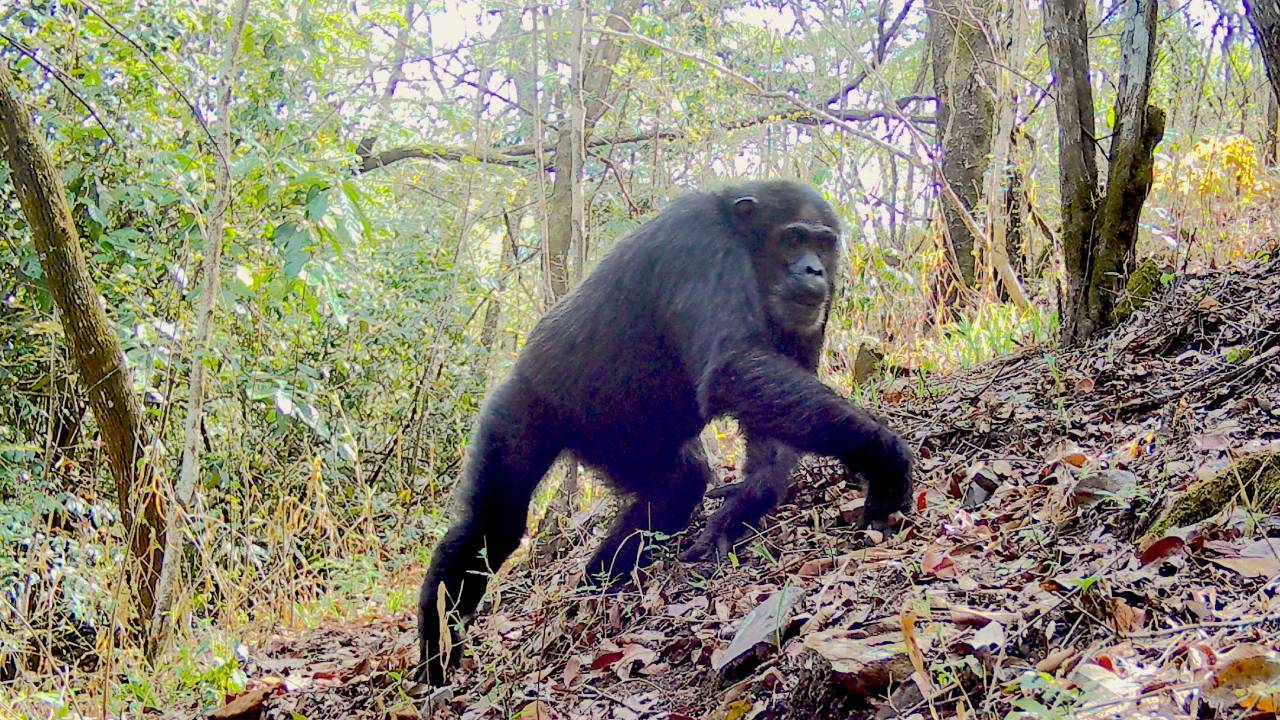
Tanzania chimps craft tools to catch termites, study finds
Scientists have documented chimpanzees in Tanzania using tools made from grass and bark to catch termites, marking the southernmost recorded example of tool use among wild chimpanzees in Africa. The discovery in Loasi Forest Reserve extends the known range of this behaviour by around 230 kilometres and offers new insight into the intelligence and survival skills of these animals.The research, involving scientists from the Wildlife Conservation Society (WCS), has been published in the scientific journal African Primates.
It shows how chimpanzees in the Tanzanian forest make and use simple plant-based tools to pull termites out of their mounds.Termite fishing is a feeding technique in which chimpanzees insert thin pieces of grass, bark or other plant material into termite mounds to catch insects. While this behaviour has been recorded in other parts of Africa, the latest study documents it farther south than ever before.The discovery is important because the chimpanzees in Loasi live close to the southern edge of the species' natural range.
It also shows that even populations that have received limited scientific attention display impressive skills when finding food and adapting to their surroundings.Chimpanzees are among the few nonhuman animals known to make and use tools in the wild. Their ability to select materials and use them to access food is one example of how their behaviour can resemble certain human skills.Researchers have also found that chimpanzee populations can develop different ways of finding food and using tools.
Some of these behaviours are learned by observing other members of the group and passed on over time, making them an important part of the species' social and behavioural traditions.Study points to the need to protect chimpanzees and their habitat"This discovery tells us that even at the southernmost edge of their range, chimpanzees are demonstrating remarkable ingenuity in how they survive," said Aaron Nicholas, a WCS Tanzania researcher and co-author of the study, according to a release.He said protecting chimpanzees involves more than conserving the animals and the forests they live in.
It also means safeguarding the unique behaviours and traditions found among different populations. Nicholas added that the research provides another reason to secure the future of Loasi and its chimpanzees.The findings come as the government of Tanzania has committed to working with WCS and local communities to review the possibility of upgrading Loasi Forest Reserve to Nature Forest Reserve status.
The proposed change could offer stronger long-term protection for the forest and its wildlife.The newly documented tool use adds to the conservation importance of the area, showing that Loasi is home not only to chimpanzees but also to distinctive animal behaviours that need protection.Research offers fresh insight into chimpanzee intelligenceTitled New Southernmost Limit for Chimpanzee Tool-making: Termite Fishing in the Loasi Forest Reserve (Tanzania), the study was authored by Alejandra Pascual-Garrido, Susana Carvalho, Sophy J.
Machaga, Noah E. Mpunga, Frank Mbago and Aaron Nicholas.The researchers say more field studies are needed in lesser-known chimpanzee habitats to understand where different populations live, how they use their surroundings and which behaviours they have developed.The discovery shows why protecting wildlife involves more than conserving animal populations and their natural habitats.
It also means preserving the remarkable skills, learned behaviours and traditions that make each population unique.Your child uses AI every day. But do they understand it? Find out in the TOI AI Masterclass.