Sons sue auction house after stepbrother allegedly sold father's $400,000 gold coins
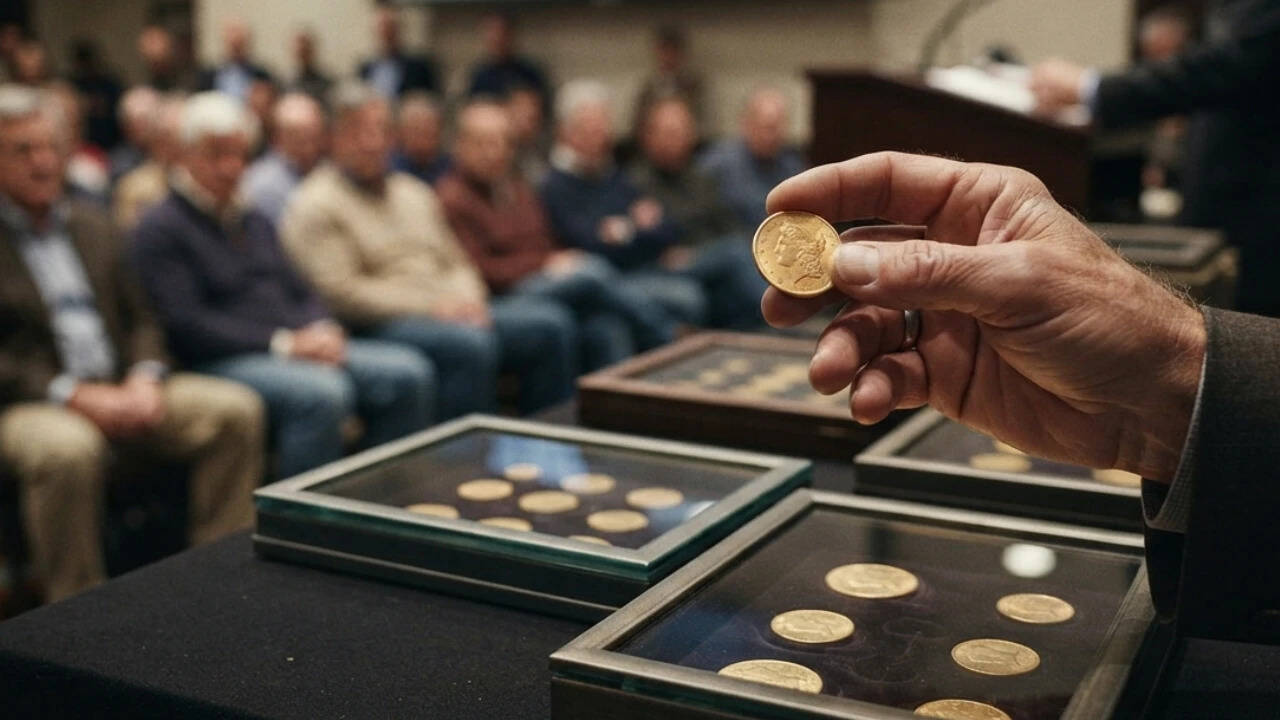
Two brothers are pursuing a lawsuit against an auction house over 12 gold coins they say were taken from their late father's collection and sold without their knowledge. They allege that their stepbrother handed the coins to Scotsman Coin & Jewelry Inc., which later sold them to buyers at an auction in July 2021.The coins, comprising $10 and $20 Carson City gold pieces, are estimated to be worth around $400,000.
The brothers, Bradley Middleton and Christopher Middleton, say their father had specifically left these coins to them in his will.According to case details on Justia, the dispute came to light while the family was settling their father's estate. The brothers say they discovered that the coins were missing while checking his collection and preparing an inventory of his assets. They subsequently brought a claim against the auction house, alleging that it had wrongfully sold property belonging to them.The case has now cleared an important hurdle.
On November 20, a federal judge refused to dismiss the brothers' lawsuit against the auctioneer. The decision allows the case to proceed.Family inheritance dispute preceded discoveryThe brothers' father, Benjamin Middleton, died on January 8, 2021. He was survived by his wife, Kathleen Middleton, and three adult sons, including Bradley and Christopher. Joseph Canfield, Kathleen's son from an earlier relationship, was Benjamin's stepson.Benjamin had made arrangements for his coin and precious metals collection through his will and subsequent amendments.
A document signed in 2013 specifically excluded Canfield from inheriting anything from his estate. It also set out how certain coins were to be distributed among the family members.Following Benjamin's death, disagreements arose over his will and the division of his collection. The family eventually reached a settlement through mediation in June 2021. Under the agreement, Kathleen accepted the distribution set out in her husband's will and agreed that the coins listed for Bradley and Christopher should go to them.The agreement also allowed the brothers to examine their father's collection and search his former home in Portland, Oregon, for the coins mentioned in the will.
Benjamin had reportedly hidden coins in different places around the property, making a search necessary.The brothers carried out the inspection on July 16, 2021. A court approved their family settlement the following month, and Bradley was appointed to manage the estate.Missing coins traced to auction houseWhile preparing the estate's inventory, Bradley discovered that 12 coins intended for him and Christopher had been sold.
He found this on September 24, 2021, according to the court order.The coins had already appeared in Scotsman Coin & Jewelry's Midwest Summer Sale, held on July 23, 2021. They were listed under the name Sheffield Collection across several lots and were sold to buyers whose identities were not specified in the court document.The brothers allege that Canfield took the coins sometime after Benjamin's death and arranged for their sale through the auction house.
They claim the transaction took place without their knowledge, despite the coins having been left to them under their father's will.Their lawsuit also alleges that the auction house advanced money to Canfield in anticipation of the auction. The brothers argue that the auctioneer's involvement in handling and selling the coins deprived them of property they were legally entitled to receive.
They are seeking $400,000 in damages, based on their estimate of the coins' value.Judge rejects auction house's request to dismiss caseScotsman Coin & Jewelry sought dismissal of the lawsuit, arguing that the brothers had not made a sufficient case against the company. It also contended that Canfield and their father's estate should have been included in the proceedings. US District Judge Henry Edward Autrey rejected the request on November 20.The judge found that the brothers had presented sufficient grounds to pursue their claim.
Their lawsuit identifies them as the intended owners of the coins under the will and the subsequent family settlement. It also alleges that the auction house handled and sold the coins after receiving them from Canfield.The auction house further argued that the case could not proceed without Canfield, given his alleged role in the transaction. The judge disagreed, noting that a lawsuit against one party accused of contributing to a wrongful act does not always require every other alleged participant to be included.The court also found no reason to dismiss the case because the estate had not been named as a party.
The estate had transferred its interest in the claims to Bradley and Christopher, the judge noted.You use AI every day. Now get your AI Quotient. Take the AIQ test.