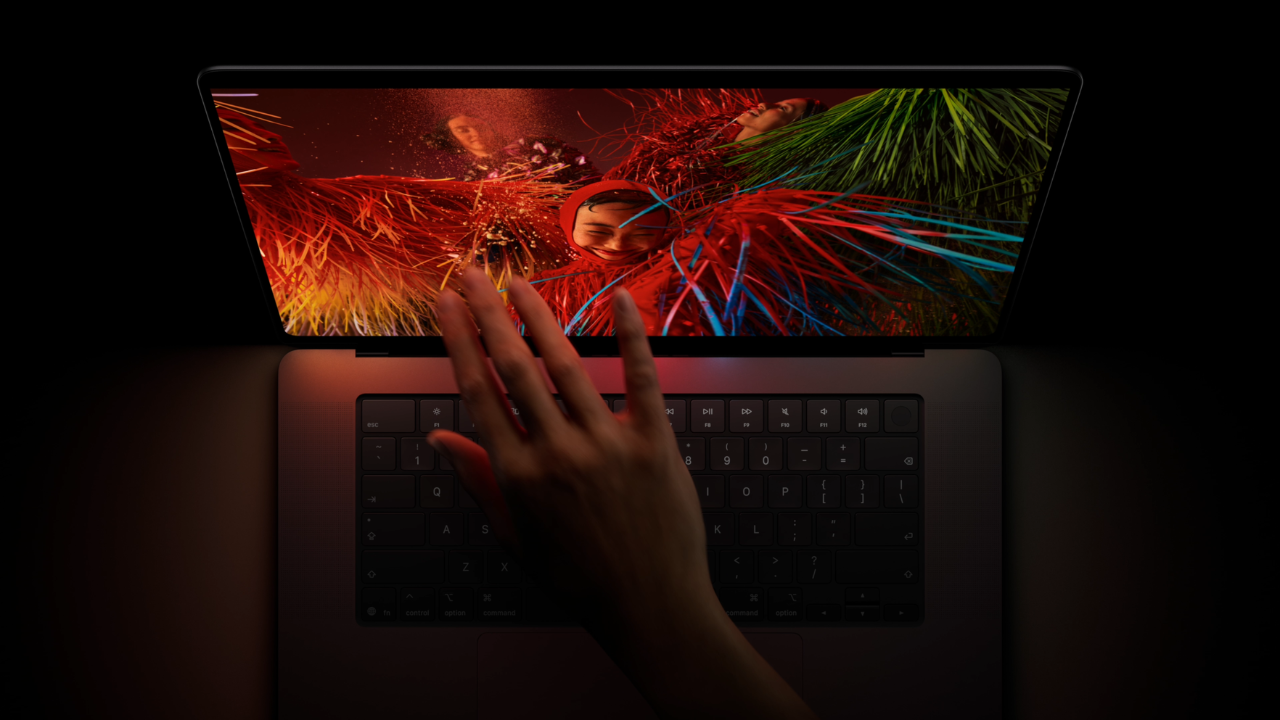
Why Apple took 16 years to make a touchscreen MacBook
For 16 years, Apple had an answer ready whenever someone asked about a touchscreen Mac, and the answer was always some version of no.Steve Jobs gave it first, with the most theatre. Tim Cook gave it with kitchen appliances, and Phil Schiller with user studies. In 2021, Apple's then hardware engineering chief, John Ternus, told The Wall Street Journal's Joanna Stern that the Mac was built around the keyboard and trackpad, adding: "We haven't really felt a reason to change that."Apple has now found one.The MacBook Pro with PROLED XDR Display is a mouthful even by Apple's standards, so I'll call it the touchscreen MacBook Pro from here on.
It is the first Mac that responds to a finger on its screen, and also the first MacBook with an OLED panel, which, as Apple tells it, is the very reason touch could happen at all.When Wired asked Ternus, now nearly two months into the CEO job, whether Apple was about to break its oldest Mac taboo, he kept it brief: "Who knew?" On X, he was a little less brief, writing that Apple was "glowing with excitement" over the new MacBook Pro and that "you've gotta touch it to believe it." With the glowing Apple logo back on the lid, the pun was almost certainly intended.That is quite a turn for someone who, five years ago, couldn't see a reason to change the Mac at all, and Apple can expect some ribbing for it.
The reversal is also typical of how the company works. Apple's "never" has usually carried an unwritten condition, roughly "until we can do it in a way we like," and no product has taken longer to get past it than the touchscreen Mac.Apple kept saying no, and nobody else quite proved it wrongJobs set the tone in October 2010, barely ten months after he had introduced the iPad. Touch surfaces don't want to be vertical, he argued on stage.
Reaching up to a laptop screen made for a nice demo, but Apple's own testing showed fatigue set in quickly, and after long enough, "your arm wants to fall off." Touch belonged on horizontal surfaces, which is why MacBooks got big glass trackpads instead.Cook made a similar case two years later. Asked on a 2012 earnings call whether tablets and laptops would eventually merge, he likened the idea to combining "a toaster and a refrigerator," suggesting the result would please nobody.
Microsoft released its first Surface tablets that same year, alongside a version of Windows rebuilt around touch.Then came Schiller. In 2015, Apple's marketing chief laid out a broader theory of the product line to journalist Steven Levy: every Apple device is essentially a computer behind a sheet of glass, and each gets the interface that suits how it is used. Reaching over a fixed keyboard to poke a screen was uncomfortable, he argued, and macOS was built for the precision of a pointer, with tiny buttons and dense menus that fingers would fumble.A year later, Apple did put touch on the MacBook Pro, just not on the display.
The Touch Bar sat above the keyboard, and Schiller said the company had tested touchscreen Macs internally and come away convinced its instincts were right. The Touch Bar itself didn't last. Physical function keys returned in 2021, and the strip was gone from the lineup by 2023.Stern, for her part, kept asking. When she put the question to software chief Craig Federighi at the Journal's Tech Live event in October 2022, he replied "Who's to say?" and the panel broke into laughter.
By June 2025, Federighi and marketing head Greg Joswiak were meeting it with laughter alone. Going back through her archive on X this week, Stern noted that Apple's replies had slowly drifted from a flat "nope" to evasive laughter.In hindsight, that was about as close to a yes as Apple ever gets.Elsewhere, in the Windows world, touchscreen laptops became routine long ago. Machines with screens you can tap, and often fold back into a tablet, have sat on store shelves for well over a decade without ever being short of buyers.
A generation raised on phones and tablets expects every screen to respond to touch, and plenty of laptops happily oblige.Selling them, though, isn't the same as settling the argument, and Microsoft's own history shows it. Windows 8 rebuilt the PC around touch, and the backlash was strong enough that the Start button came back within a year. Windows 10 restored the familiar desktop, Windows 11 quietly dropped the dedicated tablet mode, and the company that bet hardest on touchscreen laptops has spent the decade since easing touch into the background.
Part of the reason is that the trade-offs never went away. A touchscreen still tends to mean a glossier panel, more weight and shorter battery life, and with most apps never rethought for fingers, people were rarely given a good reason to reach for the screen.Apple, meanwhile, was edging closer from the other side. The iPad picked up trackpad support in 2020 and a far more Mac-like iPadOS last year, complete with resizable windows and a menu bar.
The Mac, in turn, had been running iPhone and iPad apps since its move to Apple silicon, apps built for fingers that never felt quite right under a cursor.By January 2023, Bloomberg's Mark Gurman was reporting that Apple had a touchscreen MacBook Pro in the works, originally pencilled in for 2025. That date slipped, and for good reason. Apple had clearly decided a touchscreen Mac was coming; what it hadn't worked out yet was how to add one without giving anything up.Touch could only come if it cost the Mac nothingTernus's explanation for the timing is the most revealing part of this story.
Apple, he told Wired, needed to reach a point where adding touch didn't make the MacBook Pro worse in any way: not heavier, not thicker. Anything earlier would have meant a compromise on the company's most expensive laptop.The OLED panel is what made the maths work. The touch sensor is built directly into the display rather than laid on top as a separate layer, so it adds neither bulk nor noticeable lag, and because OLED needs no backlight, the lid slims dow…