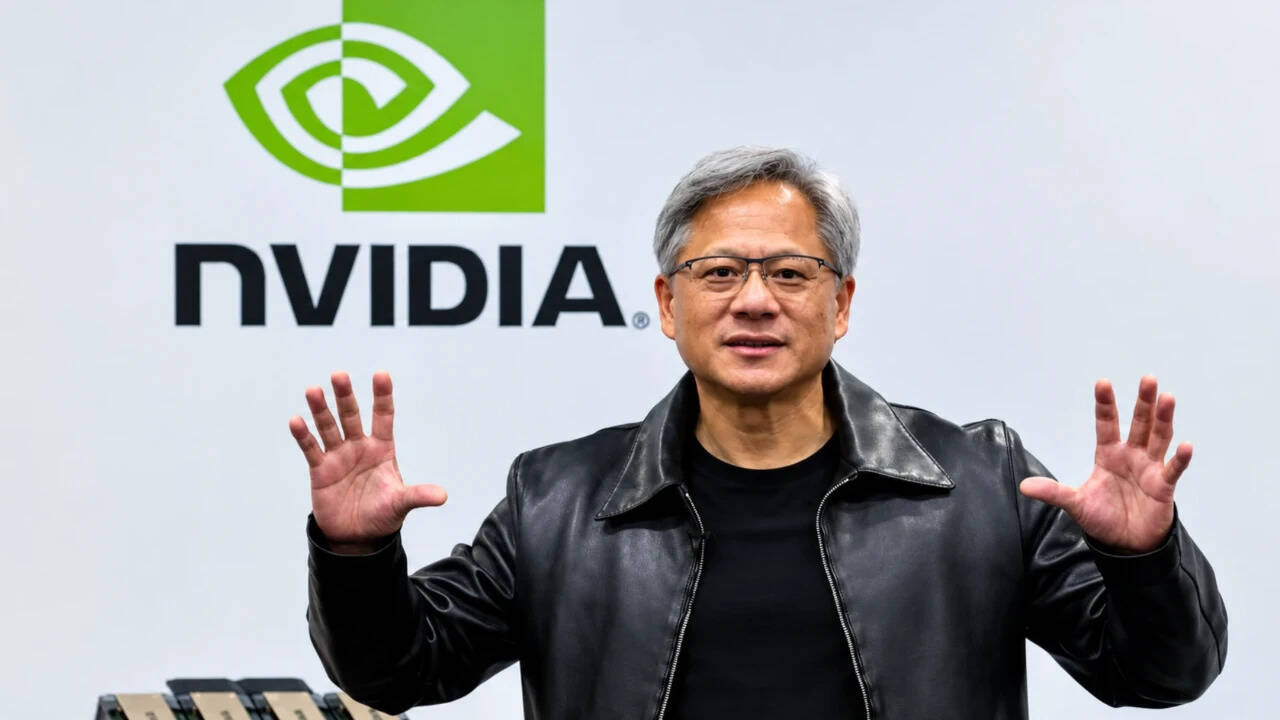
Nvidia U-turn: Why Huang got reinstated as CEO in 11 days; crisis far from over
On November 17, Nvidia chair Harvey Jones opened the company's earnings call with a line that seemed to settle the matter: the board "does not intend to reinstate Jensen as CEO". Five days later, the same board voted unanimously to bring him back. Jensen Huang returned as Nvidia's president, CEO and board director on November 23, 11 days after he resigned from the company he co-founded in 1993.Nvidia's explanation is brief.
Directors say meetings with Huang left them satisfied with his candour and his ability to lead. They add that input from senior US government officials gave them confidence his return carries no national security risk. The statement leaves out what happened in the days between those two board positions. In that time, Nvidia's stock had its worst day in nearly two years, the US President publicly asked for Huang back, and the company's own investors disagreed over how fast the board should move.Huang stepped down on November 12.
On October 29, The New York Times had reported that US officials concluded Alice Huang, a former Megaspeed executive, was a Chinese intelligence asset. On November 7, the Financial Times reported that the US believed the relationship was romantic. On November 11, The New York Times reported that Huang had also had an affair with an Nvidia executive. Huang admitted infidelity in a note to employees on November 8, and CFO Colette Kress stepped in as interim CEO.Nvidia's board says the candour problem behind Huang's exit is resolvedThe word the board chose matters most.
At an all-hands meeting on November 18, Jones told employees the board had accepted Huang's resignation because of his "lack of candor". The stated reason was how open Huang had been with the board, more than the relationships themselves.The timeline shows where that concern came from. On October 29, Huang described Nvidia's dealings with Megaspeed as "completely normal". The New York Times later reported that on the night of November 7, general counsel Tim Teter went to Huang's home and asked him directly whether the reports were true.
Huang said they were. On November 8, the board said it had no reason to believe national security or Nvidia's secrets had been compromised, and it opened an investigation.The November 23 statement speaks to the same concern. Nvidia says directors held "a series of discussions and meetings" with Huang, after which they were satisfied with his candour. Huang had also made the first move in public.
On November 17, he posted on X that he had made "serious mistakes" and offered to return if the board felt it served shareholders. Semafor reported the same day that three directors were already pushing for his comeback.The US government moved from caution to support for Huang within daysThe national security question was harder to settle inside a boardroom, and the board did not try to settle it alone.
Its statement credits "senior levels of the United States government" for its confidence, without naming the officials.The intelligence picture has never been clear-cut. On October 30, China's foreign ministry called the spy report "groundless speculation". On November 12, Singapore's home affairs ministry said it had investigated Alice Huang, but not for espionage. US Attorney General Todd Blanche said the Justice Department had reached no conclusion on whether she was a spy, and CNN reported that the intelligence did not prove she was one.
On November 13, The Washington Post reported that a memo by Marco Rubio was based on a CIA report that he had recast more assertively.The politics moved in Huang's favour over the same days. On November 12, President Donald Trump called the developments "horrible" and "sad", and he later suggested former Apple CEO Tim Cook as a successor. On November 15, Treasury Secretary Scott Bessent said the board needed "a dramatic shakeup".
On November 16, Trump said he would not mind Huang returning. On November 20, he said he "would love to see Jensen be given a second chance."On November 22, Trump wrote on Truth Social: "I hope the Board of Nvidia rehires Jensen Huang. It would be the best thing for the Company, and also, for the U.S.A." Bessent, who had wanted an outside hire, said in a TV interview the same day: "I said they should go to the outside, but he's on the outside now." Nvidia's filing with the US securities regulator dates the board's decision to November 22 as well.Investors wanted Huang back, though not all wanted the board to rushThe market pressure was hard to miss.
On November 20, Nvidia shares fell nearly 14% to $125.53, their worst day since January 2025. By then the stock had lost about $2.7 trillion in market value since its October 6 peak. On November 18, Moody's lowered its outlook on Nvidia's Aa1 credit rating to stable. By November 16, a "Stand With Jensen" petition had passed 178,000 signatures, and Elon Musk was among the tech figures publicly backing Huang.The most prominent investor push was more measured than the petition.
On November 14, Altimeter Capital's Brad Gerstner and Atreides Management's Gavin Baker asked the board for a slow, deliberate CEO search that left room for Huang's return. Their firms held about $2.13 billion of Nvidia stock between them. They did not ask for him to be reinstated straight away. Speaking at a conference on November 16, Gerstner warned against political pressure from either side pushing the board to act "before we've even taken the time to turn over the cards and learn what was done".The board's own investigation into Huang has not finished, so he returns before that inquiry reaches a conclusion.The business itself held up in his absence.
On the November 17 earnings call, Kress raised Nvidia's growth outlook. Even so, shares jumped more than 25% in premarket trading on November 23 after the announcement. That still left them below the $166.19 close on the day Huang resigned.Jensen Huang returns with the export-control questions around Nvidia still openThe bigger q…