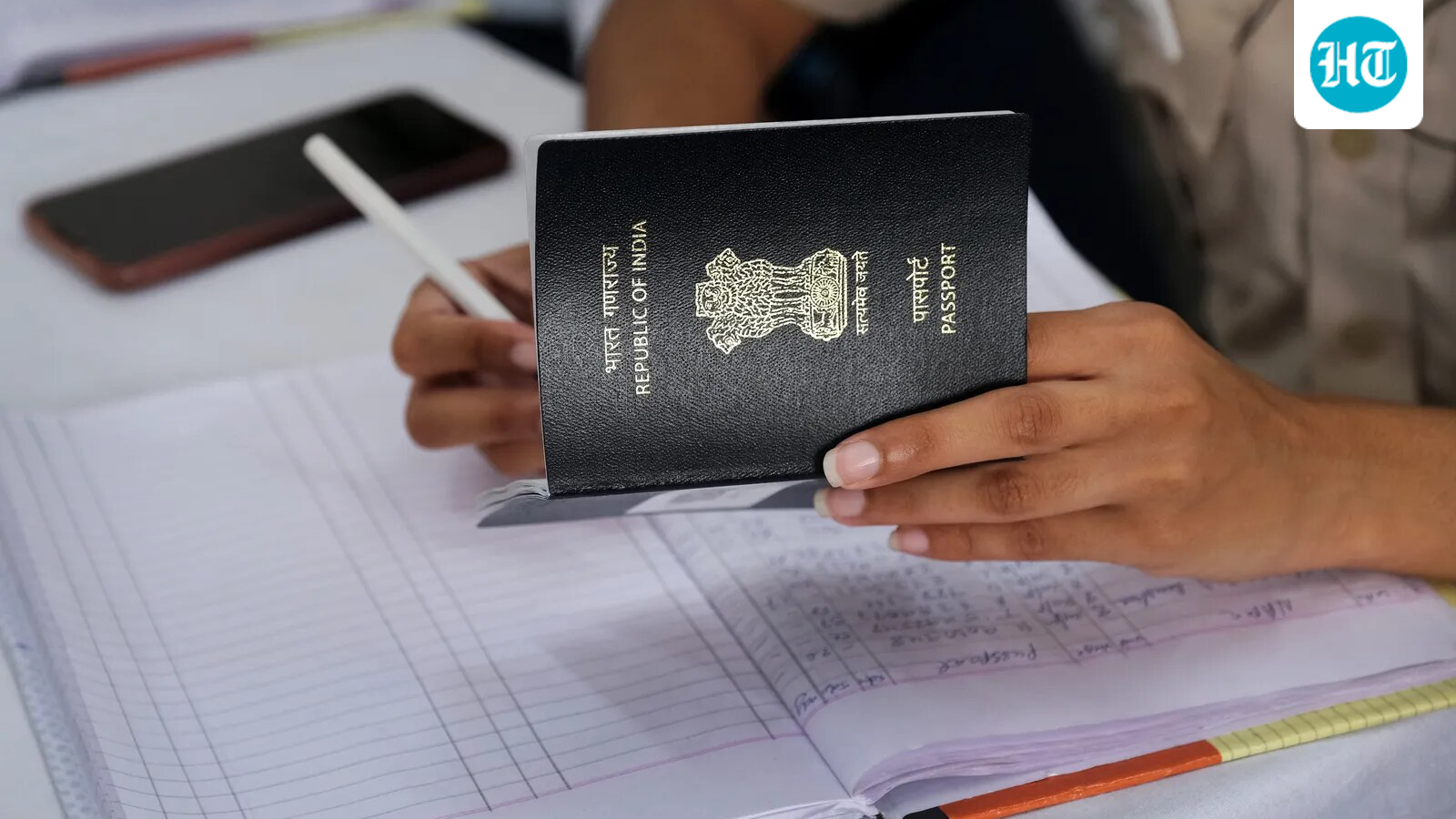
India cuts visa categories from 13 to 9, application form fields reduced by up to 70%
The Centre has reduced the number of main Indian visa categories from 13 to nine and sub-categories from 49 to 23, aimed at simplifying the country's visa regime, the ministry of home affairs said in a statement on Wednesday.In a separate exercise, the Union home ministry is also moving to simplify visa application forms, reducing the number of fields by 65-70% across all 23 visa sub-categories.
The home ministry said that this rationalisation was being undertaken to boost foreign tourist arrivals, enhance medical value travel and foreign student arrivals.Additionally the changes will also reduce overlap between visa categories and make framework easier to navigate for visitors, patients, students, researchers, investors and business professionals.The nine primary categories under India's visa regime now include – Business Visa, Diplomatic Visa, Work Visa, Journalist Visa, MedicaL Visa, Official Visa, Student Visa, Visitor Visa and Miscellaneous Visa.Tourist Visa renamed Visitor VisaAmong the changes in the visa regime, the erstwhile Tourist Visa has now been renamed as the Visitor Visa, reflecting a broader range of permitted purposes beyond conventional tourism.The new category “has been organised into two sub-categories, V-1 and V-2, so that applicants may select a visa suited to the nature and duration of their proposed visit,” the MHA statement said.Visa 1, in addition to other eligible visitor activities, covers short-term activities such as business meetings, medical consultations, wellness retreats, short-duration medical treatment and short-term courses in Indian languages, music, art and craft.
It is granted for 30 days with multiple entries.Meanwhile Visa 2 is intended for longer-duration visits, with validity of 1, 5 or 10 years, as specified. It covers the activities permissible under V-1 and mountaineering. For mountaineering, a visa of six months, with multiple entries, will be granted.“By bringing a wider range of short visits under a clearly identified category, the new arrangement makes visa selection simpler for travelers who may combine leisure with business meetings, medical consultations, wellness retreats or cultural learning, short duration yoga programme.
The longer-duration V-2 option provides continuity and convenience for eligible repeat visitors, while the specific mountaineering provision addresses the distinct needs of such travel,” the government said in the statement.Business Visa divided into two sub-categoriesAccording to the MHA release, the Business Visa category has been consolidated into B-1 and B-2. B-1 Visa covers long-term, licence-based business activities, including foreign nationals seeking to establish industrial or business ventures in India.
B-2 Visa covers short-term, contract-based business activities, including Production Investment Business, conferences, sports, performative arts and films.The ministry highlighted a specific provision for “foreign subject-matter specialists, engineers and technical personnel engaged by Indian companies in activities such as installation and commissioning, quality checks and essential maintenance, production, IT and ERP ramp-up, training, supply-chain development, plant design and bring-up, senior management and technical support, including transfer of know-how, technology and services.” These personnel would qualify for a Production Investment Business Visa under the B-2 category through the e-Visa platform, the MHA said, adding that this was earlier under the e-B4 visa nomenclatureIt added that this differentiation gives businesses greater clarity when planning long-term investments as against short-term contractual assignments.Student Visa categories consolidated into two sub-categoriesAs part of the changes, the Student Visa category has also been consolidated into two sub-categories – S-1 and S-2.
S-1 Visa covers school, graduate and post-graduate education. S-2 Visa covers PhD and research scholars in Indian universities, visiting faculty, foreign research students visiting India for research, scientific and anthropological expeditions, internships and exchange students, among other specified academic activities, the ministry of home affairs said.““For foreign students enrolled in Indian educational institutions through the Study in India portal, the e-S1 Visa may be granted for up to five years or for the duration of the academic course, whichever is less, with multiple entries,” the MHA added.