Supreme Court sets four-month deadline for FSSAI to finalise stricter food labelling norms
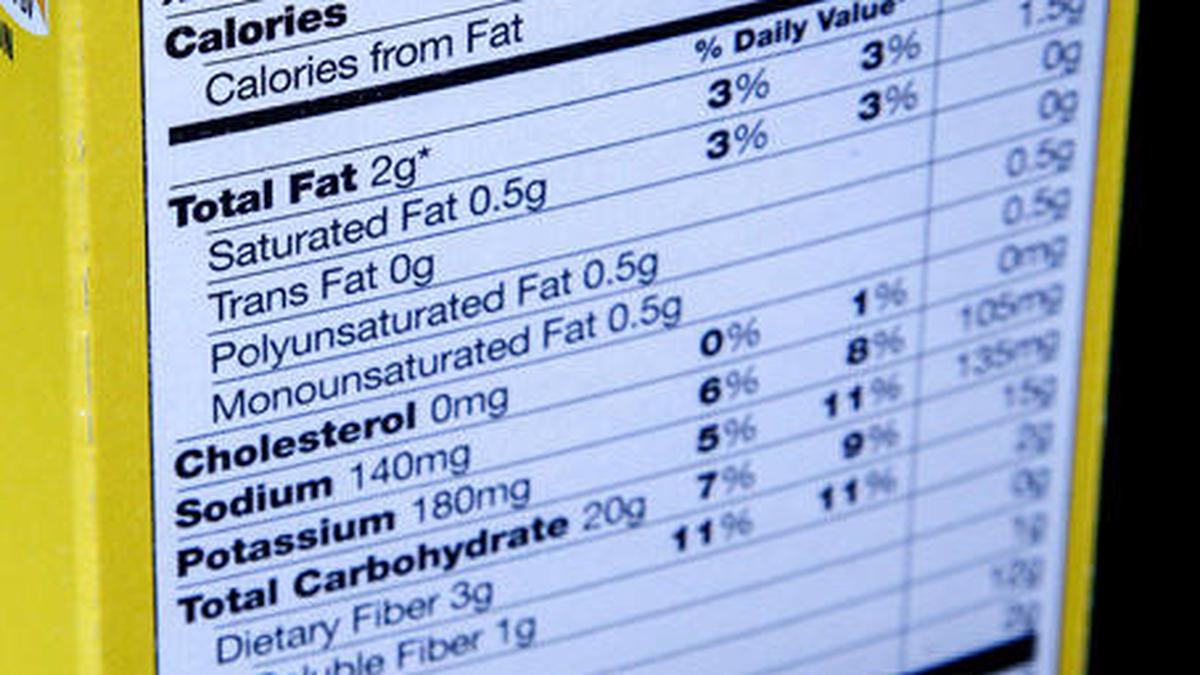
New Delhi Observing that the right to health casts an obligation on the state to regulate industry practices detrimental to public health, the Supreme Court on Thursday (November 26, 2026) directed the Food Safety and Standards Authority of India (FSSAI) to formulate a single-phase front-of-pack nutrition labelling (FoPNL) regime mandating prominent red warning labels on packaged foods high in sugar, saturated fat or salt.
The court also asked the regulator to “strictly adhere” to the four-month deadline for finalising the draft regulations. The judgment is the culmination of a series of interventions by a Bench of Justices J.B. Pardiwala and K. Vinod Chandran in a public interest litigation (PIL) filed by the Kerala-based NGO 3S and Our Health Society seeking mandatory front-of-pack warning labels on packaged foods high in sugar, salt and saturated fat.
Front-of-pack nutrition labelling to be rolled out in single phase, FSSAI tells Supreme Court Front-of-pack nutrition labelling to be rolled out in single phase, FSSAI tells Supreme Court The regulator sought a four-month period for issuing and finalising the draft regulations under the Food Safety and Standards Act Front-of-pack nutrition labelling to be rolled out in single phase, FSSAI tells Supreme Court storyline 1 “The population’s exposure to harmful substances must be controlled, their consumption must be discouraged, and consumers must be protected from practices detrimental to health used by the food businesses.
Preventive measures that are most effective must therefore be undertaken in an effort to respect, protect and guarantee the right to health,” the Bench said. Hexagon warning labels In a direction that will require the FSSAI to recalibrate the thresholds for mandatory warning labels, the Bench asked the regulator to treat “total sugars” and “saturated fat”, rather than “added sugar” and “added fat”, alongside salt, as the nutrients of concern, in keeping with the regulatory consensus that preceded the 2024 Dietary Guidelines for Indians (DGI).
The Bench cautioned that the thresholds must be neither too high nor too low. Excessively high thresholds, it said, would allow unhealthy products to escape scrutiny, leaving consumers unknowingly exposed to harmful levels of sugar, saturated fat and salt, while excessively low thresholds could result in nearly all packaged foods carrying warnings, eventually desensitising consumers and inducing “label fatigue”.
The court also prescribed changes to the design of the warning labels, directing the FSSAI to provide a separate red hexagon for each nutrient of concern, with a standardised pictorial representation accompanied by the words “HIGH FAT”, “HIGH SUGAR” or “HIGH SALT”. Products exceeding the thresholds for multiple nutrients would thus have to carry distinct warnings for each. Drawing on international practices, the Bench directed that each hexagon occupy a minimum of 4% to 5% of the package’s principal display panel, unless reasons exist for departing from this standard.
“The FSSAI shall also prescribe the font size of the text within each hexagon such that it is prominent, conspicuous and readily legible to consumers when viewed together with the pictorial representation of each nutrient-of-concern under normal conditions of purchase and use,” the Bench said. Supreme Court questions FSSAI on thresholds for ‘high’ sugar, salt, fat warnings Supreme Court questions FSSAI on thresholds for ‘high’ sugar, salt, fat warnings Bench emphasises that food safety is a cause of “national interest” Supreme Court questions FSSAI on thresholds for ‘high’ sugar, salt, fat warnings storyline 1 ‘Double standards’ Notably, the Bench also took note of concerns that certain multinational food business operators (FBOs) operating in India adopt practices that differ from those they follow elsewhere, both in the composition of their products and in the information disclosed on their labels.
It underlined that such “double standards”, if true, were “deeply troubling”. “A consumer in India is entitled to no less protection, and no less information, than a consumer in the United States or the United Kingdom. We would, therefore, urge such multi-national FBOs to adopt uniform standards across jurisdictions, and to extend to Indian consumers the same regard and respect for their health that they extend to consumers elsewhere,” the Bench said.
‘Misuse of transition period’ The Bench accepted the FSSAI’s proposed timeline of four months for issuing and finalising the draft regulations. The regulator informed the court that the draft amendments would be published for 60 days to invite comments from domestic stakeholders and through the World Trade Organization (WTO) platform. The responses would then be examined before the regulations were approved and forwarded to the Ministry for notification in the Official Gazette.
“Every day of delay means that packaged foods continue to be sold without such labels to the detriment of the right to health, food and informed choice respectively,” the court said, stressing the need to adhere to the stipulated timeline. The court further cautioned the regulator against seeking “absolute consensus” among stakeholders, acknowledging that the interests of the food industry and those advocating consumer rights and public health may never fully converge.
In such circumstances, it said, the FSSAI must accord primacy to public health and consumer interests to avoid any deadlock. While accepting the regulator’s proposal to allow food businesses a 365-day transition period to comply with the new labelling requirements, the court asked the FSSAI to put in place safeguards against its misuse. It expressed concern that manufacturers could use the one-year window to stockpile packaging without warning labels or scale up production of existing formulations, allowing unlabelled products to remain on shelves well beyond the compliance deadline.
“The FSSAI should act pre-emptively and put …