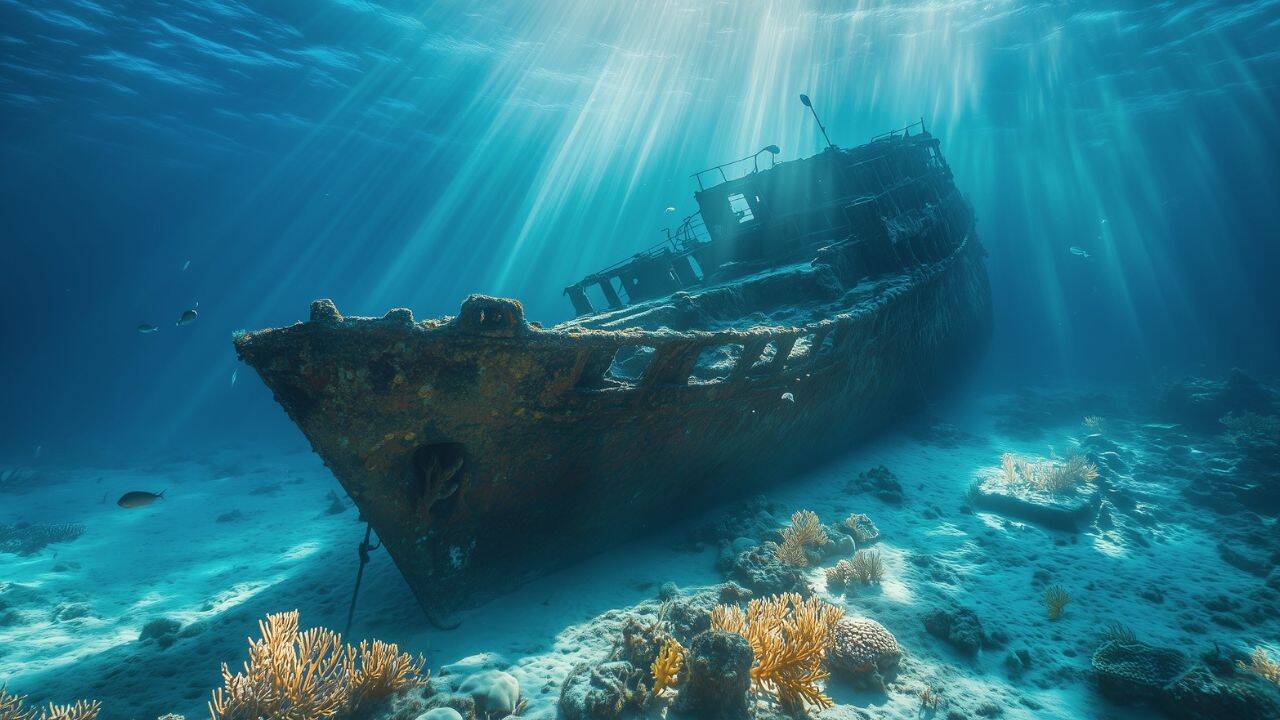
2,200-year-old Roman shipwreck reveals ancient waterproofing technique
Seawater is so harsh, it can ruin the best materials, which is why ancient seafarers relied on innovation and the limited raw materials to maintain the longevity of the ships. These techniques do not even become a great part of history books, all we hear about the Roman navy is about their legions. But a sunken ship off the Croatian coast has provided evidence to recognise the efforts to waterproof its wooden hull.Around the middle of the second century BCE, a Roman Republic ship about 70 feet long went down in the Adriatic.
As reported by the Smithsonian magazine, it was carrying logs and wine and stayed on the seabed until divers found it in 2016. Researchers named it Ilovik-Paržine 1, and its hull still carried clear evidence of an elaborate waterproofing job.Earlier studies mostly looked at the ship's structure and age. But archaeologists had also noticed a thick layer of organic adhesive coating the hull inside and out.
That layer, as Gizmodo explains, is the sort of thing that normally rots away, which is exactly why it's so precious.So what was the secret recipe?A team of French and Croatian researchers analysed ten samples of the coating, using techniques like mass spectrometry to read the chemical fingerprints. Nearly everything turned out to be pine tar, also called pitch, which is basically resin from conifer trees that had been heated until it became a dark, sticky, waterproof goo, according to the Frontiers news release.One sample, though, was a little different.
It blended pine tar with beeswax, a mixture Greek shipbuilders called zopissa. The wax made the coating more flexible and easier to spread while hot. Think of it as the ancient equivalent of adding a little oil to stop a sauce from going brittle.The Greek connectionThe lead researchers also point out that the use of zopissa was an archaic Greek tradition. Seeing it on a Roman ship built centuries later suggests a long chain of shared know-how.
Study co-authors Armelle Charrié and Quentin Couillebault described it to Gizmodo as a "circulation of technical knowledge" across the Mediterranean.The sticky pollen with secretsSticky pitch is a brilliant pollen trap. Anything floating in the air while it was being made or applied can get stuck in it and preserved for millennia.So the team counted the pollen grains. They found traces of holm oak, pine, olive, hazel, alder and ash, a landscape typical of Mediterranean and Adriatic coasts and valleys.
A small amount of fir and beech pollen also appeared in some samples, which points to mountainous countries like the ranges of Istria and Dalmatia in the northeastern Adriatic. Earlier work on the ship's ballast stones had already linked its construction to Brindisi, on Italy's southeastern coast.The layers of the hullThe analysis by the researchers suggested four to five distinct batches of coating.
While the stern and middle of the ship shared the same coating, three batches at the bow differed from one another. This suggests that repair work was involved, with patches put up in stages, using materials from different places.In this case, the vessel likely sailed between the western and eastern Adriatic, getting its first coat near where it was built and further touch-ups along the way.
Charrié summed up the idea in the official statement, noting that it's easy to assume long-distance ships needed repairs but surprisingly hard to prove it. Here, pollen helped tell apart coatings whose chemical profiles looked identical.Why a bit of old tar mattersYou might wonder why anyone should care about something deposited on a rotten boat. The answer is that organic waterproofing materials get far less attention than timber and cargo, even though ships couldn't function without them.
Charrié has said in the official press release that these materials are real witnesses to past naval technologies.They also remind us that ancient seafaring was a maintenance job as much as an adventure. Sailors weren't just sailing. They were scraping, heating, patching and resealing, often far from home. And because shipbuilders used whatever raw materials they had access to, Charrié notes in the release, "Each boat has its own history."Fearless legend or grounded realist?
Rate yourself on 11 categories in the Great Indian Confidence Survey – find out in 3–6 min