How Sir Alex Ferguson's 'horse' ruined Manchester United
Hello and welcome to another edition of Offside.Manchester United fans must feel like they are stuck in several Franz Kafka novels at the same time. Overnight, their league-winning club has metamorphosed into a giant, useless insect; successive managers are perpetually put on trial for the sins of an institution whose real architects never appear in the dock, while supporters, players and even managers are stuck in a constant circle of doom as invisible people in the castle grin on and rub their monies.But how did one of the world’s most popular clubs go from a perennial winner to a mid-table banter club?The answer lies with the Glazers, obviously, but even for that, we have to go a little further back to examine – to borrow a line from Churchill – the beginning of the end of Man Utd’s downfall.
But before that, a small story about how the club was saved.Those familiar with United lore know that the club was saved thanks to a dog named The Major. Back in 1901, Newton Heath, as Manchester United was known, faced bankruptcy when The Major, who also happened to be the club’s mascot and belonged to captain Harry Stafford, went missing. The canine ended up at a restaurant where he was fancied by John Henry Davies for his little daughter's 12th birthday.
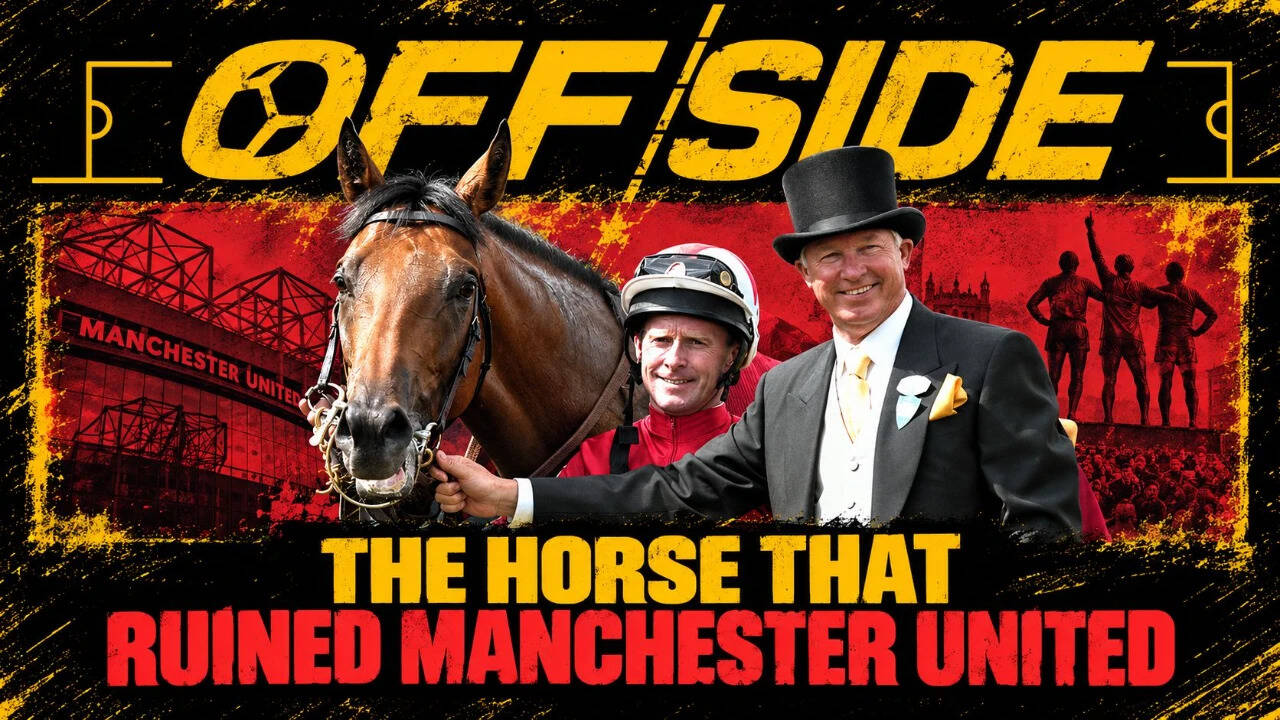
The club captain refused to sell but later relented. But this chance meeting got John Henry Davies interested in the club’s fortunes, and he, along with other investors, saved it from bankruptcy and became its new chairman.And now United’s downfall, too, can be traced to another creature: a horse.Long before kings or presidents measured power by the size of their armies, nuclear arsenals or reverse tariffs, ancient Indian rulers had a rather ingenious way of establishing sovereignty: the Ashvamedha Yajna.
A consecrated horse would be allowed to wander across kingdoms with the king’s warriors, and anyone who stopped said horse was challenging the king’s power and claim to the land.The ritual features prominently in both Indian epics: the Ramayana and the Mahabharata. In recorded history, Samudragupta also performed the ritual and commemorated it with gold coins. If the horse ritual was meant to cement a kingdom’s boundaries, in Manchester United’s case, its woes can be traced back to a stud named Rock of Gibraltar: the rock upon which modern Manchester United’s church was desecrated.Much like the sovereignty of Gibraltar has sullied Anglo-Spanish relations, Rock of Gibraltar’s ownership became a major bone of contention between Irish businessman John Magnier and his friend Sir Alex Ferguson.As Jonathan Wilson noted in his fantastic piece in The Guardian, the unravelling began in the year of the Treble, when Mull of Kintyre, owned by Magnier, won the prestigious Gimcrack Stakes at York, which entailed giving a speech at the annual Gimcrack Dinner.
Not wanting to replicate the plot of The King’s Speech, Magnier asked his friend Sir Alex Ferguson to speak in his stead. But the racing establishment refused, saying only the horse’s owner would be allowed to show off said oratory.So Magnier made Ferguson the owner of another horse, Juniper (which also lost), and then Rock of Gibraltar, which won the race in 2001 and allowed Ferguson to give a speech.Like Manchester United in the nineties and noughties, Rock of Gibraltar turned out to be an extraordinarily successful racehorse, winning seven consecutive Group One races.
His potential value as a breeding stallion skyrocketed, and Ferguson believed he was owed 50% of the horse’s future stud fees.An acrimonious legal battle followed with Magnier, and the club became entangled as well, with Magnier and his associate JP McManus selling their shares to one Malcolm Glazer in 2005, helping the Glazer family take Manchester United from a PLC to a private company.Now, speaking against Ferguson is the closest one can come in United’s religious order to blasphemy, and the only one brave enough to voice his dissent was the fallen Red Devil Roy Keane, who famously lashed out at Ferguson after his MUTV interview fallout and accused him of bringing his private life into the club with his argument with Magnier.Football finance expert Kieran Maguire once said during an interview with Goal: "I think if that particular discussion over the horse had never taken place, we could be watching a very different Manchester United today.
If that relationship had remained amicable, then Manchester United might not have been sold."But what’s done was done.During his tenure, Ferguson continued to defend the Glazers while racking up league wins and a Champions League, but the dark cloud of debt had already cast a pall over Old Trafford, and the dam broke the moment he retired.Now, if one is a fiscal dunce like yours truly, here’s a simple explainer of how the Glazers saddled United with debt.Malcolm Glazer bought Manchester United for approximately £790 million in 2005, but instead of paying for the club from his own pocket, he borrowed heavily and transferred the debt back onto the club.In financial parlance, it’s called a leveraged buyout.
Football fans called it daylight robbery.From being virtually debt-free, United were suddenly £604 million in debt. Despite being the world’s most marketable club, those funds kept disappearing into the black hole to service the Glazers’ debt.A BBC Verify investigation found that approximately £1.19 billion left Manchester United between 2005 and 2024 in debt interest, debt repayments, dividends and fees associated with the takeover.
Of that, £815 million went towards interest alone.To put that number in context, between 2009-10 and 2017-18, City, whose owners were coming up with imaginative ways of financial doping instead of suckling the club dry, had created an inflated revenue of £900 million.Ferguson’s managerial genius – which had transformed a relegation-hit club into modern football’s serial winners – continued to ensure no one needed to closely examine the increasingly fragile and menda…