EPFO approves systematic withdrawal plan: How it benefits you; check calculations
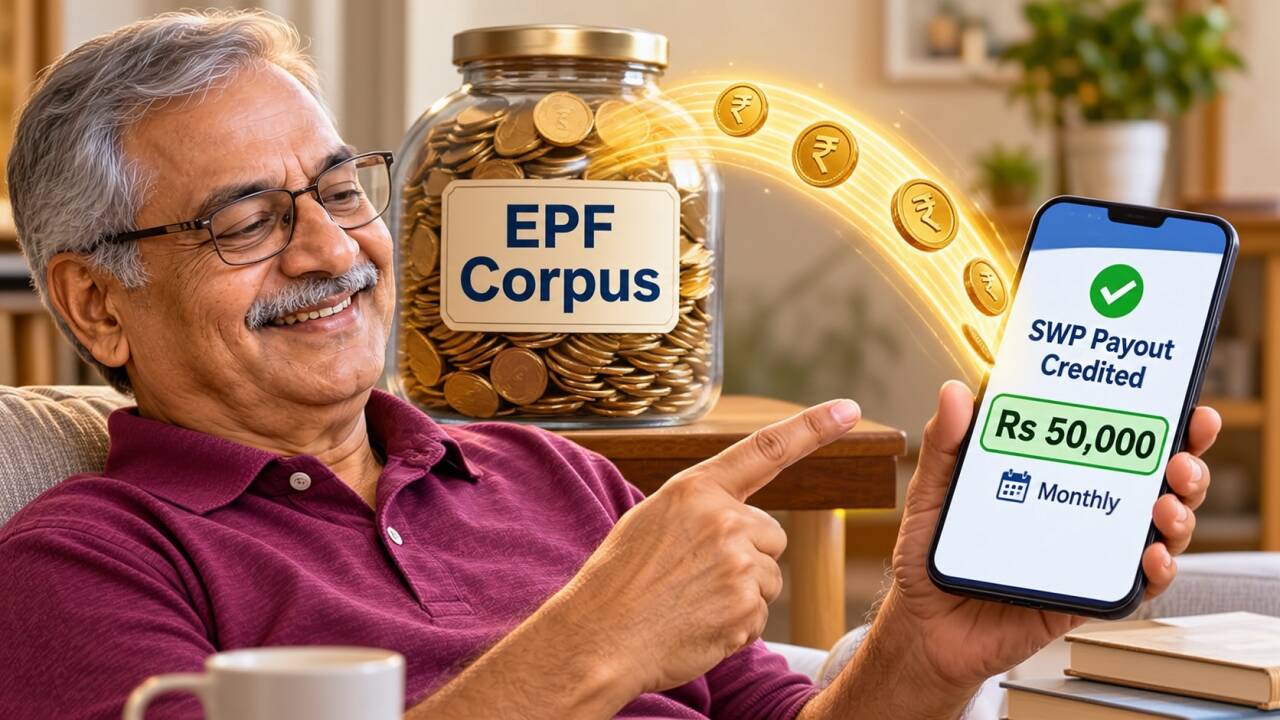
In a significant move, the Employees’ Provident Fund Organisation (EPFO) board on Thursday approved the provision for a Systematic Withdrawal Plan (SWP) for retiring members. The step is being seen as a game-changer for retirement planning, allowing for members to withdraw their provident fund corpus in instalments over their lifetime, instead of as a lump sum.The aim is to provide EPF members with a dependable income after retirement, while also limiting their reinvestment risks.
With an SWP, members will receive predictable payments from their retirement savings while retaining ownership of the remaining corpus and earning interest payouts on it.To begin with the move is expected to benefit approximately 6.32 lakh EPF members who are above the age of 55 years and have provident fund accumulations of over Rs 5 lakh.How will the EPF SWP work? How long will your retirement corpus last if you opt for a systematic withdrawal plan?
Will it be better than other traditional investment avenues that retirees opt for? We decode:Systematic Withdrawal Plan on EPF, changes in minimum balance: Top 10 pointsThe SWP facility will allow you to choose a withdrawal frequency for your EPF corpus post retirement. You will not be mandated to withdraw it in lump sum within three years of your retirement.The frequency of SWP can be monthly, quarterly, or even half-yearly, depending on what you opt for.The balance amount of your corpus will continue to earn interest.The scheme is intended to provide a regular source of income after retirement, help members earn returns on their remaining savings and supplement their pension benefits.You don’t have to opt for the SWP, it will be voluntary.If during the payout period, an EPF member passes away, the nominee or the dependent will be allowed to withdraw the outstanding amount or even continue with the SWP.Yet another aspect would be implemented in future, which would allow for UAN-linked facilities for direct voluntary deposits and small contributions from third parties, such as customer tips.
This is particularly relevant for gig workers. These transactions would operate independently of conventional employer payroll systems, providing additional flexibility and supporting the objective of universal social security.EPFO board also approved changes to the minimum balance that members must have in their EPF accounts and the waiting period for final withdrawals. Members will now be required to retain only 10% of their contributions in their accounts at all times.
The waiting period for withdrawal has also been shortened from 12 months to two months.What it means for youThe move is important because most EPF members tend to withdraw their entire corpus at retirement.That can in turn expose the money to poor investment choices, family pressures or importantly, the risk of outliving savings. With an SWP, a single payout turns into a predictable income stream.Puneet Gupta, Partner, EY India explains the basic takeaway: The proposed Systematic Withdrawal Plan could give employees more choice in how they use their provident fund savings after retirement.Instead of taking the entire PF amount at one go, a member could withdraw it gradually, on a monthly, quarterly or half-yearly basis, while the balance continues to earn EPF returns.“For retirees, this could help create a regular stream of income and also reduce the need to immediately decide how to reinvest a large lump-sum amount.
Since the option is voluntary, members would still have the flexibility to choose what works best for their retirement needs,” Gupta tells TOI.Vivek Iyer, Partner and Financial Services Risk Advisory Leader, Grant Thornton Bharat believes that the move fills a long-standing gap in India's retirement system, which has focused on building savings but offered little help in turning them into income.Fundamentally, it gives retirees another investment and savings avenue alongside the existing options of pension and annuity products that can generate regular post-retirement cash flows.Other benefits announced today also assume significance.Puneet Gupta tells TOI, “The reduction in the minimum PF balance requirement from 25% to 10% gives employees greater access to their PF savings through partial withdrawals for permitted needs such as housing, medical treatment and education.
In practical terms, members can now access up to 90% of their PF balance, compared with 75% earlier, while retaining a smaller portion for long-term social security.”“The waiting period has also been reduced from 12 months to two months. The press release refers to this specifically in the context of final PF withdrawal. It would therefore be useful to have further clarity on whether the revised waiting period applies only to final withdrawal after cessation of employment or has any impact on partial withdrawals as well,” he adds.How SWP on your EPF account could workNow let’s take a look at a hypothetical SWP with regards to PF withdrawals.
Let’s say a member retires at 58 with a Rs 50 lakh balance in his EPF account.The member decides to opt for a Rs 40,000 monthly withdrawal from his PF account. According to calculations shared by Grant Thornton Bharat, the retirement corpus will last for around 24 years, that is approximately till the age of 82 years. The payout will be around Rs 1.15 crore, because the remaining balance will keep earning interest, even as part of it is withdrawn every month.Below are some more hypothetical calculations of how long your retirement corpus of Rs 50 lakh can last at a retirement age of 58, assuming an annual interest rate of 8.25%.
It’s important to note that EPFO reviews the interest rate for provident fund every year, and is therefore subject to change.As Vivek Iyer points out, subscribers need to look at inflation as the real trade off: raising payouts 5% a year protects purchasing power but shortens the plan by about four years compared with a flat Rs 40,000.According to Vivek Iyer, the nom…