82% disapprove of Trump. So why are fewer Indian Americans identifying as Democrats?
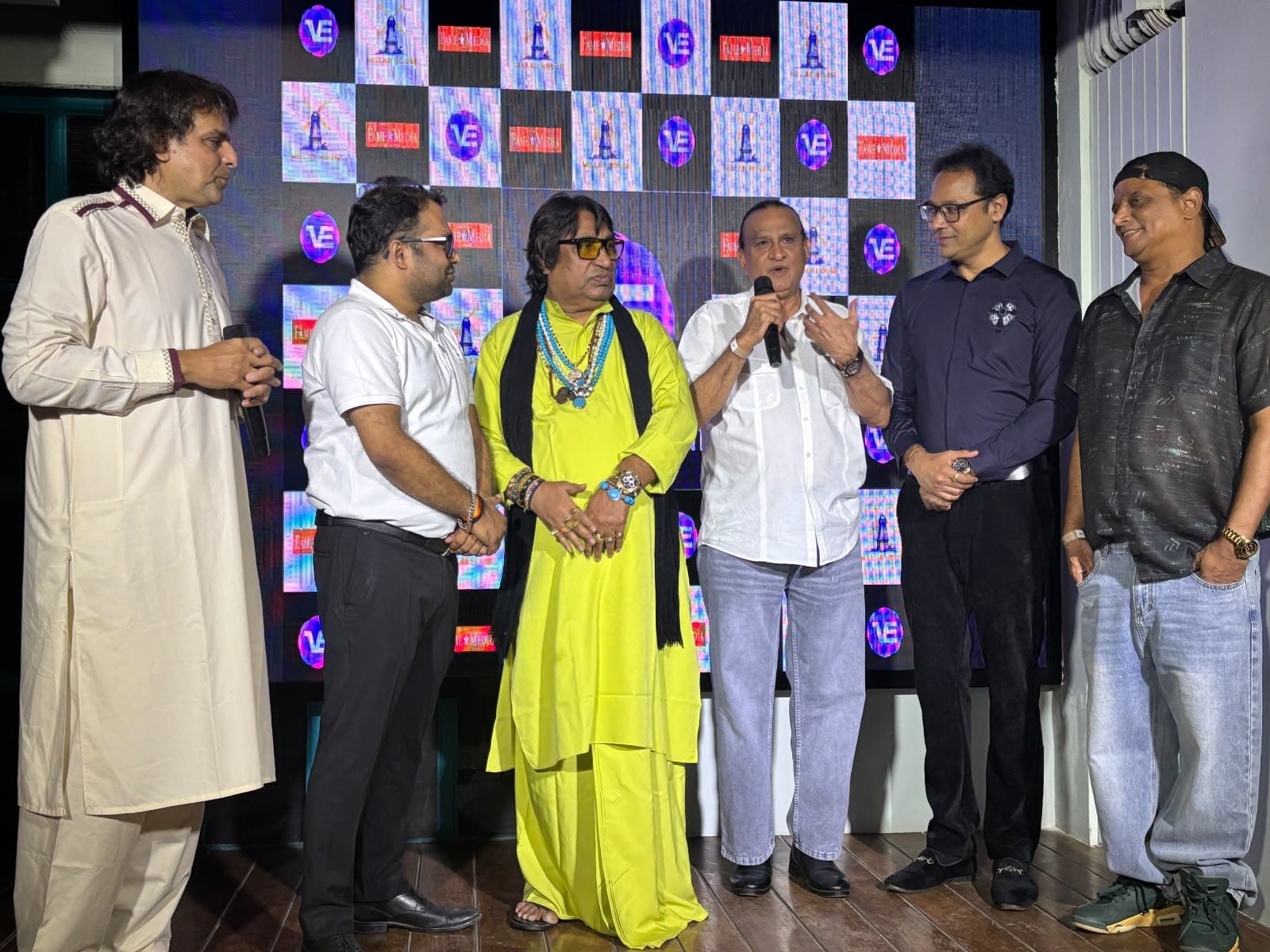
At an Indian restaurant in Irving, near Dallas, Democratic US Senate candidate James Talarico tried his hand at making a masala dosa, spreading batter on a hot pan and filling it with spiced potatoes. In Connecticut, Governor Ned Lamont joined Diwali celebrations, while Republican Congressman John James visited a Swaminarayan temple in Michigan. From dosas to Diwali and temple visits, politicians from both parties are making symbolic overtures to Indian-American voters ahead of the November 3 midterms.
But the community’s political allegiances are not as straightforward as those campaign gestures might suggest.At the national level, Republicans are fighting hard to retain control of both chambers of Congress. And the odds, at least in prediction markets, are not in their favour. As of October 30, betting website Kalshi gave Democrats a 92% chance of taking control of the House of Representatives and a 69% chance of winning the Senate.
Polymarket's corresponding figures were 94% and 72%.A Reuters/Ipsos poll completed on October 26 also found Democrats leading Republicans 47% to 36% among registered voters. Losing control of either chamber, or in the worst case both, could severely hamper US President Donald Trump's legislative agenda in the final two years of his presidency. So the stakes couldn't be higher.With the Trump administration pursuing what many see as anti-immigration policies, the stakes are also fairly high for the 5.2 million people of Indian origin living in the US.
However, there is an interesting paradox between their voting patterns and declared political affiliations. While most are strongly anti-Trump, many don't identify as Democrats. The party's perceived leftward tilt appears to be one source of discomfort among some Indian-Americans.An AP-NORC and AAPI Data survey released on October 19 found that 82% of Indian-American respondents disapprove of Trump's job performance.
Yet four in ten held an unfavourable opinion of the Democrats. A separate series of surveys by the Carnegie Endowment earlier in the year suggests that fewer Indian-Americans identify as Democrats than they did six years ago, while more describe themselves as independents.Together, the surveys challenge the idea of Indian-Americans as a politically uniform community. They reveal differences across age, education, income and other factors that shape political affiliation.A clear Democratic leadThe AP-NORC/AAPI Data survey, conducted from September 8 to 15, found Trump's handling of the economy similarly unpopular: 81% disapproved and 18% approved.
On immigration, 70% disapproved of his performance.Almost in lockstep, the Republican Party was viewed favourably by only 19%, while 70% held an unfavourable opinion of it. Democrats were in a substantially stronger position, with 51% viewing the party favourably.That advantage also appears in surveys measuring voting intentions. The 2026 AAPI Voter Survey, conducted by AAPI Data and APIAVote between June and July, found that 66% of Indian-American registered voters preferred Democratic candidates for the House of Representatives, against 18% favouring Republicans.
Democratic Senate candidates also attracted 66%, compared with 22% for Republicans.Fewer are calling themselves DemocratsAccording to the Carnegie Endowment's 2026 Indian-American Attitudes Survey, conducted between November 2025 and January 2026, the share of Indian-American adults identifying as Democrats declined from 52% in 2020 to 48% in 2024 and 46% in 2026. Over the same period, Republican identification rose from 15% to 19%, while independent identification increased from 23% to 29%.Republicans' gains came between 2020 and 2024; between 2024 and 2026, their share of party identifiers remained unchanged at 19%.
The independent share, meanwhile, rose four percentage points. The two-point dip in Democratic identification during this period is small relative to the survey's margin of error.Being independent, however, does not mean being undecided, particularly given the two-party nature of US politics. Carnegie found that the independent share dropped from 29% to 17% when respondents were offered the option of leaning towards one of the two parties.The ideological picture offers another clue.
Carnegie found that 32% of Indian-Americans identified as moderates in 2026, up from 28% in 2024. The share selecting the specific label 'liberal' declined from 25% to 21%. But when those identifying as slightly liberal and extremely liberal are included, the broader liberal segment has changed little over the past six years. Rather than indicating a conservative shift, Carnegie describes the community as broadly centrist, with a left-of-centre tilt.On a scale of zero to 100, the Democratic Party's average rating in Carnegie's survey fell from 60 in 2024 to 53 in 2026.
The Republican Party's rating also dropped, from 41 to 34. The decline extended to leading political figures. Kamala Harris's average rating fell from 62 to 52, while Trump's dropped from 40 to 32.Exhausted, but engagedThere is another striking finding from the AAPI Voter Survey. Although 92% of Indian-American registered voters said they planned to vote in November, 66% said they always (29%) or often (37%) felt exhausted when thinking about politics.At the same time, 43% described themselves as more enthusiastic than usual about voting in the midterms, compared with 22% who were less enthusiastic, perhaps because a lot more is at stake now.Three-quarters of respondents said they had discussed politics with family or friends in the previous year.
Another 25% had discussed politics or community issues through group messaging platforms such as WhatsApp, while 24% had posted about politics on social media.But direct party outreach tells a different story. Forty percent of Indian-American registered voters reported receiving no contact from the Democratic Party over the preceding year, while 56% said the same of Republicans.The Democratic dr…