‘Willfully disobeyed order’: Supreme Court pulls up Tamil Nadu govt amid Karthigai Deepam row
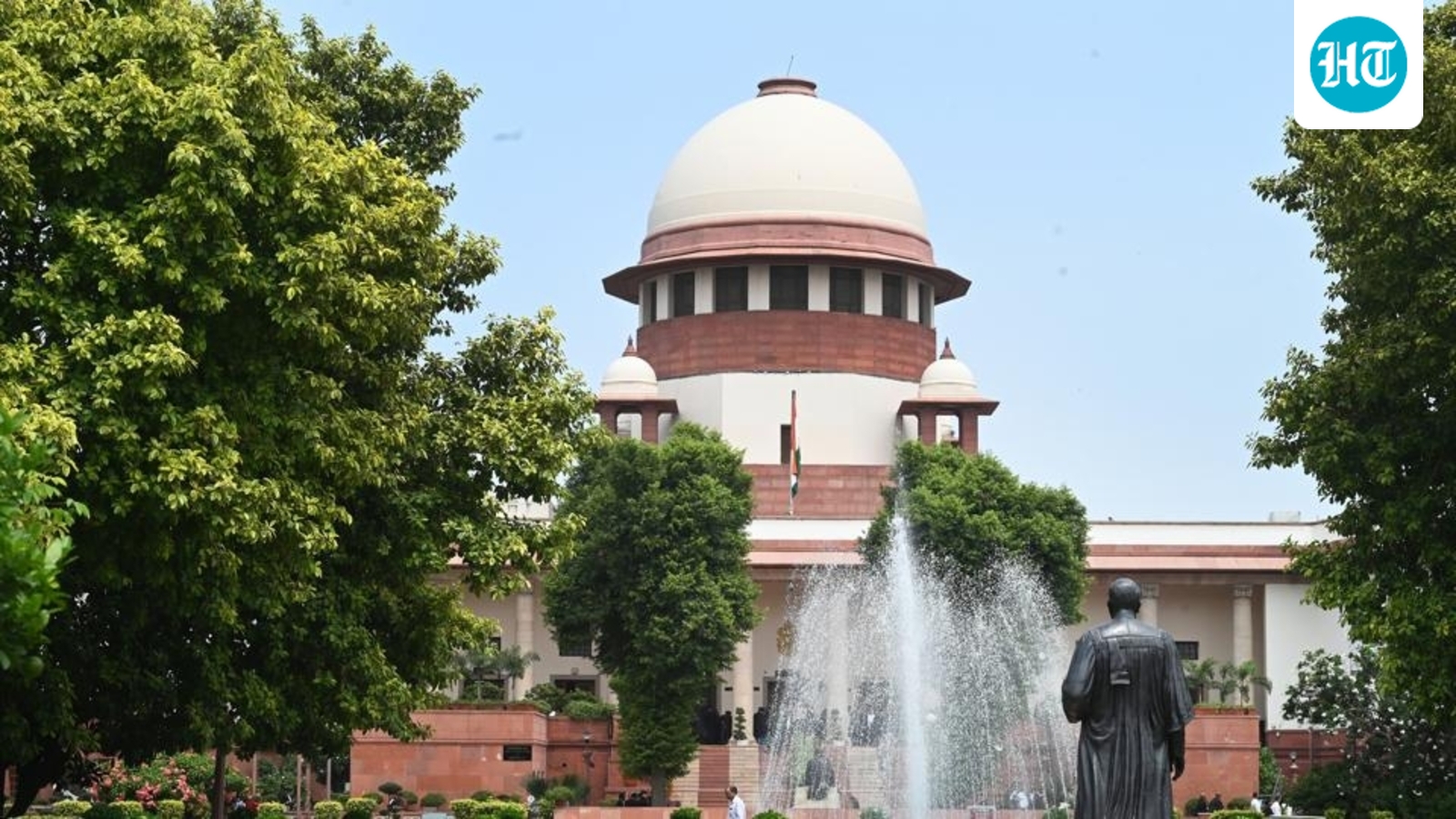
The Supreme Court on Friday held that the Tamil Nadu government and Madurai district administration had prima facie “wilfully and flagrantly disobeyed” its November 20 order directing the lighting of the Karthigai Deepam lamp at the Deepathoon atop Thiruparankundram hill, and described the Madurai District Collector's preliminary status report as one that was “shedding crocodile tears.”The Court directed that the lamp be lit at the Deepathoon on Saturday, November 28, four days after the Karthigai Deepam festival was celebrated on November 24.
It permitted “all devotees” to light the lamp at the designated spot, at least 50 metres away from the dargah, and directed the Central Reserve Police Force (CRPF) to take necessary steps to protect the dargah.A Bench of Justices Aravind Kumar and VM Pancholi Tissued show-cause notices of contempt against the Tamil Nadu Chief Secretary, DGP, HR&CE Commissioner, Board of Trustees, Chairperson and the Trustees of the Arulmigu Subramaniya Swamy Temple at Thiruparankundram, and the Madurai collector Nishant Krishna, asking why contempt proceedings should not be initiated against them.
Also Read | ‘Complete failure’: SC suspends temple trustees amid Deepathoon row, appoints retired judgesCourt suspends board of trustees of templeThe Court also suspended the Board of Trustees of the Temple, appointed two former Madras High Court judges as receivers to administer the temple, and directed the CRPF to take over security of the temple premises.The Apex Court appointed former Madras High Court judges Justices S Vaidyanathan and V Parthiban as receivers to take immediate charge of the temple administration from the suspended Board of Trustees.It further directed the receivers to ensure that the lamp is lit at the Deepathoon “using the flame from the lamp at the Uchipillaiyar temple.”“The first thing which comes to our mind is to express the word alas!
As it would be relevant and appropriate to express in the present scenario. We say so for reasons assigned hereinafter and we say so with pain and anguish. The time has come to deal with the situation with an iron hand,” the Court said, adding that one must remember that its orders were not something that can be negotiated upon by anyone.The bench also noted that the Madurai district collector had personally undertaken before the Madras High Court to implement the Apex Court’s November 20 order of lighting the lamp on the Deepathoon.
However, he failed to do so and blamed the temple authorities for such failure. Such conduct, the Court said, could lead to “constitutional chaos.”“District Collector has filed a preliminary report that the order couldn't be complied with. He has tendered a formal apology that he took all steps and has attempted to shift the blame entirely to the temple administration. We are surprised that the collector could take a stand.
His powers are wide, and hands are long to implement the order,” the Court said.Also Read | SC orders lighting of lamp atop disputed ‘Deepathoon’ tomorrow, issues contempt notice to top Tamil Nadu officials‘Order of Court is not invitation to negotiation,’ says benchThe Court made the scathing observations while hearing contempt petitions alleging non-compliance with the Supreme Court’s November 20 order directing that the lamp be lit at the Deepathoon.“An order of this Court is not an invitation to negotiation until the Court itself modifies it,” the bench said.It further warned that any attempt to undermine the constitutional mandate or interfere with the administration of justice would be dealt with firmly.The Supreme Court also said that the extraordinary intervention could have been avoided had the authorities “demonstrated bona fide compliance and purged the contempt.”It said that after hearing all parties, it had found that the temple's Board of Trustees had purportedly overreached the Supreme Court's directions by passing a resolution to light the lamp at the Uchipillaiyar temple, where it had traditionally been lit, instead of at the Deepathoon.SC observed that the trustees had effectively taken a stand that they would not implement its November 20 order.The Court also directed the TN Chief Secretary to furnish details of “all communications, messages and call records to ascertain whether executive authorities had acted at the behest of political superiors.” It directed the Chief Secretary to file a personal affidavit confirming that notices had been served on all the concerned persons.All the persons issued notices must file their affidavits within 10 days of service and appear personally before the Court on the next hearing date, December 15.What happened in courtDuring the hearing, the State sought permission for the Chief Secretary and other officials to appear virtually at the next hearing.
The bench, however, directed them to appear in person first, indicating that it would consider requests for exemption from personal appearance subsequently.During the hearing, Senior Advocate Tushar Mehta, appearing for the Archaeological Survey of India (ASI), submitted that its officials had been prevented by the police from proceeding beyond the dargah to reach the Deepathoon and ascertain the location for lighting the lamp.He argued that the police administration had effectively prevented compliance with the Supreme Court's directions and urged the Court to entrust the exercise to an independent agency.Senior Advocate Sai Deepak, appearing for one of the devotees, submitted that the November 20 order was an unequivocal direction and did not leave room for the temple administration or the State authorities to exercise discretion over whether the lamp should be lit at the Deepathoon.He argued that the appointment of the Board of Trustees shortly before the Supreme Court's order and its subsequent resolution to light the lamp at Uchipillaiyar indicated a premeditated attempt to frustrate the Court's directions.Senior Advocate Guru Krishna Kumar, also appearing f…