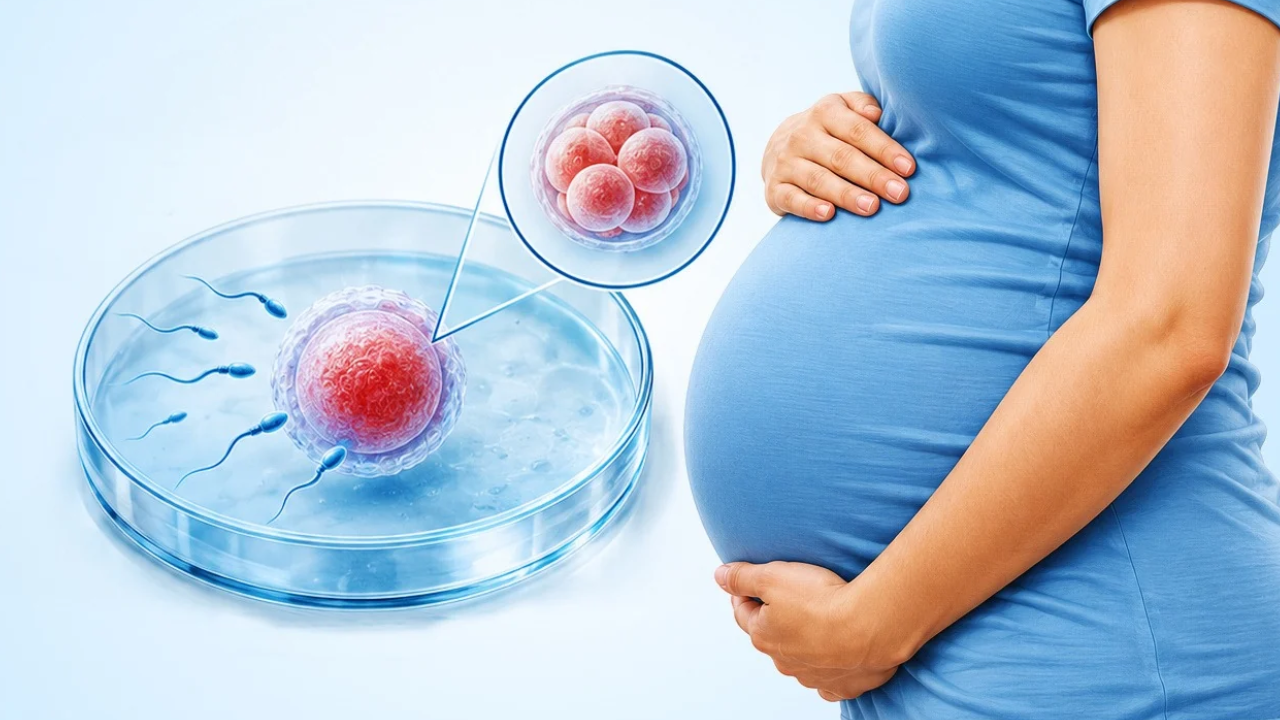
Road to parenthood: What every couple should know before choosing IVF
NEW DELHI: For couples who struggle to conceive naturally, starting a family can become a journey marked by medical consultations, uncertainty and emotional stress. Advances in reproductive medicine have made it possible for many to explore alternatives when pregnancy does not happen through natural conception.One of the most widely known options is in vitro fertilisation (IVF), a form of assisted reproductive technology (ART) that helps eggs and sperm meet outside the human body.Commonly known as the test-tube baby procedure, IVF has helped many couples experiencing fertility problems pursue parenthood.
However, the treatment is not a guaranteed route to pregnancy. It involves several medical procedures, hormonal medications, laboratory work and careful monitoring. Some patients conceive in their first cycle, while others may need multiple attempts.Understanding how IVF works, who may benefit from it, its success rates, possible complications and financial implications can help couples make informed decisions.What is IVF and how does it work?In vitro fertilisation is a fertility treatment in which a woman's egg and a man's sperm are combined in a laboratory to create an embryo.
The resulting embryo is then transferred into the woman's uterus, where it may implant in the uterine lining and develop into a pregnancy.The term 'in vitro' refers to a process taking place outside the living body, in a controlled laboratory environment. Unlike natural conception, where fertilisation usually occurs inside the fallopian tube, IVF allows fertilisation to take place in a laboratory.The treatment involves collecting mature eggs from the ovaries, obtaining sperm, fertilising the eggs and monitoring the development of embryos before transferring one into the uterus.According to a report on IVF, the procedure generally involves ovarian stimulation, egg retrieval, fertilisation, embryo culture and embryo transfer.
The exact treatment plan, however, depends on the patient's medical condition, age and reproductive health.Why do couples opt for IVF?IVF may be recommended when a couple has difficulty conceiving because of underlying fertility problems or when other treatments have not been successful.Some of the common medical conditions that may lead doctors to recommend IVF include:Blocked or damaged fallopian tubes: When the fallopian tubes are blocked or damaged, the egg and sperm may not be able to meet naturally.Male-factor infertility: Low sperm count, poor sperm movement or abnormalities in sperm function can affect fertilisation.Ovulation disorders: Conditions such as polycystic ovary syndrome (PCOS) can interfere with regular ovulation and make conception difficult.Endometriosis: This condition can affect reproductive organs and interfere with fertility.Diminished ovarian reserve: A reduction in the number of available eggs can make conception more difficult.Unexplained infertility: Sometimes, medical investigations do not identify a clear reason why a couple is unable to conceive.Previous unsuccessful fertility treatments: IVF may be considered when other fertility treatments have not resulted in pregnancy.Age is another important consideration.
Female fertility gradually declines with age, particularly after 35, as both the quantity and quality of eggs decrease. This can affect the chances of natural conception as well as the outcome of fertility treatment.A report on IVF and fertility treatment notes that couples should consider seeking medical advice after 12 months of unsuccessful attempts to conceive through unprotected intercourse.
Women above 35 are advised to seek consultation after six months rather than waiting longer.What happens during an IVF cycle? A step-by-step guideIVF is not a single procedure performed in one sitting. It involves several stages, and the treatment can take several weeks, depending on the patient's response to medication and the doctor's treatment plan.Initial consultation and fertility assessmentThe first stage involves a detailed medical evaluation of both partners.
Doctors review their medical history and conduct investigations to understand the possible causes of infertility.For women, the assessment may include blood tests to evaluate hormone levels, ultrasound examinations to check the ovaries and uterus, and tests to assess ovarian reserve.For men, semen analysis helps evaluate sperm count, movement and quality.These investigations help fertility specialists determine whether IVF is appropriate and develop a treatment plan according to the couple's needs.
Ovarian stimulationDuring a natural menstrual cycle, the ovaries usually release one mature egg. However, IVF requires multiple eggs to improve the possibility of obtaining embryos suitable for transfer.Doctors therefore prescribe hormonal medications, generally through injections, to stimulate the ovaries to produce several eggs.The patient is monitored through regular ultrasound scans and blood tests to check follicle development and hormone levels.
The dosage and duration of medication depend on how the ovaries respond to treatment. Egg retrievalOnce the eggs have matured, doctors administer a trigger injection to prepare them for collection.Egg retrieval is generally performed around 34-36 hours after the trigger injection. It involves using an ultrasound-guided needle to collect eggs from the ovarian follicles.The procedure is usually performed under sedation or anaesthesia.
The collected eggs are then sent to the embryology laboratory for assessment.Fertilisation in the laboratoryAfter egg retrieval, sperm is collected from the male partner or obtained through an appropriate medical procedure when required.The eggs and sperm are brought together in a laboratory dish to allow fertilisation.In certain cases, doctors may recommend a specialised procedure called intracytoplasmic sperm injection (ICSI).
In this technique, a single sperm is injected directly into a mature egg to assist fertilisation. It m…