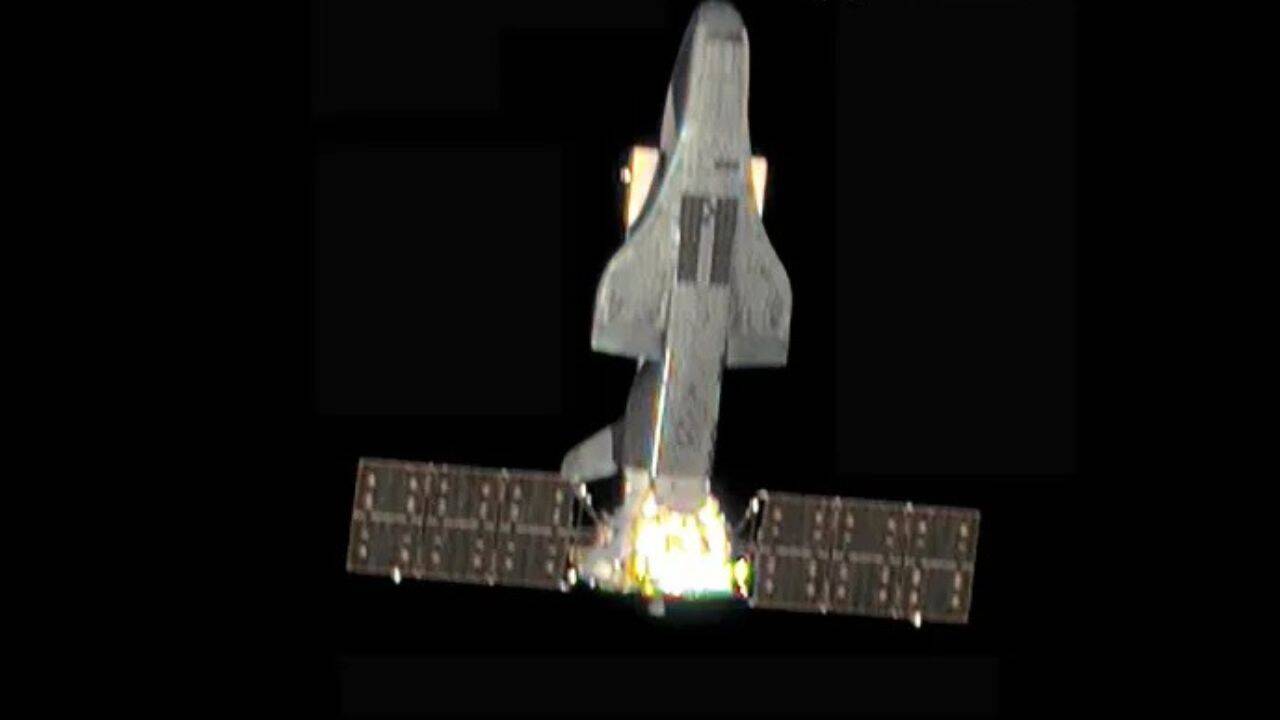
China may deploy orbital lasers to blind US satellites by late 2020s: Report
A future war could begin by blinding an enemy before the first missile is fired. China may be preparing to take that fight into space, with weapons capable of threatening the satellites that guide precision strikes, track enemy forces and keep modern militaries connected.According to a new report by the US Defense Intelligence Agency (DIA), China could field space-based directed-energy weapons by the late 2020s, potentially expanding its ability to disrupt, damage or disable adversary satellites.
The assessment warns that Beijing is also developing more powerful ground-based systems capable of threatening satellites operating in higher orbits, raising concerns over the vulnerability of US military assets in space.The DIA’s report, Challenges to Security in Space, released on October 26, warns that China is expanding its counterspace arsenal, combining directed-energy weapons with anti-satellite missiles, electronic warfare and manoeuvrable spacecraft.The report identifies the late 2020s as a potential timeline for China to field space-based directed-energy systems, although it does not confirm that such weapons are already operational in orbit.Directed-energy weapons are systems that use concentrated energy, such as high-powered lasers or high-power microwaves, to disrupt, disable or damage a target without firing conventional ammunition.In space warfare, these weapons could be used to temporarily blind a satellite’s optical sensors, interfere with its electronic systems or cause permanent damage to sensitive components.Unlike conventional anti-satellite missiles, which physically collide with and destroy their targets, directed-energy weapons can potentially affect satellites without creating large amounts of space debris.
Their effectiveness, however, depends on factors such as the weapon’s power, distance from the target, targeting accuracy and the satellite’s vulnerability.The DIA said the People’s Liberation Army (PLA) considers directed-energy weapons particularly useful because they can produce both reversible and irreversible effects against satellites. Reversible attacks could include jamming satellite signals or temporarily blinding optical sensors, while more powerful systems could permanently damage sensitive components.“China and Russia will continue to pursue new and improved counterspace capabilities to exploit a perceived US and allied reliance on space-based assets,” the report concluded.Why satellites are critical in modern warfareSatellites have become a backbone of modern military operations, enabling armed forces to communicate across vast distances, track enemy movements, guide precision strikes and detect incoming missile threats.
Their disruption could weaken a military’s ability to gather intelligence, coordinate forces and respond rapidly to changing battlefield conditions.Satellite-based navigation systems, such as GPS, provide positioning, navigation and timing data used by military aircraft, naval vessels, ground forces and precision-guided weapons.Surveillance satellites help identify troop concentrations, monitor naval movements and assess enemy deployments, while secure satellite communications allow commanders to exchange information with forces operating across different theatres.Satellites also play a critical role in missile warning, with specialised sensors detecting heat signatures associated with missile launches and transmitting alerts to defence networks.
Losing access to these capabilities could delay threat detection and complicate military responses.For the United States, which relies heavily on space-based infrastructure to support global military operations, the threat is particularly significant.In a potential conflict over Taiwan or elsewhere in the Indo-Pacific, China's ability to disrupt satellite services could complicate US force coordination and targeting.