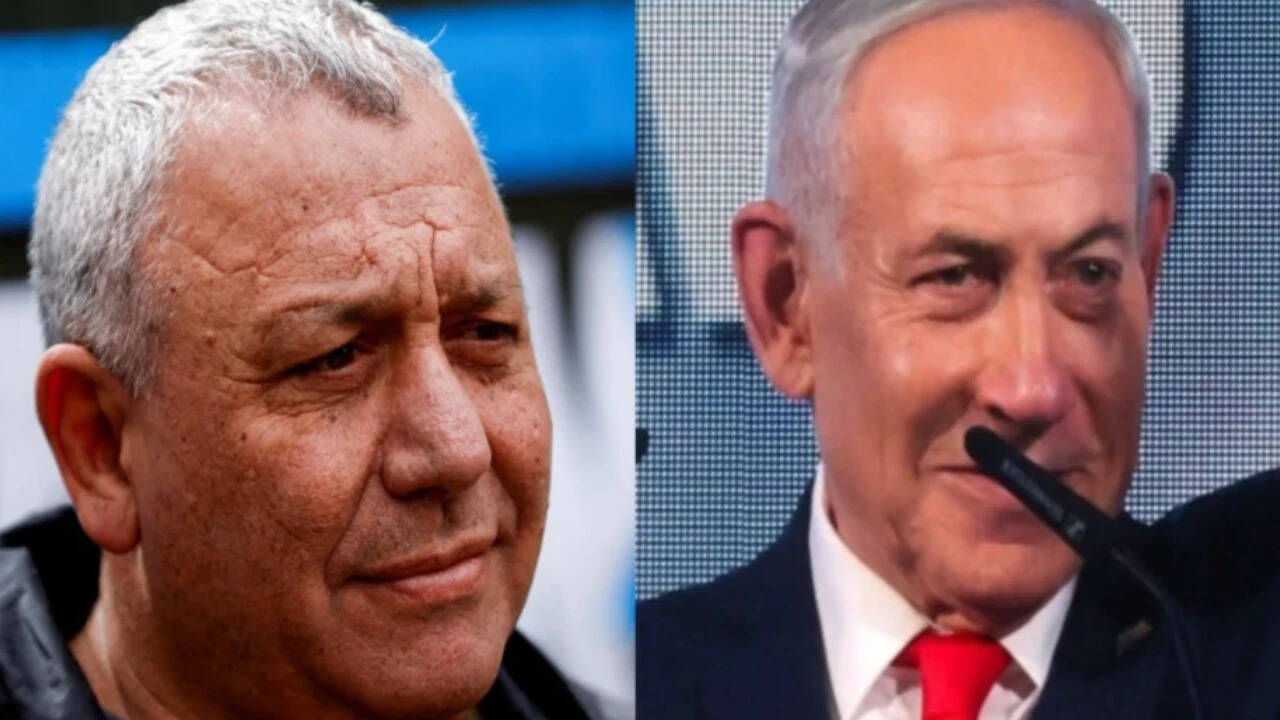
No breakthrough in Netanyahu-Eisenkot meeting on Israel govt; further talks unlikely
Israeli Prime Minister Benjamin Netanyahu's attempt to form a national unity government with political rival Gadi Eisenkot appeared to hit a dead end on Sunday, after a two-hour meeting failed to bridge differences between the two sides.No further meetings are expected, leaving Eisenkot to focus on forming a government with his existing political partners and seeking support from other parties to secure a parliamentary majority.The meeting in Tel Aviv came a day after Netanyahu offered to serve as the second prime minister in a rotation agreement, allowing Eisenkot to lead a potential unity government initially.
The proposal was aimed at breaking the political deadlock following the inconclusive October 27 election, which left neither leader with a clear path to power.The discussions began with a security briefing at the Kirya military headquarters before turning to government formation. Former strategic affairs minister Ron Dermer, who is reportedly mediating the negotiations, also joined the meeting.In a joint statement, Likud and Eisenkot's Yashar party described the discussions as "businesslike", saying both sides had sought to bridge the "substantial gaps" between them.However, the meeting failed to produce an agreement.
According to The Times of Israel citing Hebrew media reports, serious differences persisted, with no further meetings between the negotiating teams planned.Eisenkot reportedly told Netanyahu that he remained committed to his existing political partners and that Likud and its allies could join the government after its formation, provided they accepted its guiding principles.Netanyahu's offer came as Eisenkot appeared to be making progress towards forming a government without Likud.
The Yashar leader had given Netanyahu 24 hours to demonstrate his seriousness about joining a unity government after the prime minister announced he was willing to serve second in a rotation arrangement.The offer also came amid growing pressure on Netanyahu after his bloc lost its parliamentary majority in the October 27 election.However, the proposal faced resistance from within Eisenkot's bloc.
Avigdor Liberman and Yair Golan, whose parties have already signed coalition agreements with Yashar, have opposed joining a unity government with Netanyahu.Likud sources accused Eisenkot of not being interested in a unity arrangement, arguing that his refusal to accept Netanyahu as the second prime minister showed he was focused on forming a government without Likud, The Jerusalem Post reported.What are Eisenkot's options now?With the unity government route appearing increasingly unlikely, Eisenkot is expected to concentrate on putting together a coalition with his existing partners and securing support from other political groups.His Yashar party has already signed coalition agreements with Yair Golan's Democrats and Avigdor Liberman's Yisrael Beiteinu.
Together with Yashar, the bloc has 48 seats in the 120-member Knesset, well short of the 61 required for a majority.Netanyahu's Likud and its alliance of far-right and ultra-Orthodox parties have 53 seats.Eisenkot could now seek support from ultra-Orthodox Jewish parties, Arab parties or a combination of both. Another possibility is a minority government, according to The Jerusalem Post.Meanwhile, parallel negotiations between Yashar and Naftali Bennett's B'Yachad party continued on Sunday.
Bennett is the only leader in Eisenkot's bloc to have openly backed a unity government with Likud. He has supported the proposal for Netanyahu to serve second in a rotation arrangement.However, military conscription for ultra-Orthodox Jews remains a key sticking point in the negotiations between Bennett and Eisenkot's teams.Eisenkot is under pressure to move quickly. President Isaac Herzog tasked him with forming the government on November 8, giving him until December 6 to complete the process.
He can seek a further 14-day extension if required.You use AI every day. Now get your AI Quotient. Take the AIQ test.