Women are earning, but who controls their money? India's financial literacy divide
“He died at 40. She couldn't even access his digital life.”A wealth adviser recounted the story of a client who did not know her husband's banking passwords and was “forced into an exhausting battle, navigating government offices, collecting countless documents, and fighting for basic entitlements.”In Kolhapur, a 27-year-old widow allegedly lost access to Rs 70 lakh in insurance proceeds and gratuity after her husband's death, as she "trusted" her family in financial decisions.
Elsewhere, even an established author and retired professor, 75-year-old Alice Stone Nakhimovsky, struggled to understand her family's finances after her husband's sudden death, despite their having saved more than $1 million.These examples, different as they are, expose a common vulnerability; when women are excluded from financial decisions or lack access to information about their household's money, a crisis can leave them struggling to understand, access or protect their own financial future.
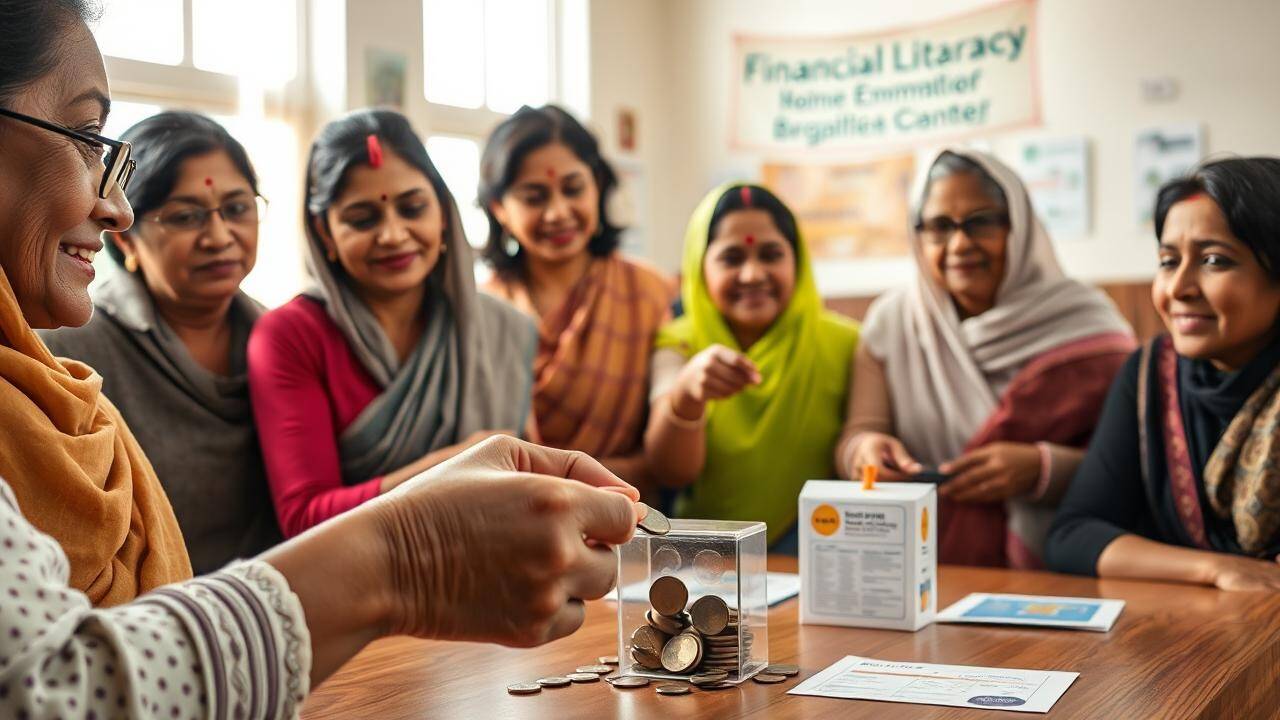
They are not isolated cases. Situations like these are more common.Although women in India are increasingly participating in the formal financial system. More have bank accounts, are saving, borrowing and using digital payment platforms. But access to financial services does not necessarily mean they understand financial products, feel confident making investment decisions or have control over how their money is used.In many households, women may manage monthly expenses, household budgets and routine transactions, while decisions on investments, insurance, property and long-term savings are left to husbands, fathers or other male family members.
Even women who earn an income may not always have an equal say in how it is saved or invested.The gap is not simply about whether women can access financial services. It is also about whether they have the knowledge, confidence and opportunity to make informed financial decisions.The World Bank's Global Findex 2025 database, based on data collected in 2024 (latest available with the organisation), offers a picture of this divide.
Bank account ownership stood at 89.2 per cent among women in India, marginally higher than the 88.8 per cent recorded among men. However, the share of women who saved formally in the preceding year was 22.8 per cent, compared with 31.1 per cent of men. Digital payment use also showed a gap, at 36 per cent among women against 54 per cent among men.(function{function e{window.addEventListener(`message`,function(e){if(e.data[`datawrapper-height`]!==void 0){var t=document.querySelectorAll(`iframe`);for(var n in e.data[`datawrapper-height`])for(var r=0,i;i=t[r];r++)if(i.contentWindow===e.source){var a=e.data[`datawrapper-height`][n]+`px`;i.style.height=a}}})}e});These figures measure financial access and participation rather than financial literacy directly.
But they indicate that having an account does not automatically translate into equal engagement with formal financial services.There are signs of progress though. A report released in April 2026 by NITI Aayog's Women Entrepreneurship Platform, TransUnion CIBIL and MicroSave Consulting found that credit penetration among women aged 18 to 64 rose from 1 per cent in 2017 to 36 per cent in 2025.Yet borrowing, saving and making digital transactions are only parts of financial participation.
Understanding interest rates, comparing financial products, assessing risk, planning for retirement and knowing how to protect one's money are equally important.Why women hesitateThe reasons for the divide go beyond a lack of access to information. Social conditioning, family roles and limited opportunities to participate in financial decisions can shape how women view their own capabilities.Anooshka Soham Bathwal, CEO and founder of Dhanvesttor, believes the issue is rooted in habits developed over generations, rather than an inability to understand money.
“This issue relates to habits formed through the course of history, rather than the skills possessed by women.”She said women have traditionally been associated with managing household budgets and running families, while men have often taken the lead in earning and handling investments. This division can leave women capable of managing everyday money but hesitant when making investment decisions.The distinction between earning money and controlling it is central to the problem.
“There are two sides to the question – earning money and controlling that money are two entirely distinct aspects.”Women may contribute significantly to household income but have limited involvement in deciding how that money is saved, invested or used to build long-term security. Others may not earn an independent income but manage household budgets and make decisions that affect the family's financial health.Neither role should exclude women from financial discussions.
Financial literacy must involve not only understanding investment options but also developing the confidence to make choices about personal finances.The March 2026 study by DBS Bank India and Deloitte, which surveyed 1,342 women across different segments, offers some insight into this relationship between financial confidence and decision-making. It found that 69 per cent of the female entrepreneurs surveyed identified themselves as the primary financial decision-makers.
The corresponding figures were 60 per cent among rural women earners and 58 per cent among high-net-worth women.Consequences of being financially unpreparedThe consequences of limited financial knowledge or control may become most visible when a household faces a major change: the death of a spouse, separation, divorce, illness, loss of income or an unexpected expense.A woman who has not been involved in decisions about investments, loans, insurance or savings may suddenly have to manage them while dealing with emotional stress or uncertainty.
She may also have to establish what assets exist, understand liabilities, access financial documents and determine whether…