Tests reveal Roman coffin at Westminster Abbey may hold medieval abbot
A centuries-old archaeological puzzle at Westminster Abbey in London may finally be nearing a resolution, with new research suggesting that a skeleton discovered inside a Roman stone coffin belonged to a medieval abbot rather than the Roman-era man named on its inscription. According to an announcement by Westminster Abbey and reports by The Guardian and Live Science published on October 21, 2026, archaeologists have identified two possible candidates for the burial, with one emerging as the likelier match.
The limestone sarcophagus was officially excavated in 1869, although it had reportedly been uncovered during building work decades earlier. Its inscription commemorates Valerius Amandinus, a wealthy Briton who lived during the fourth century. However, a large Christian cross carved into the lid belongs to a much later period, raising questions about when the coffin was reused and who was eventually buried inside it.A Roman coffin with a medieval secretThe contrast between the inscription and the cross provided an early clue that the sarcophagus had served more than one purpose.
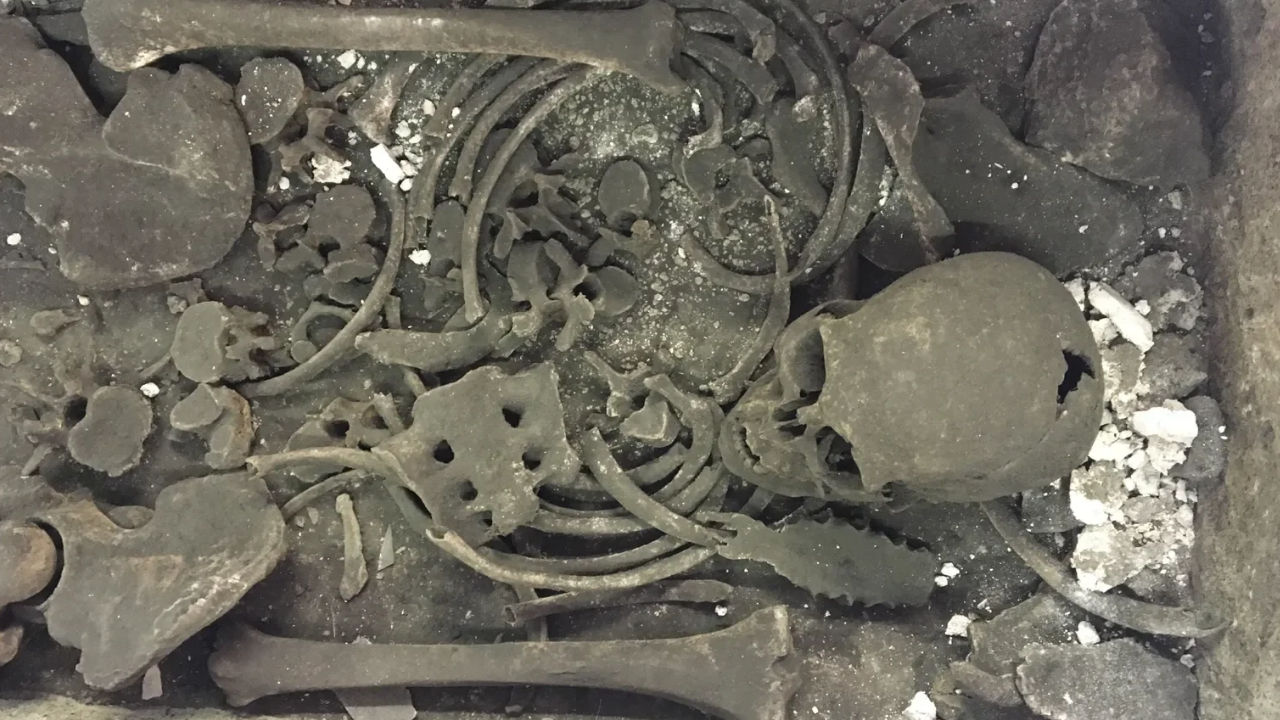
While its original construction dates to the Roman period, the cross was carved during the late Anglo-Saxon era, around the 10th or 11th century. The coffin had also suffered damage and was reportedly looted before its contents could be properly investigated. For years, researchers believed the skeleton might no longer survive. That assumption changed in 2016, when the sarcophagus was opened at a conservation studio and an almost complete human skeleton was discovered inside.
The remains were subsequently examined by specialists, including human bone expert James Young Langthorne of Pre-Construct Archaeology. Their findings, discussed in a new study by Westminster Abbey’s consulting archaeologist, Warwick Rodwell, have helped establish the burial’s likely date and the status of the individual.What the skeleton revealedAnalysis indicated that the remains belonged to a man who was approximately 35 to 49 years old and around 5 feet 9 inches tall.
Examination of the bones also identified signs of osteoarthritis, gout and two healed rib fractures. Radiocarbon dating placed the man’s remains between AD 987 and 1052, firmly establishing that he lived centuries after the Roman sarcophagus was made. The results support the conclusion that the coffin was repurposed during the late Anglo-Saxon period.Researchers also identified traces of a rectangular structure inside the stone coffin, marked by a white residue associated with lime.
Rodwell’s analysis suggests that the deceased was originally placed in a wooden coffin inside the much older stone sarcophagus. The wooden structure eventually decayed, leaving behind evidence of its former outline. The reuse of an elaborate Roman burial container for a medieval religious figure may also help explain why the individual received such a substantial burial.Two abbots emerge as possible identitiesIn his study, published in the Journal of the British Archaeological Association, Rodwell narrowed the possible identities to two former leaders of Westminster’s Benedictine monastery: Ælfwig and his successor, Wulfnoth.
Ælfwig served as abbot from 993 to around 1020, while Wulfnoth held the position from approximately 1020 until 1049. Both lived within the period indicated by the radiocarbon results and are considered plausible candidates for the burial.Ælfwig is regarded as the stronger possibility because he was already a monk at Westminster before becoming abbot. However, the available archaeological evidence does not establish the deceased’s identity beyond doubt, and Wulfnoth remains a viable alternative.
The lack of surviving grave goods makes a definitive identification more difficult. Any objects that might once have accompanied the burial may have disappeared during the earlier disturbance of the tomb.A mystery preserved at Westminster AbbeyThe findings add another chapter to the history of a sarcophagus that has survived repeated discoveries, damage and conservation work. Investigations into the abbey’s former sacristy area, including archaeological work undertaken by Pre-Construct Archaeology, have helped researchers reconstruct the circumstances surrounding its burial and eventual rediscovery.Today, the sarcophagus is displayed in Westminster Abbey’s Queen’s Diamond Jubilee Galleries, where visitors can see the Roman inscription and the medieval cross that helped trigger the investigation.
Although the identity of the man remains uncertain, the new research provides a clearer picture of his likely place in history: a high-ranking religious figure buried in an ancient stone coffin that had already survived several centuries before it was reused.