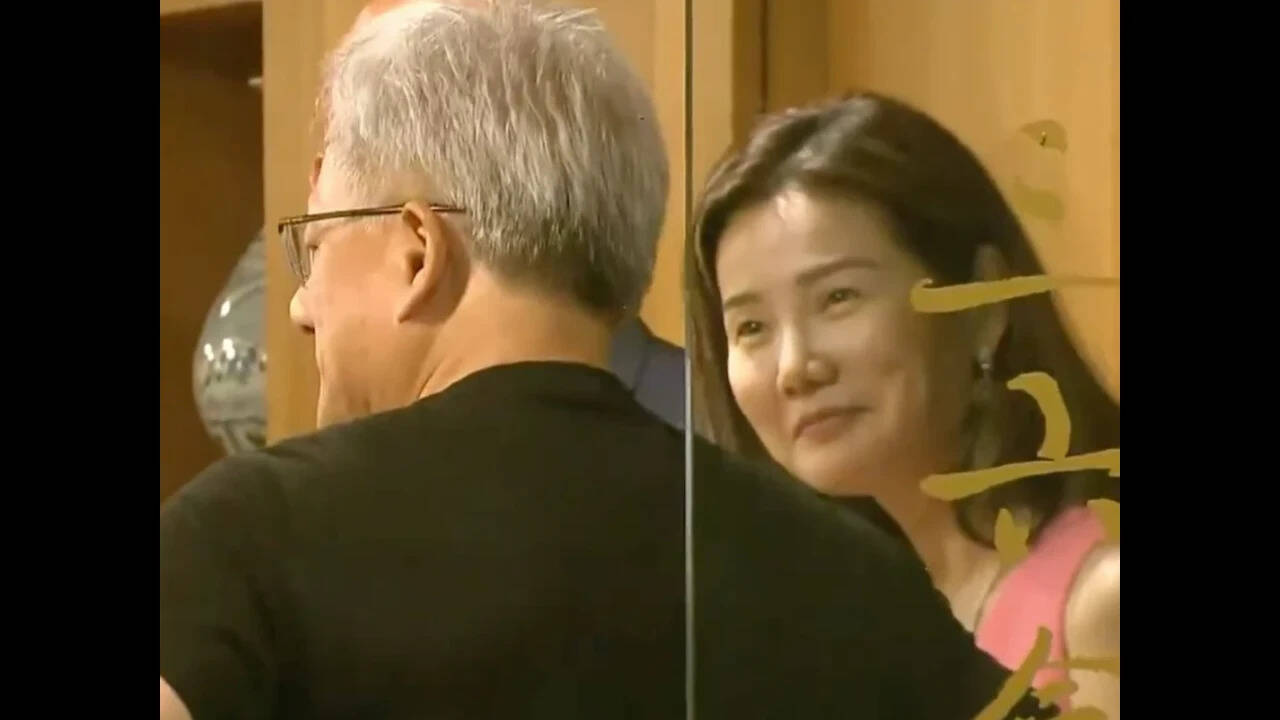
China warns US over Jensen Huang’s relationship, says stop ‘fabricating’ spy claims
China has now warned US to not use former Nvidia chief executive Jensen Huang’s relationship with an alleged Chinese spy as a pretext to tighten export restrictions on critical technologies, according to a report by Financial Times. “The US should stop fabricating so-called espionage narratives to find excuses for imposing a technological blockade,” Chinese foreign ministry spokesperson Mao Ning told reporters in Beijing on Thursday.
She said China’s technological progress relies on “independent innovation and open co-operation,” and that Beijing remains willing to build constructive strategic stability with the US.Jensen Huang’s resignationHer comments came hours before Huang stepped down. Jensen Huang has resigned as Nvidia’s President and CEO and has also left the company’s board, with immediate effect. Nvidia’s board announced his exit on Thursday, November 12, and named Chief Financial Officer Colette Kress as interim CEO.
Kress will keep her CFO role until the board finds a permanent replacement.The resignation follows weeks of mounting pressure on the 63-year-old, who co-founded Nvidia in 1993 and led it through the AI boom. On Sunday, November 8, Huang admitted to an extramarital affair with Alice Huang, a former executive at Singapore-based data centre firm Megaspeed. US officials reportedly suspect her of spying for China.
On Wednesday, fresh reports said he had also had a relationship with a married healthcare executive at Nvidia who reported to him. Nvidia’s announcement does not give a reason for his exit.Nvidia’s China problemThe crisis at the world’s most valuable chip design group is forcing a rethink of China’s access to chips critical to AI development, the FT said. Nvidia is banned from selling its most advanced chips to China, and the trade is further complicated by Beijing’s own restrictions on Nvidia chip imports as it pushes for semiconductor self-sufficiency.The scandal also threatens a fragile trade truce between the two largest economies.
Donald Trump and Xi Jinping are expected to meet in Shenzhen next week, where China is hosting the Asia-Pacific Economic Cooperation summit. The US warned China this week that it must meet the terms of the truce the leaders agreed in South Korea last year, which expires on January 10.Analysts: ammunition for hawksZhu Feng, an international relations expert at Nanjing University, said Trump’s enemies could use the controversy to “demonise” his China policy, which he called “very worrying.” Another scholar at a Chinese think-tank who advises Beijing, speaking anonymously, said there was concern that the allegations would shape Washington’s approach and give ammunition to hawks who want broader export controls.Homin Lee, senior macro strategist at Lombard Odier, said the affair had a “clear impact on Washington DC dialogue on export controls.” He said it adds pressure on China’s industry, which still depends heavily on Nvidia chips and its Cuda software platform for building AI models.
A complete split of the Chinese ecosystem from the US would be “a huge threat” to Nvidia over the longer term, he said.Chinese tech shares fallShares in Chinese tech companies that depend on Nvidia chips fell on Thursday. Alibaba dropped 6.8%. Hong Kong-listed model providers Z.ai and MiniMax sank more than 9% and nearly 8%. Nvidia’s own shares fell 13.4% after the open, according to AIStockWire.Your child uses AI every day.
But do they understand it? Find out in the TOI AI Masterclass.