Trump’s heir, but not his echo: JD Vance, Iran and the limits of loyalty
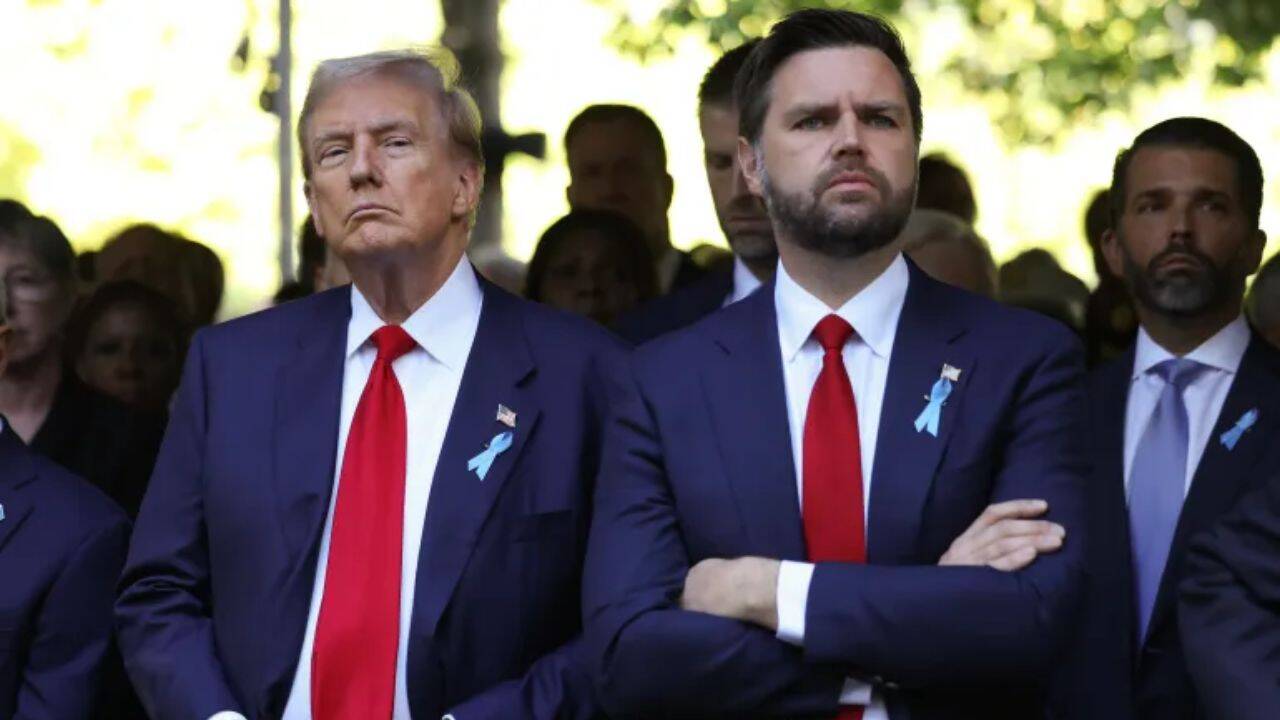
When Donald Trump picked JD Vance as his running mate in 2024, he chose a politician who had once described him as “America’s Hitler”. Two years later, Vance is not only the US vice-president but is also frequently discussed as a possible successor to Trump and the Republican Party’s “America First” movement.The transformation has been striking. Vance has embraced much of Trump’s political agenda, from economic nationalism and restrictive immigration policies to scepticism towards America’s overseas commitments.
Yet the war with Iran has demonstrated that the two men do not always share the same instincts on how that agenda should be pursued.Vance has generally been more sceptical of prolonged military involvement. He has also sought to place greater emphasis on the domestic and economic consequences of foreign policy. These differences do not necessarily amount to a break with Trumpism.
But they offer an indication of how Vance might seek to define the movement if he eventually has to lead it without Trump.From critic to political heirVance’s transformation is central to understanding his relationship with Trump. In a report published in July 2024, Reuters recalled that Vance had publicly called Trump an “idiot” and described him as “reprehensible” during the 2016 presidential campaign.
Reuters also reported that Vance had privately compared Trump to Adolf Hitler.By the time Trump selected him as his running mate in 2024, however, Vance had become one of his most prominent defenders. Reuters described the choice as a signal that Trump wanted his Make America Great Again (MAGA) movement to continue beyond his own presidency. Vance was increasingly being viewed within the Republican Party as a possible inheritor of that political project.The ideological overlap is visible across several policy areas.
Both men have challenged the traditional Republican preference for free trade, advocated tougher immigration enforcement and questioned the scale of America’s international commitments.For Vance, economic nationalism is also about the position of American workers. His criticism of multinational corporations and the movement of manufacturing overseas fits into the broader argument that the US should prioritise domestic industry over the interests of global markets.
This is a central theme of Trump’s political appeal as well.Ukraine: a more pronounced scepticismForeign policy is where Vance’s views have, at times, been more clearly defined than Trump’s. Both have questioned the scale of American support for Ukraine and argued for an end to the war through negotiations. But Vance has been a more consistent and vocal opponent of continued US assistance.In an interview in 2022, Vance said: “I don't really care what happens to Ukraine one way or the other.” Reuters quoted the remark in its July 2024 assessment of his foreign-policy positions.
The agency also reported that Vance had argued Ukraine had little chance of regaining all the territory occupied by Russia and that American resources should instead be directed towards issues such as the US-Mexico border and competition with China.Trump, too, has expressed scepticism about US aid to Kyiv and promised to end the conflict through negotiations. However, Reuters noted that, unlike Vance, Trump had not explicitly opposed the congressional aid package for Ukraine passed in April 2024.Their preference for a negotiated settlement may overlap, but Vance’s opposition to American involvement has been more categorical.
It is therefore important not to treat their positions as identical.Vance’s wider scepticism towards overseas military commitments was also evident before he became vice-president. In a 2023 opinion article for The Wall Street Journal, he praised Trump for not starting wars during his first term. The Associated Press later cited Vance’s explanation for supporting Trump: “I know he won't recklessly send Americans to fight overseas.”Iran: Where the differences became visibleThe US-Israeli military campaign against Iran in February 2026 brought Vance’s foreign-policy instincts into sharper focus.Trump argued that military action was necessary to prevent Tehran from acquiring a nuclear weapon.
Vance supported that stated objective, but the president himself acknowledged that the two had approached the decision differently.At a news conference on March 9, Trump said Vance was “philosophically a little bit different than me” and had been “maybe less enthusiastic about going” to war. Trump added: “I felt it was something we had to do. I didn't feel we had a choice.” The remarks were reported by the Associated Press.Vance’s reservations had also been evident before the strikes.
He had told The Washington Post that there was “no chance” the United States would become involved in a prolonged conflict similar to the Iraq war, Reuters and AP reported.Once the operation began, however, Vance publicly backed the president. In an interview with Fox News, he defended the administration’s approach by arguing that Trump had clearly defined the military objectives.“What's so different about this, Jesse, is that the president has clearly defined what he wants to accomplish,” Vance told Fox News, according to the Associated Press.Vance’s role in the conflict later extended to diplomacy.
He became a central figure in efforts to negotiate an end to the fighting and defended the preliminary agreement reached with Tehran. In June, he presented the agreement as a success, pointing to its potential economic benefits, including lower fuel prices and the resumption of shipping through the Strait of Hormuz.Trump publicly joked about the political risks of giving his vice-president responsibility for the negotiations.
“If it works out, I'm going to take the credit. If it doesn't work out, I'm blaming JD,” Trump said on June 17, according to the Associated Press.The agreement did not bring a lasting end to the conflict. On November 2, Vance told reporters that he and Tr…