The tank was once king of the battlefield, drones have changed the rules, and India is adapting
Achtung Panzer! (beware the tank) the phrase sums up the terror the tank has caused on those facing it. What is more interesting is that the phrase originated from an eponymous book of the same name. The book in question here was written by non other than Heinz Guderian, a pioneer of the combined arms approach that kept the tank as the spearhead of the attack. This type of an attack was called 'Blitzkrieg' or lightning war.
Since its introduction at the Somme offensive in 1916, the tank gained a mythical status of an invincible machine of war. This view that the 'tank will always get through' was shattered recently in 2022, when Ukraine halted the Russian juggernaut. The Indian Army is seeking from domestic industry a set of solutions that will keep the current fleet of tanks and infantry fighting vehiclesTanks have remained a central component of land warfare for more than a century, combining firepower, mobility and protection.
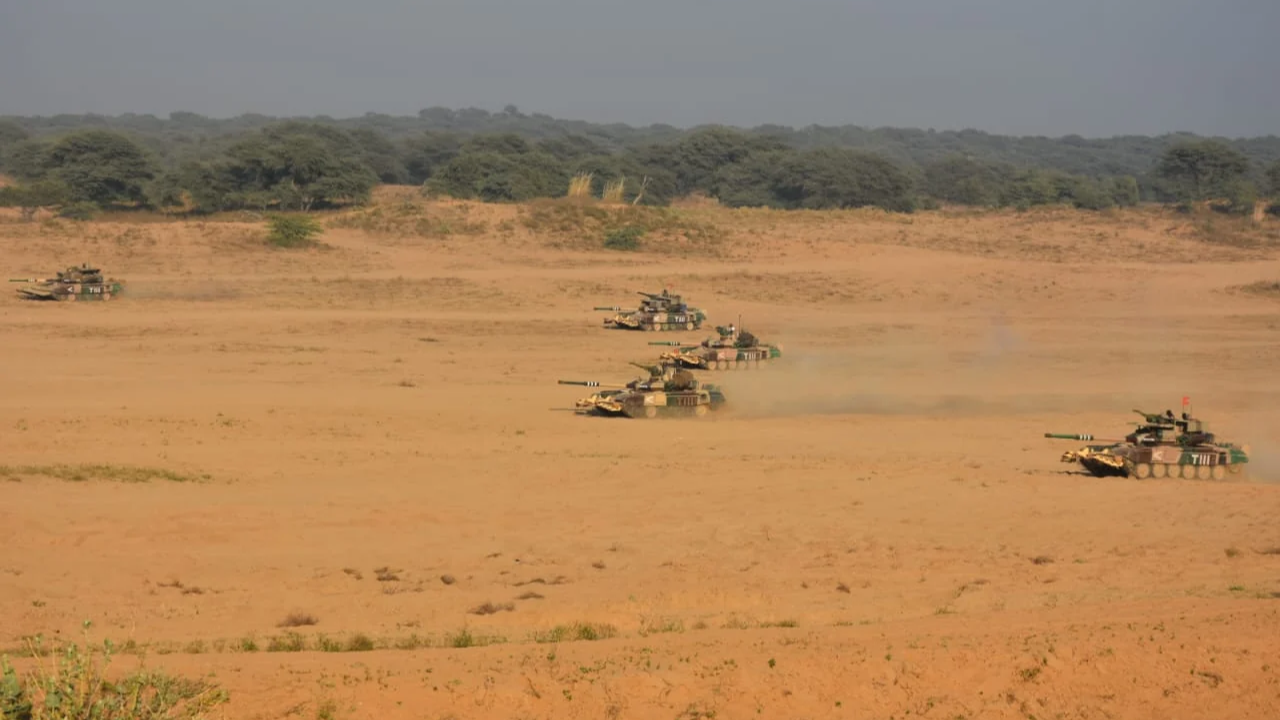
Despite advances in anti-tank weapons, precision-guided munitions and unmanned aerial systems, they still play an important role in mechanised operations. Unlike artillery, which generally fires from a distance, tanks can move ahead of advancing troops, engage targets directly and provide sustained fire support and their armour lets crews operate where lightly protected vehicles and dismounted troops would face greater exposure.Military history teaches us that weapons rarely become obsolete simply because new technologies emerge.
They become obsolete only when forces fail to adapt their doctrines to the changing character of warfare. Look at how we used our Gnat fighters against the most advanced aircraft of the era during both the 1965 and 1971 wars. We also used the much weaker AMX-13 tanks to blunt Pakistani advance Operation Grand Slam in 1965.The battlefield is becoming increasingly transparent, but tanks are not disappearing from it.
From the plains of western India to the high-altitude terrain of Eastern Ladakh, armoured vehicles have been central to the army's ability to deliver firepower, protect troops and hold territory. Yet the war in Ukraine has exposed a growing vulnerability, tanks once protected by their armour and mobility can now be detected, tracked and attacked by relatively inexpensive drones, loitering munitions and precision-guided weapons, that too at much greater distances.What armour has done for IndiaIndia's military history shows why armour matters.
In the 1947-48 war in Jammu and Kashmir, Stuart light tanks of 7th Light Cavalry were dismantled, carried towards the Zoji La sector, reassembled and used in Operation Bison in November 1948. Their use in terrain thought unsuitable for armour helped Indian forces recapture the pass. In 1965, the battles of Asal Uttar and Phillora showed the offensive power of armoured formations and the importance of terrain and combined-arms tactics.
In 1971, at Basantar in the Shakargarh sector, 17 Poona Horse, equipped with Centurion tanks, helped repel Pakistani armoured counterattacks and protect a bridgehead across the river. In the east, PT-76 light tanks demonstrated their amphibious capabilities, out foxing and out flanking their Pakistani foes; paving their own road to Dhaka.In 2020, the Army moved T-72 and T-90 tanks and BMP-II infantry combat vehicles to high-altitude locations along the Line of Actual Control (LAC) in eastern Ladakh.
It meant keeping vehicles, crews, fuel, ammunition and repair facilities going in sub-zero temperatures with limited infrastructure, and it showed that tanks can serve as a means of deterrence as well as offence.What Ukraine conflict has changedBoth Russian and Ukrainian forces have used first-person-view (FPV) drones, reconnaissance UAVs and loitering munitions to find and attack tanks, often together with artillery and anti-tank guided missiles.
A tank spotted by a reconnaissance drone can soon be hit by artillery, a loitering munition or a missile and persistent aerial surveillance makes it hard for armour to move, concentrate or stay in exposed positions. The withdrawal of US-supplied M1A1 Abrams tanks from frontline deployment in Ukraine in 2024 brought fresh attention to the vulnerability of conventional platforms.
The lesson is not that tanks are irrelevant, but that employing them has become more demanding.How India is seeking to retain its combat edgeFor the Indian Army, this has meant looking at ways to adapt its existing T-72 and T-90 tanks and BMP-II vehicles through unmanned systems, Artificial Intelligence (AI), better firepower, electronic warfare and new forms of protection. The aim is not to replace tanks with unmanned systems, but to connect them to a wider network of drones, sensors and weapons.Unmanned systems and firepowerThe first focus is integrating drones and loitering munitions with tanks.
The Army wants a tank-launched UAV system for the T-72, controlled from the turret, that gives commanders a live video feed to spot concealed enemy armour and anti-tank missile positions. It also seeks an operator-authorised terminal attack capability for loitering munitions, so a crew can engage a target it has identified, subject to human authorisation. The Mechanised Infantry wants a tactical loitering weapon system for the BMP-II that can launch and control a UAV swarm, particularly in canal crossings and bridgehead operations on the western front.
An indigenous unmanned ground vehicle for minefield reconnaissance and breaching, able to work in GPS-denied conditions, is also on the list, along with software that combines drone activity and terrain data to help vehicles pick concealed routes.The second area is firepower. The Army is looking at an AI-based target recognition system for the T-72's fire control, using thermal imagery to detect, classify and track enemy armour, with firing decisions left to humans.
It is considering a faster autoloader for the T-90 and indigenous control units for the autoloaders of the T-90 and T-72, the KR-185 and KR-…