Pacific garbage patch may be changing ocean's colour, satellite study finds
Far out in the North Pacific Ocean, a floating mass of rubbish may be doing more than polluting the water. New research suggests that these tiny plastic particles could be altering how sunlight scatters across the ocean, creating a subtle blue-green tint that satellites have detected over two decades. The particles responsible are too small to see from orbit. "We were shocked, excited, and a little alarmed to see the same shift in ocean colour on the map after we analysed the first satellite dataset of the garbage patch," ocean optics specialist Shea Cheatham of the University of Bergen in Norway told ScienceAlert.
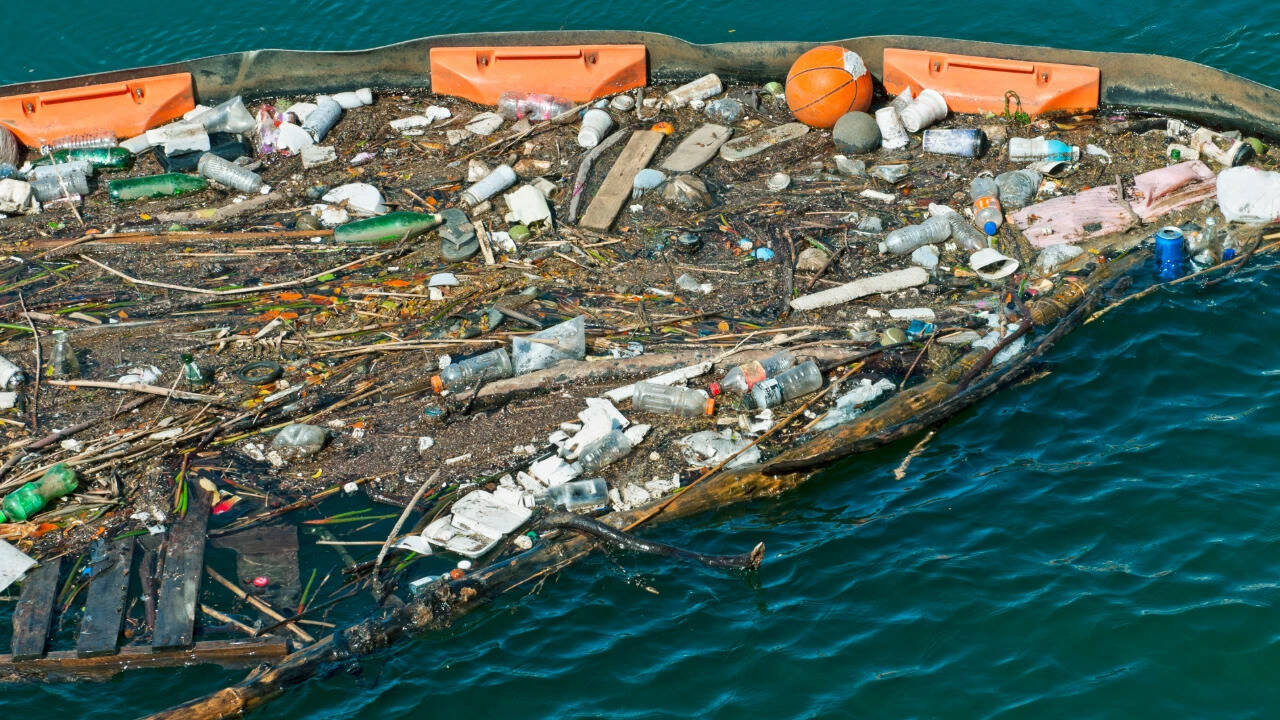
The findings of the study are published in the journal Communications Earth & Environment.A garbage patch that's turning the ocean bluerThe Great Pacific Garbage Patch sits inside a slow, circular system of currents called a gyre, which gathers plastic from a huge area. Its size is roughly twice that of Texas. Despite the name, it isn't one island of junk. The debris is so thinly spread that satellites had never picked it up.Counting pieces gives a clearer picture.
Tiny microplastic fragments make up about 94 per cent of the pieces floating there, yet they account for only about 8 per cent of its weight.Scientists at the University of Bergen in Norway, including Shea Cheatham, Daniel Koestner and Børge Hamre, didn't start with the sea. They first looked at how microplastics absorb and scatter light. Then they compared those properties with those of natural materials in seawater, such as phytoplankton and minerals.
Their models suggested that the effect could show up at concentrations similar to those in the patch.Following this, they analysed satellite records from 2002 to 2022. Near the patch, they found a small but statistically significant brightening in blue and green wavelengths. Over the years, the water took on a gradually intensifying cyan tint, which matched the pattern their models had predicted."Our first reaction was disbelief, which is what led us to check two other satellite datasets just to convince ourselves that it was even remotely possible that we could be seeing the same signature evident in our models," Cheatham told the outlet.Plenty of things can change how the ocean looks.
For instance, phytoplankton tends to make water greener, and dissolved organic matter can make it darker. Mineral dust can brighten the sea too, but it's more common in coastal waters. Measurements from a nearby research station showed that dust levels stayed steady during the study period. The researchers did find that certain natural changes could produce a similar signal. Those scenarios were rare in their simulations, though, making microplastics the strongest explanation.The current evidence points towards microplastics; however, it doesn't settle the question.
Cheatham and her colleagues want to take optical measurements of seawater samples from inside the patch. "To fully answer the question of whether microplastics themselves are the root cause of this ocean colour shift, we will need to go to the garbage patch to make optical measurements of water samples and quantify the microplastics present," Cheatham said.So what can be done? Well, cleaning up the rubbish is a separate problem.
Although trained professionals can pull out large debris, the tiny fragments are much harder to remove. Cheatham put it plainly: "At present, the only way to reduce microplastic pollution is to prevent it from entering the water in the first place."Microplastics not only change the ocean's colour but are also the "most likely to enter the base of the marine food web and end up on your plate", the researchers cautioned.