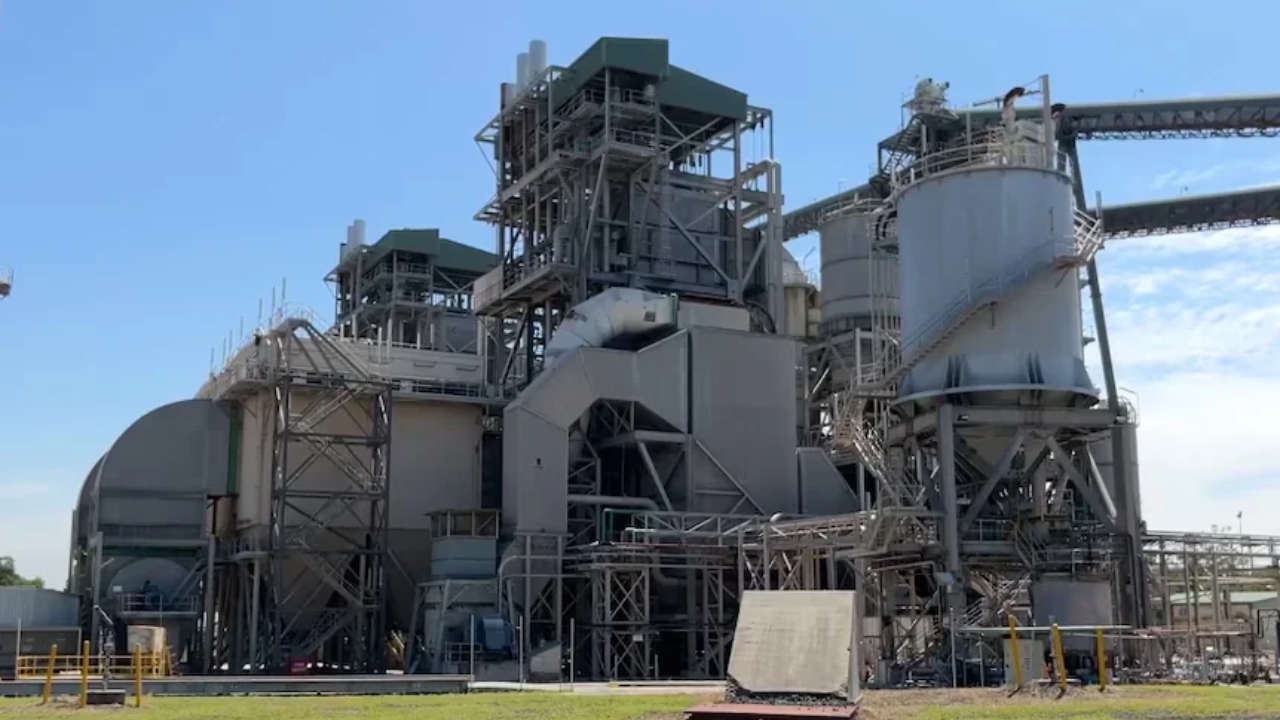
Australian coal plant's 200,000-home biomass plan rejected; court upholds ruling
A long-running proposal to convert an ageing coal-fired power station in Australia's Hunter Valley into a biomass facility capable of supplying electricity to 200,000 homes has suffered another setback after a court upheld the rejection of the project over environmental concerns.The New South Wales Land and Environment Court dismissed an appeal by Verdant Earth Technologies against the refusal to restart the former Redbank Power Station near Singleton, according to Bioenergy Insight.
The ruling upholds a decision made last year by the NSW Independent Planning Commission (IPC), which found that the project's environmental consequences outweighed its potential benefits.Verdant Earth has owned the site since 2018 and had been pursuing plans to establish a bioenergy hub at the former coal plant. The proposed 151-megawatt facility was expected to burn approximately 700,000 tonnes of dry material annually, using invasive native vegetation cleared from farmland in western New South Wales alongside purpose-grown energy crops.The company had estimated that the development would require more than A$70 million in capital investment.
Its submission to state planners also projected 330 jobs during construction and 60 permanent positions once the facility became operational.Although the IPC acknowledged the project's potential contribution to electricity security, grid reliability and employment, it ultimately refused approval because of its environmental impact.Why the biomass project faced environmental oppositionThe court's decision has been welcomed by conservation groups, which had opposed the proposed use of native vegetation as a fuel source.Jacqui Mumford, chief executive of the Nature Conservation Council of NSW (NCC), said she hoped the ruling would end efforts to restart the Redbank facility."It was a bad project from the start," Mumford said.She argued that using native vegetation to generate electricity could encourage landholders to clear bushland to meet the plant's fuel requirements, increasing pressure on threatened wildlife and vulnerable ecosystems.The NCC chief executive also challenged the classification of invasive native species (INS), arguing that it was not based on scientific grounds.
She said the organisation planned to push for changes to the state's INS legislation ahead of the March state election."It's a completely political and unscientific classification; no other state or territory in Australia has the INS classification," Mumford said.The proposed fuel supply was a central part of the disagreement. Verdant Earth had planned to use vegetation removed under government-approved land-clearing programmes, alongside purpose-grown crops.
Conservation groups argued that this approach could create an incentive to clear additional native bushland.Company considers alternatives after court setbackVerdant Earth chief executive Richard Poole said he was surprised by the court's decision and had not yet reviewed the full judgment."I'm a full believer in biomass as an absolute solution for Australia's energy problems," Poole told ABC News.He said the company had reached agreements over the previous 12 months to reduce its dependence on invasive native species and accelerate plans to lower the project's emissions.Poole argued that the revised proposal should have been considered for approval, particularly because the vegetation clearing involved was part of a government-approved programme.
He also pointed to the value of the existing power station equipment, which he estimated at approximately A$800 million.The court ruling has also created uncertainty around a separate proposal involving the former power station site. Verdant Earth had entered discussions with Voltic DC, a data centre developer managed by APDC, over a possible facility on neighbouring land.The arrangement was expected to explore shared infrastructure and potential electricity supply from a restarted Redbank station.
Voltic DC had indicated that the partnership could allow both companies to maximise the use of the adjoining land and existing infrastructure.Poole said the court's decision had put those plans in doubt, as the proposed data centre could have benefited from electricity generated at Redbank.The company is now considering its options, with Poole saying he would consult its legal team before deciding on the next steps.
He also raised the possibility of using the site for a data centre or battery storage facility instead.You use AI every day. Now get your AI Quotient. Take the AIQ test.