Old North Carolina iron mine now shelters five bat species; 320 acres protected
A former iron mine in North Carolina, which operated for more than 100 years, has become an important shelter for five species of bats. Its underground tunnels now provide places for bats to hibernate, including species that are rare and endangered. To protect this habitat and the forest surrounding it, a conservation group has purchased 320 acres of land around the historic mine.The Southern Appalachian Highlands Conservancy (SAHC) bought the property in 2026.
It includes the site of the historic Cranberry Iron Mine, located just south of Elk Park in Avery County. The land also contains parts of Cranberry Creek, a wild trout stream, along with smaller water sources. The protected area reaches elevations of around 3,900 feet along its western ridgeline.According to SAHC, the mine was used to extract iron ore from around 1826 until the 1930s.
Initially, most of the mining took place on the surface. However, underground mining began in the 1880s, following the arrival of the Eastern Tennessee and Western North Carolina railroad from Johnson City in 1882. The railway helped mining operations expand in the area.Although mining eventually stopped, the underground passages continued to serve a different purpose. They became important shelters for five bat species: Virginia big-eared bats, tri-coloured bats, little brown bats, big brown bats and northern long-eared bats.
The latest land purchase will strengthen protection of these underground habitats and the forest above them.How the former mine became a bat habitatThe North Carolina Wildlife Resources Commission (NCWRC) had taken steps to protect the mine's bat population before the latest purchase. In 2002, it bought the mineral rights to the Cranberry Iron Mine and received a donated conservation easement.
This arrangement was intended to protect the hibernating bats living inside the underground passages.However, the earlier conservation agreement did not cover every activity on the property. It protected the underground bat habitat but still allowed commercial timber harvesting and the construction of media towers. The land was substantially logged between 2008 and 2010, when a hardwood manufacturing company owned the property.SAHC's purchase has now brought additional land around the protected mine habitat under conservation.
The organisation plans to manage the recovering forest to improve its long-term health and maintain wildlife habitat.“This property tells a story of Appalachia from the 1800s when iron ore was mined and transported on the historic Tweetsie Railroad,” says Land Protection Director Michelle Pugliese. “The evolution of the former mine to become a safe haven for endangered bats demonstrates nature’s ability to recover and adapt.
I am excited to partner with the NC Wildlife Resources Commission to safeguard that habitat.”Why protecting bat habitats mattersBats play an important role in maintaining ecosystems and also provide benefits to humans. They help pollinate plants and control populations of pest insects. They can also help prevent the spread of mosquito-borne diseases. A nursing female bat can catch up to 4,500 mosquitoes in a single night.Bats generally become visible while searching for food during the early evening and early morning, although they remain active throughout the night.
They use echolocation to navigate and locate their prey, but they also have good eyesight.According to Katherine Etchison, statewide bat biologist for NCWRC, bats in North Carolina mate during spring or autumn and usually give birth to one young bat each year. Some species form maternity colonies during summer to raise their young, while others live and raise their offspring alone.Several species migrate south during winter.
Others remain in sheltered places called hibernacula, where they sleep through the colder months. Caves and abandoned mines are among their preferred hibernation sites. Bats can also use buildings and bridges for shelter and generally return to the same location every year when possible.Some bat species can live for 20 to 30 years in the wild. North Carolina is home to 17 bat species, of which three are federally endangered and one is federally threatened.White-nose syndrome poses a serious threatDespite their ecological importance, native bat populations are declining.
They face threats from pesticides, habitat loss and disturbances at maternity colonies and hibernation sites. One of the most serious dangers is white-nose syndrome (WNS), a fungal disease that affects bats during hibernation.The disease gets its name from the white fungal growth that appears on infected bats' muzzles. The fungus damages their wings, which are important not only for flying but also for functions such as heat exchange, circulation and maintaining water balance.The fungus grows in cold conditions and causes bats to use up their stored fat during hibernation.
As their energy reserves run out, they can die from starvation. Since WNS was first detected in the US in 2006, it has killed millions of bats. Its spread has been confirmed in 42 states and nine Canadian provinces. The disease was detected in North Carolina in 2011.Kyle Shute, SAHC's land protection associate, said protecting undisturbed winter shelters was important for bat survival.
Keeping people away from these areas also helps reduce disturbance and the risk of spreading the fungal spores.The fungus can spread through direct contact with infected bats and through contaminated environments where they roost or hibernate. People can accidentally carry it on their shoes, clothes and equipment.Mine entrances closed to prevent disturbanceTo protect the bats, NCWRC and the US Forest Service have installed steel gates at the mine entrances.
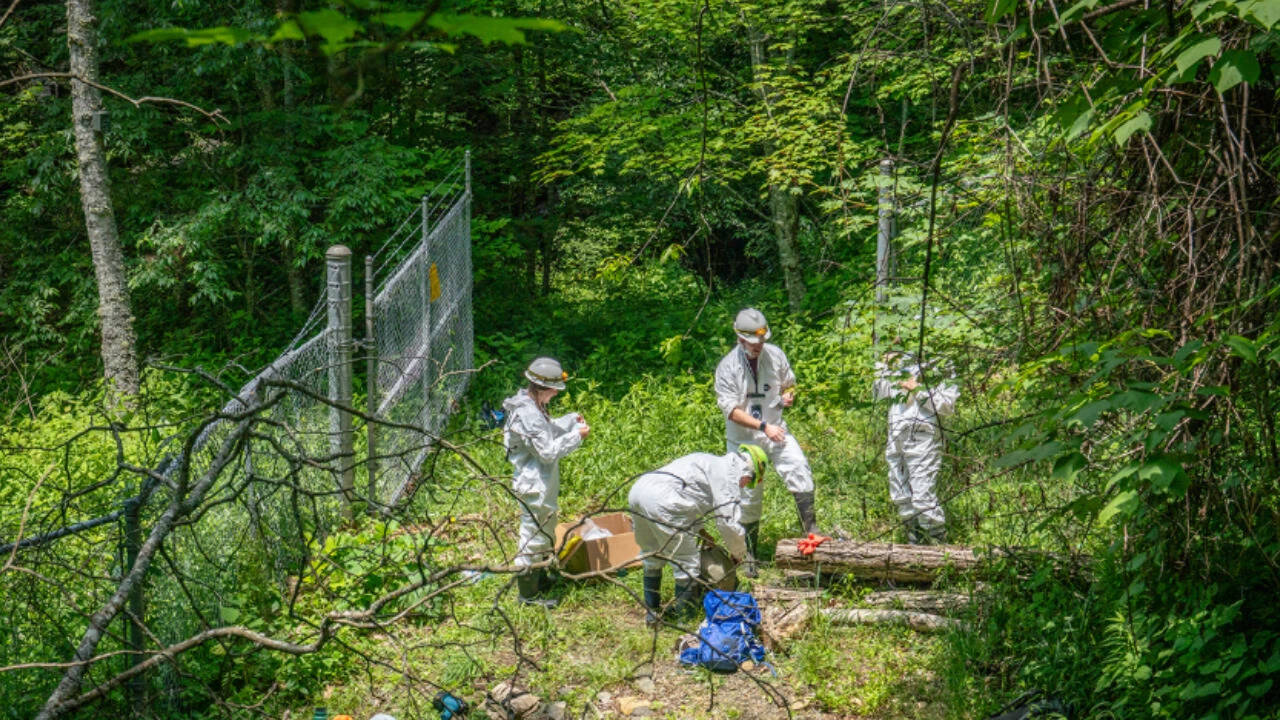
These gates allow bats to move freely in and out while preventing people from entering the tunnels.SAHC and NCWRC staff also take precautions when monitoring the habitat to avoid spreading white-nose syndrome. The organisations have fenced of…