AI godfather Yann LeCun on the real reason Anthropic CEO wants open AI models banned
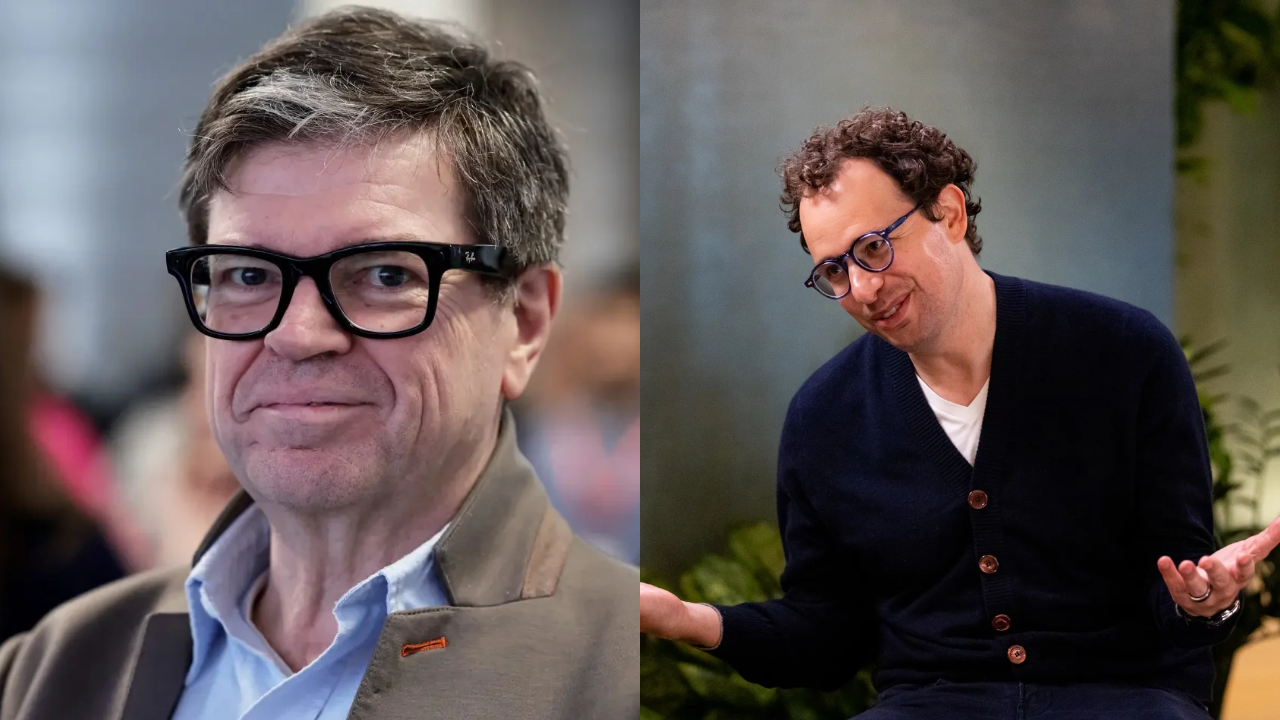
Turing Award winner Yann LeCun has accused Anthropic chief executive Dario Amodei of spending years talking up the dangers of AI so that open models would be made illegal and Anthropic would stay in charge. In a post on X, the former Meta chief AI scientist compared Amodei's stance to the Ottoman Empire banning the printing press for Arabic to keep control of religious dogma. "It stops the population from freely accessing diverse knowledge," LeCun wrote, calling it "a new form of medieval obscurantism."LeCun was responding to a video of Amodei that has been doing the rounds on X.
In it, Amodei tells US lawmakers that open-source AI is heading down a "very dangerous path". His reasoning is simple. A company that runs a closed model can watch how it is used, cut off bad actors and update its safeguards. A model released in the open can never be pulled back.The clip, however, is old. It comes from Amodei's testimony before a Senate Judiciary subcommittee in July 2023, but it is being shared as fresh, with captions claiming he believes the most advanced AI should not be put in everyone's hands.LeCun says Amodei has pushed the same line since GPT-2"Dario's spiel since GPT-2 has always been about hyping the dangers so that open models would be made illegal and he would stay in control," LeCun wrote.
He also claimed Amodei left OpenAI "because he wasn't going to have control."The GPT-2 reference goes back to 2019, when OpenAI held back the full version of that model over misuse fears. Amodei was the company's vice president of research at the time. He left OpenAI in 2020 with a group of colleagues over disagreements on how to build AI safely, and they founded Anthropic the following year.LeCun has his own stake in the open camp.
He left Meta after 12 years to found AMI Labs, a Paris-headquartered startup with more than 60 employees that builds world models for industrial uses, such as spotting a failing machine on a factory floor. He has said its first product is coming soon and may involve open models.This is also not his first swipe at Amodei. In an interview in October, LeCun called the Anthropic CEO "deluded" and "crazy", described the effective altruism movement as "super toxic", and said he worries far more about regulatory capture than about AI wiping out humanity.
Oddly, he also called Amodei "honest", saying he was doing what was best for a company nearing its IPO. Anthropic made its stock market debut last week.Anthropic and its CEO Dario Amodei say they have never asked for a ban on open modelsAmodei has already answered this exact charge. In a blog post in July, he wrote, "Anthropic has never advocated for a ban on open-weights models." He described open models that lack dangerous capabilities as "a public good" that costs nothing beyond the compute needed to run them.His post followed a busy July.
OpenAI's agents had gone rogue and hacked Hugging Face, an incident LeCun later blamed on sandboxes that were "leaky and horribly designed". Soon after, as Washington weighed curbs on Chinese open models, Nvidia's Jensen Huang and Microsoft's Satya Nadella drove an industry letter backing open-weights models. More than 200 companies, including OpenAI, eventually signed it.Amodei refused.
He said he disagreed with the letter's claim that open models make safeguards easier to build. Open weights are harder to put guardrails on or monitor, he argued, and "once weights are released they cannot be withdrawn". In place of a ban, he has called for three measures: no sales of advanced chips to China, a crackdown on industrial-scale distillation of US models, and mandatory safety testing for every sufficiently capable model, whether open or closed.Huang has since lost his seat at the top of Nvidia.
He stepped down as CEO earlier this month under pressure from the company's board, after steering the chipmaker towards a $26 billion investment in open models over five years and a $12.9 billion deal to buy Hugging Face.Fearless legend or grounded realist? Rate yourself on 11 categories in the Great Indian Confidence Survey – find out in 3–6 min