Scientists map ancient sea-life fossils, find richer sites in younger rocks
Pirates, buckle up; there is a new treasure map in town.Scientists have drawn a treasure map of where fossils of ancient sea life may still be waiting to be found. And unlike the ones that lead to buried gold, this one could help us uncover creatures that swam through Earth's oceans millions of years ago. By mapping 540 million years of fossil records, researchers have identified gaps in our understanding of prehistoric marine life and pinpointed regions that could hold clues to species yet unknown to science.Moreover, it seems like the richest opportunities for new discoveries may not lie in the distant past, where dinosaurs and other prehistoric creatures once roamed, but in comparatively younger geological periods.
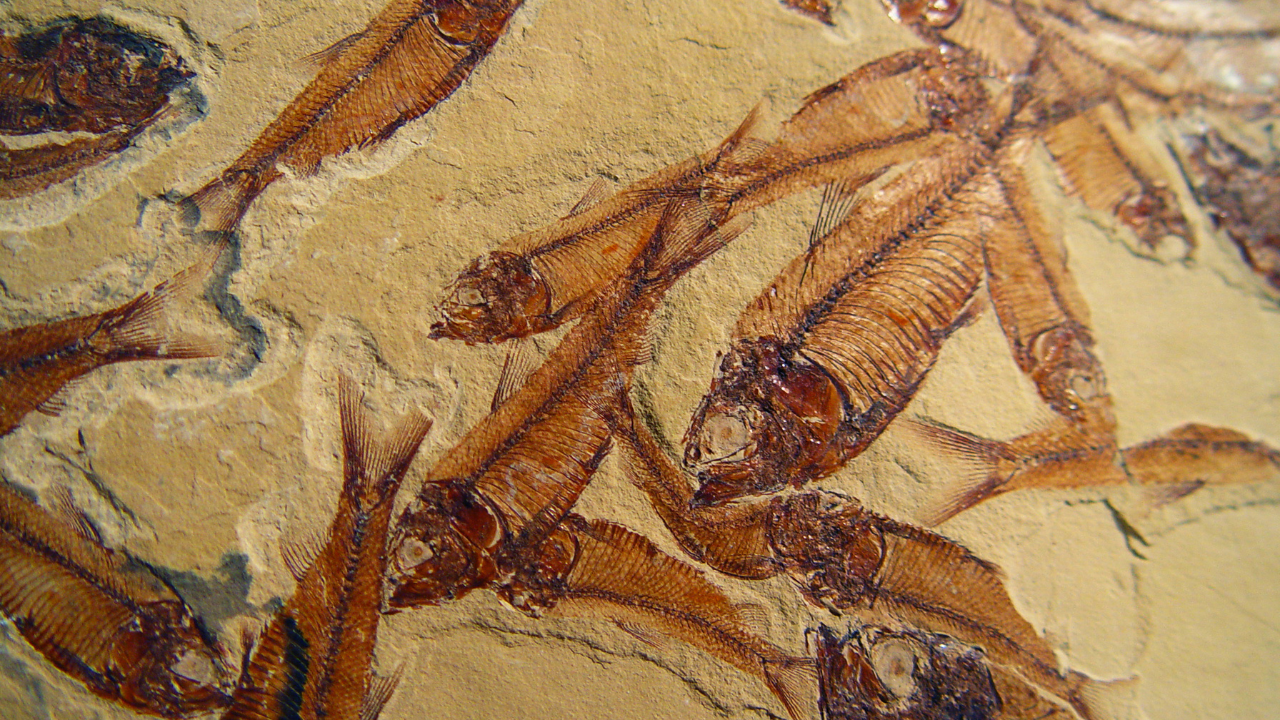
As it turns out, there is still plenty of history hiding beneath our feet, even if it is not quite as old as we might expect.A map of what we haven't found yetFossils are nature's time capsules. They allow scientists to reconstruct ancient ecosystems, understand how species evolved and piece together what life on Earth looked like millions of years ago. But the fossil record is far from a complete account of everything that has ever lived.For starters, fossilisation is an exceptionally rare process.
When an organism dies, its remains usually decompose or are eaten by other organisms before they have a chance to become fossils. Only under particular conditions, such as rapid burial in sediment, can remains be preserved over geological time. Even then, the resulting fossils need to survive millions of years of geological changes and eventually become accessible for researchers to discover.This means that the fossils we have found so far represent only a fraction of Earth's ancient biodiversity.
Some periods and geographical regions are well represented in scientific collections, while others remain poorly documented. The challenge is knowing whether a gap exists because few organisms lived there or because nobody has looked hard enough.To address this, paleontologists Thomas A. Neubauer of the Bavarian State Collections of Natural History in Germany and Mathias Harzhauser of the Natural History Museum in Vienna set out to map the missing pieces.Their study, published in Science Advances, examined fossil discoveries from shallow marine environments over the past 540 million years.
The researchers used the Paleobiology Database, an international repository containing published fossil records, to trace where discoveries had been made throughout Earth's history.They also examined how frequently research in different regions had produced new information over time. By comparing these records with geological data from the Macrostrat database, they could identify not just places where fossils were missing from scientific records, but also locations where suitable rock formations remained accessible.
In other words, the map distinguishes between places where evidence is scarce and places where there is a realistic chance of finding more.Why the oldest fossils may not be the biggest prizeOne of the more surprising findings was that the oldest geological periods may no longer be the most promising places to look for new discoveries.The researchers found that the Palaeozoic Era, which lasted from approximately 539 to 252 million years ago, and the Mesozoic Era, spanning 252 to 66 million years ago, have already been extensively studied.
The former witnessed major developments in marine life, while the latter is better known as the Age of Dinosaurs.This does not mean scientists have discovered everything there is to know about these periods. Rather, the researchers suggest that additional finds from these eras are less likely to substantially expand the existing fossil record in the near future.The bigger surprise lies in the Cenozoic Era, which began around 66 million years ago and continues today.
Often called the Age of Mammals, this period followed the extinction event that wiped out the non-avian dinosaurs. Mammals diversified, modern ecosystems began taking shape and marine environments continued to evolve.Despite the considerable number of fossils already recovered from this era, its shallow-water marine deposits remain comparatively underexplored. The researchers believe these sediments could hold fossils of previously undocumented species, making the Cenozoic one of the most promising frontiers for future discoveries.The Middle Miocene, approximately 15 million years ago, is one example highlighted in the researchers' maps.
It represents a period with relatively few documented fossil finds but considerable potential for new discoveries.It is a reminder that younger does not necessarily mean less interesting. Sometimes, the chapters of Earth's history that appear relatively familiar are precisely the ones we have yet to read properly.Making fossil hunting more strategicOf course, finding a promising location on a map and actually digging up a fossil are two very different things.
Paleontological expeditions require considerable time, funding and resources, and there is no guarantee that an excavation will produce anything new.That is where the researchers' work could prove particularly useful. Instead of repeatedly investigating locations that have already yielded extensive fossil records, scientists can use the map to prioritise regions where discoveries could add more to existing knowledge.It could also change how researchers approach natural history museums.
Collections around the world contain fossils and specimens that have been gathered over decades, sometimes from regions that remain poorly represented in scientific research. Some of this material is still awaiting detailed examination. Revisiting these collections could help fill gaps in the fossil record without necessarily requiring an entirely new expedition.Neubauer believes the map could help researchers plan future excavation campaigns and focus their efforts on areas that have received comparatively little attentio…