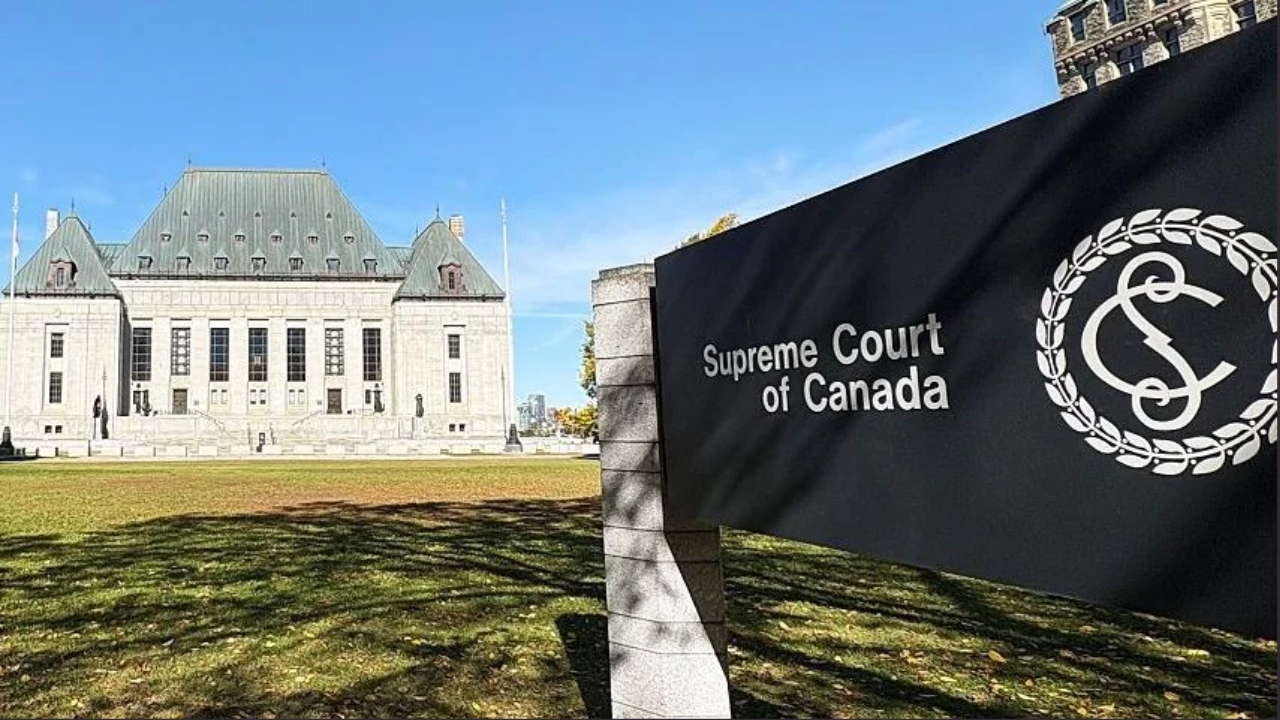
Canada's top court largely upholds Quebec ban on turbans, hijabs at public jobs
Canada's Supreme Court has upheld most of Quebec's controversial Bill 21, which prevents certain public sector employees from wearing religious symbols while performing their jobs. The ruling, delivered on November 27, 2026, confirms that the province can enforce the restrictions despite challenges based on religious freedom, equality and minority rights. The decision means that public school teachers, police officers, government lawyers and other officials covered by the legislation must continue to follow the restrictions.
Religious items affected include Sikh turbans, Muslim hijabs, Jewish kippahs and visible Christian crosses.However, the court identified a constitutional problem with one part of the law. It ruled that the requirement for members of Quebec's National Assembly to uncover their faces violates their democratic rights when it prevents elected representatives from taking part in legislative proceedings.
In its judgment in English Montreal School Board v. Quebec (Attorney General), 2026 SCC 41, the Supreme Court also rejected the argument that Bill 21 violates the education rights of Quebec's English-speaking minority. This means English-language school boards will not receive the exemption sought in the case. The ruling follows years of legal challenges and confirms the Quebec government's ability to use Canada's constitutional notwithstanding clause to protect the legislation from certain Charter challenges.
The Supreme Court's official summary states that the appeals were dismissed, along with the Quebec government's cross-appeal.The origins and implementation of Bill 21The Quebec government, led by Premier François Legault of the Coalition Avenir Québec party at the time, introduced and passed Bill 21 in June 2019. The legislation was presented as a way to protect state secularism, known in French as laïcité, and ensure that government representatives maintain religious neutrality while carrying out their duties.
The law prohibits certain public employees in positions of authority from wearing religious symbols while working. Those covered include public school teachers, police officers, judges, prosecutors and prison guards.The Quebec government argued that people exercising state authority should not display religious beliefs while performing their official duties. Supporters said the legislation would help maintain a clear separation between religion and the state.
The measure faced strong opposition from religious minority communities and civil liberties organisations. Critics argued that it forced people to choose between their religious beliefs and their careers, particularly those who wear visible religious clothing as part of their faith.The government also invoked the notwithstanding clause when passing the legislation. Section 33 of the Canadian Charter of Rights and Freedoms allows federal or provincial legislatures to keep certain laws in force despite some Charter protections, including fundamental freedoms and equality rights.
Such an override lasts for up to five years and can be renewed. Quebec also invoked the relevant override provision in its own Charter of human rights and freedoms. This made it more difficult for opponents to have Bill 21 overturned through challenges based on the rights covered by those clauses. The Supreme Court has now confirmed that Quebec used these powers validly.Immediate opposition and legal challengesBill 21 prompted legal challenges from civil liberties groups, teachers' organisations and members of religious communities soon after it became law.
The Canadian Civil Liberties Association (CCLA) and the National Council of Canadian Muslims (NCCM) were among the organisations involved in challenging the legislation. Opponents argued that the ban violated freedom of conscience and religion, as well as equality rights protected by the Canadian Charter. They also said its effects were particularly serious for religious minorities and women who wear religious clothing.
Critics maintained that the restrictions created difficult choices for public employees. Teachers who wear hijabs, turbans or other religious symbols could be forced to leave their jobs, move elsewhere or stop following religious practices to continue working in the public education system. The debate also raised concerns about hostility towards visible religious minorities in Quebec.The case moved through the province's courts before reaching Canada's highest court.
On February 29, 2024, the Quebec Court of Appeal upheld most of the earlier ruling and rejected the argument that Bill 21 violated the minority-language education rights of English-speaking communities. The Court of Appeal concluded that the legislation dealt with hiring practices rather than the language of instruction or the content of educational programmes. Several parties then appealed to the Supreme Court of Canada, which heard the case over four days, from March 23 to March 26, 2026.
The hearing involved 51 interveners, including six provincial and territorial attorneys general.The Supreme Court's nuanced judgmentThe Supreme Court's decision addressed several constitutional questions, including the use of the notwithstanding clause, equality rights, minority-language education rights and the democratic rights of elected representatives. One of the main issues was whether Quebec had legally used the notwithstanding clause to protect Bill 21 from challenges based on certain Charter rights.
The court confirmed that the provincial government had used the clause validly. It also ruled that courts retain the power to examine whether legislation conflicts with Charter rights, even when a government has invoked the override clause. A court can make a declaration that a law is inconsistent with those rights, although the Supreme Court did not make such a declaration in this case.
The judges also considered Section 28 of the Canadian Charter, which states that the rights and freedoms guaranteed by the C…