Backing Delimitation doesn't mean tie-up with BJP, says DMK's Kanimozhi
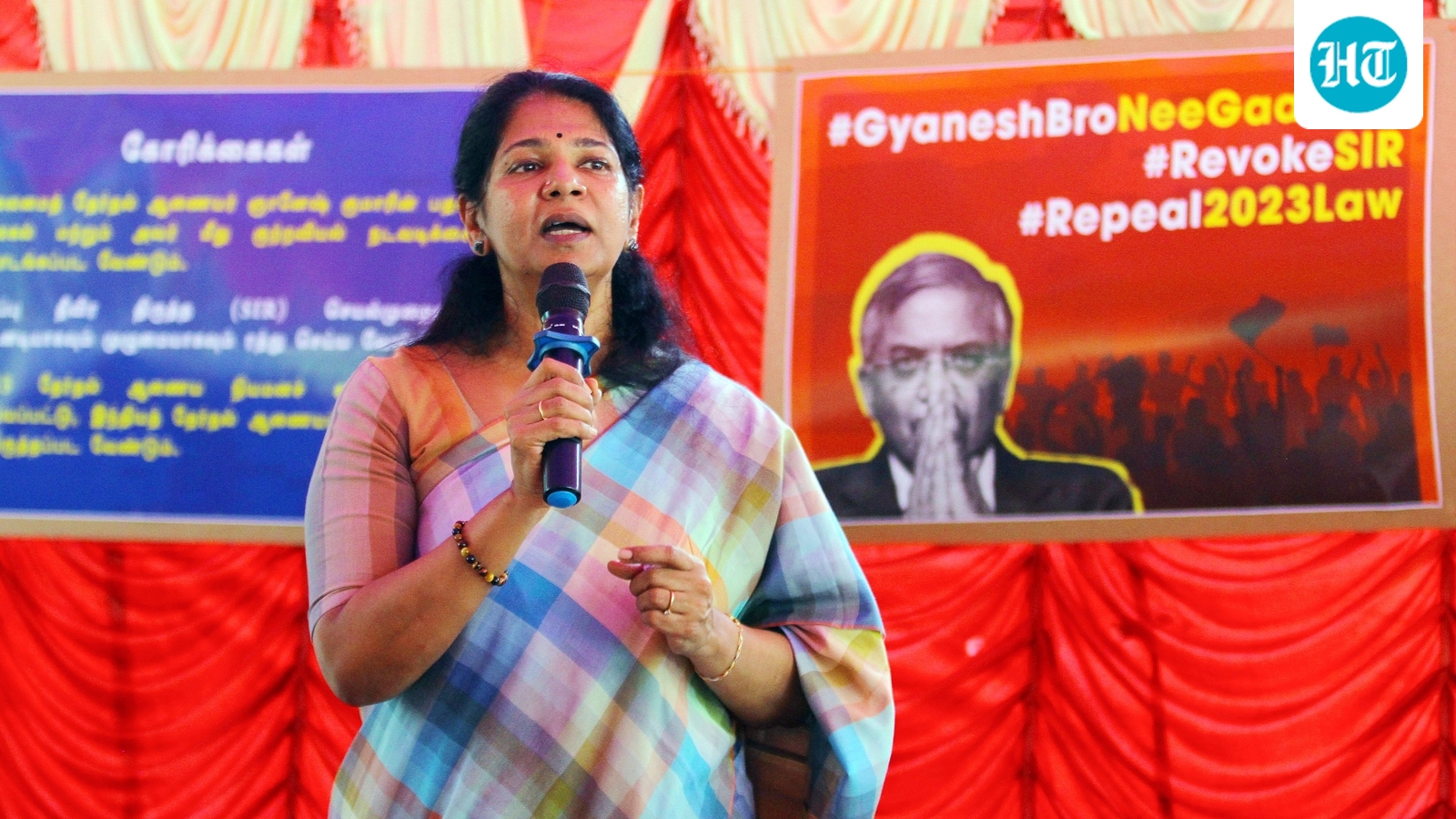
DMK MP Kanimozhi on Saturday dismissed speculation of a political alliance with the BJP over her party's decision to support the Centre's Delimitation Bill.She asserted that backing a legislation in Parliament does not amount to a tie-up, reminding critics that the Congress and Left parties had earlier voted for the BJP government's Economically Weaker Sections (EWS) quota bill.Speaking to reporters in Delhi after meeting Union Home Minister Amit Shah, Kanimozhi rejected suggestions that her party was warming up to the BJP.
"There is a repeated narrative being created that voting for a bill brought by the BJP means forming an alliance with them," she said."When the EWS bill was brought, only the DMK, the RJD and a few Islamic parties voted against it. Everyone else, including the Congress and the Communist parties, supported the BJP's bill," she added.Defending the DMK's decision to back the Delimitation Bill, Kanimozhi said the Union government had accepted the party's demand for a 50 per cent increase in seats across all states based on the 1971 Census, securing 59 parliamentary constituencies for Tamil Nadu.
The state currently has 39 LS seats.Also Read: ‘Is this not betrayal’: Prakash Raj urges DMK chief Stalin to rethink delimitation stance"We are supporting this bill with the happiness that it not only protects Tamil Nadu but also secures the rights of all southern states and other states that would have been affected," she said.On DMK's opposition to the earlier version of the legislation, Kanimozhi said the previous bill introduced in Parliament was based on the 2011 Census and did not contain any written provision for a 50 per cent hike in seats, which was only mentioned orally by the home minister.Had the delimitation exercise been carried out directly on the 2011 Census without the increase, Tamil Nadu's representation in the Lok Sabha would have dropped from 39 to 32 MPs, while several southern states and Punjab would also have lost seats, she claimed.Even with a 50 per cent increase based on the 2011 Census, Tamil Nadu would have received only 48 seats, she added.Kanimozhi noted that the current freeze on delimitation ends this year, and allowing the bill to lapse or be defeated would have left Tamil Nadu and other southern states vulnerable to severe losses if a population-based exercise were conducted next year.Also Read: From 1999 to 2026: DMK’s delimitation U-turn puts spotlight on its history of political shiftsRecalling that Tamil Nadu's parliamentary representation had been reduced from 41 to 39 during an earlier Congress regime on population grounds, she said the DMK was determined to ensure the state did not suffer any further loss.Countering criticism from the Congress that the DMK had shifted its stand, Kanimozhi said her party had convened a conference in Chennai specifically for "fair delimitation" and not "no delimitation".She pointed out that Congress chief ministers who attended the Chennai conference, as well as party leader KC Venugopal, had also advocated for fair delimitation and a 50 per cent increase in seats.Asked about Congress leader Rahul Gandhi's reported remark that some parties had turned into cowards, Kanimozhi said she did not know whom he was referring to, asserting that both Gandhi and the Congress knew the DMK's history well.Also Read: Rahul Gandhi warns against delimitation, says Modi wants ‘blank cheque’ to redraw constituencies"At no point in history has the DMK been afraid of anyone," she said, recalling the lives lost during the anti-Hindi agitation and the sacrifices made during the Emergency.She noted that the DMK had lost power during the Emergency, yet party patriarch M Karunanidhi did not waver and sent his own son to jail, while leaders such as Murasoli Maran and several others were imprisoned."Having overcome all those struggles, we continue our work as warriors, and it is because of that courage that we were able to achieve what we demanded," Kanimozhi said, adding that the DMK had never changed its stance after an election victory and had always stood by its allies in both victory and defeat.