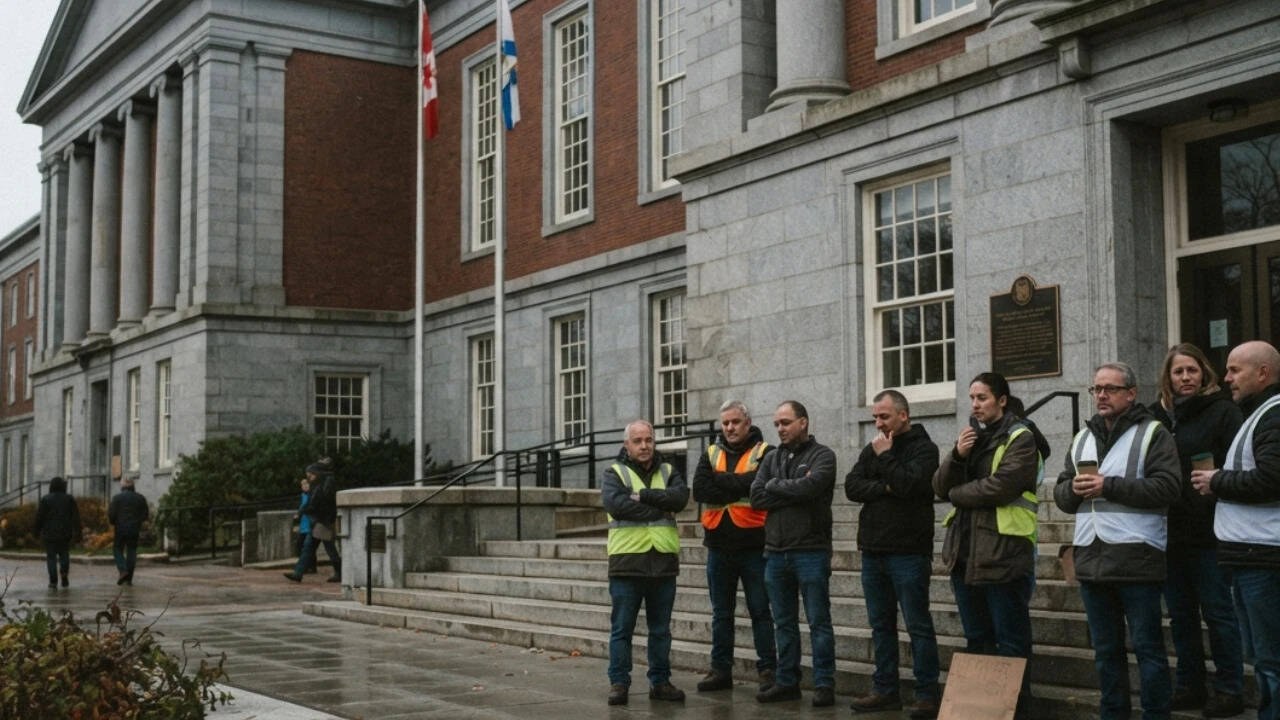
Nova Scotia court approves C$470m wage-freeze deal, up to C$5,000 per worker
Thousands of public sector workers in Canada's Nova Scotia province are set to receive compensation after a court approved a C$470 million settlement over years of restricted pay increases. Eligible employees, including those who have since retired or left their jobs, could receive up to C$5,000 each. Payments must be completed by December 31, 2027.The settlement brings an end to a long-running dispute over a 2015 law that limited salary increases for unionised government employees.
The legislation, known as Bill 148, prevented workers from receiving normal negotiated pay increases for four years and also affected their long-service benefits. Local broadcaster Your South Shore reported that the provincial government expects to spend around C$470 million on the compensation.The Nova Scotia Supreme Court declared the law unconstitutional in February. The ruling came after eight public sector unions challenged the legislation, arguing that it had weakened their ability to negotiate wages and working conditions for employees.Following the ruling, the provincial government and the unions worked out a compensation arrangement.
Justice Ann Smith approved their agreement and issued the final court order on November 9.According to the Nova Scotia Government and General Employees Union (NSGEU), around 81,000 workers are expected to qualify for payments linked to wage restrictions. An estimated 55,000 could also receive compensation for the loss of future long-service awards or retirement benefits.Why workers are receiving compensationBill 148 was brought in by the government led by former Premier Stephen McNeil.
It restricted salary increases across unionised public sector workplaces over a four-year period.Workers received no increase in the first two years. The permitted rise was then limited to 1% in the third year and 1.5% in the fourth year, with another 0.5% allowed on its final day.The law also stopped employees from building up additional service towards certain long-service awards and retirement allowances.The restrictions became the subject of a legal challenge in 2017.
Eight unions representing public sector employees argued that the government had taken away important areas of collective bargaining. These included the ability to negotiate salary increases and certain employment benefits.The court agreed that the restrictions had interfered with the unions' bargaining rights. It found that removing wages from negotiations had reduced the unions' ability to represent their members effectively.The February ruling gave the government and unions time to agree on compensation.
Their eventual settlement provides payments to eligible workers for the impact of the law on their protected rights. The money is not being treated as unpaid salary.How much can an employee receive?The amount depends on how many of the four restricted years an employee worked through. The payment is fixed for each eligible year and does not depend on the person's salary, job title or number of working hours.The compensation structure is:First year: C$1,250Second year: C$1,250Third year: C$750Fourth year: C$500An employee who qualifies for all four years can receive C$3,750.
Those who also lost the opportunity to build up long-service awards or retirement allowances may receive another C$1,250. This takes the maximum payment to C$5,000 per person.The rules also cover employees who worked for only a portion of an eligible year. They will receive the full payment for that year rather than an amount calculated according to the number of months or hours worked.
Part-time employees are covered by the same arrangement.Workers who changed public sector employers during the restricted period will not receive multiple payments for the same year.The additional C$1,250 for long-service benefits is available to eligible current and former employees who would have accumulated further service towards these benefits if Bill 148 had not been introduced.
However, the settlement does not bring back the discontinued awards or retirement allowances.Which employees qualify?The compensation covers eligible current and former unionised public sector employees who worked during at least one year of the four-year restriction period applicable to their workplace.This means that people who have retired or moved on from their previous jobs may still qualify.
Their eligibility will depend on whether they were employed during the relevant period and meet the conditions in the court order.Employees dismissed for cause and deceased workers are excluded. Management and non-union employees are also generally not covered, unless they worked in an eligible unionised position during the relevant period.The government will use employment and seniority records to identify people who qualify and calculate their payments.
The NSGEU has said that former members, including retirees, do not need to submit an application immediately. Details of the process will be shared once the government has finalised the arrangements.When will the payments be made?The provincial government has until June 30, 2027, to identify eligible workers, work out their compensation and share the details with individuals and unions.Employees will then have until September 30, 2027, to report missing names or incorrect payment amounts.
Any errors or omissions must be brought forward by that deadline to be considered under the order.All payments must be completed by December 31, 2027, although the government can make them earlier.The province is also checking the tax implications of the settlement with the Canada Revenue Agency. It does not currently expect the compensation to be taxable or affect pension benefits.The payments are also not expected to reduce benefits received by eligible workers through long-term disability, Workers' Compensation or Employment Insurance.You use AI every day.
Now get your AI Quotient. Take the AIQ test.