Colbert-named trapdoor spider has 52 chromosomes, genome 50% larger than ours
While the idea of 'Truthiness', as coined by Stephen Colbert, may still be alive and well, science has now brought forward something strictly factual and evidence-based. A tiny California spider named after the television host has surprised researchers with a genome that is reportedly nearly 50% larger than that of a human.Spiders, the infamous creepy crawlies, are creatures most people would rather keep at a distance.
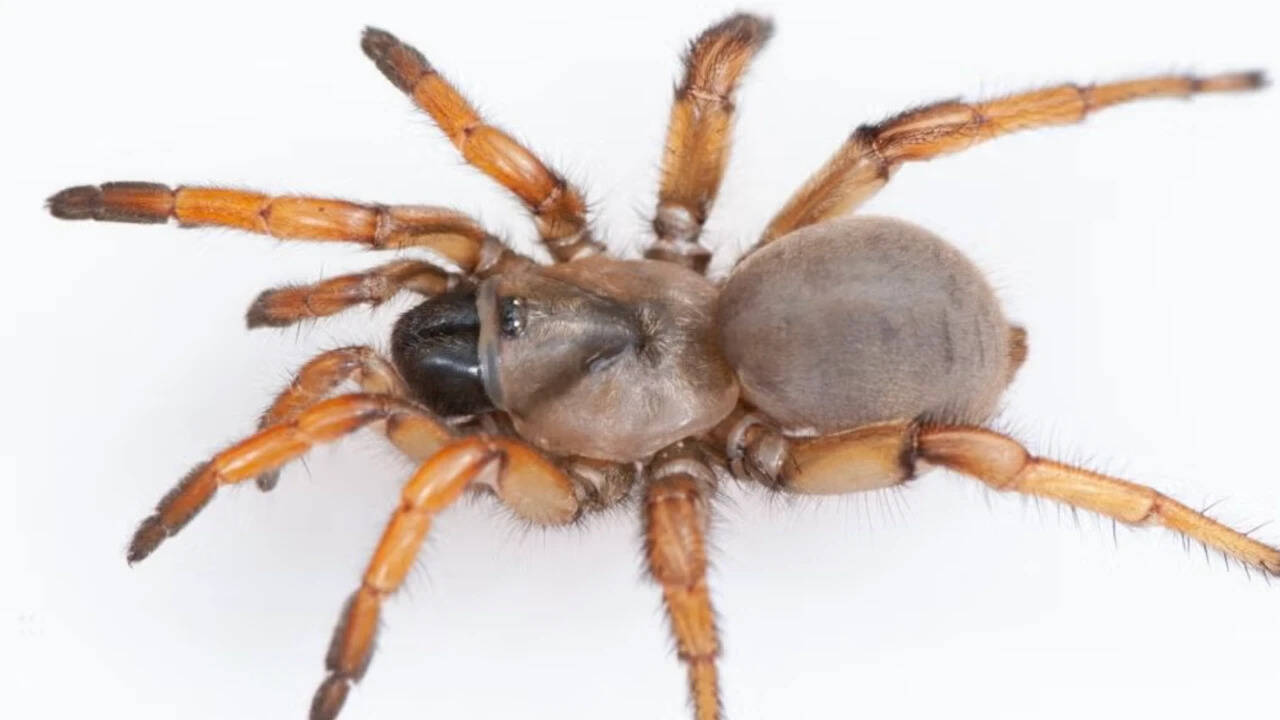
But there is something incredibly fascinating about these eight-legged creatures beyond what meets the eye, and sometimes their most remarkable aspects are not even easily visible. In a recent discovery, a small California trapdoor spider has been found to possess genetic material that surpasses that of humans in size.Known scientifically as Aptostichus stephencolberti, the species was named after American comedian and television host Stephen Colbert, following his rather humorous demand that a scientist name a spider after him.Researchers at the University of California, Davis, have now sequenced its genome, with the university reporting that it contains approximately 4.6 billion DNA base pairs, making it roughly 50% larger than the human genome.
However, the research paper reports a primary genome assembly spanning 3.63 billion base pairs, a distinction worth noting when discussing the genome's estimated size.According to UC Davis in its October 28, 2026 report, the findings were published in the Journal of Heredity and offer new insights into spider genetics and evolution. This study forms part of the California Conservation Genomics Project, a state-funded initiative that aims to build a comprehensive genetic dataset of California's biodiversity.A spider that prefers to remain hiddenUnlike many creatures that can be spotted moving around their surroundings, the California trapdoor spider spends much of its life away from view.
Found in the coastal dunes of Northern California, these spiders live underground. Female trapdoor spiders, in particular, spend their entire lives inside silk-lined burrows.Their concealed entrances make for an incredibly interesting hunting strategy. Instead of actively searching for food, the spiders wait inside their burrows, relying on vibrations to detect the movement of insects and other prey approaching nearby.
Once something comes within reach, the spider quickly emerges through its camouflaged door to catch it before retreating into hiding. This hunting tactic also helps keep the spider concealed from potential predators.Despite their rather intimidating appearance, these spiders do not pose a danger to humans through their venom. According to Jason Bond, a professor in the Department of Entomology and Nematology at UC Davis and the corresponding author of the research, only around 30 to 50 of the more than 50,000 known spider species have venom known to be toxic to people.An unusual genomeWhile its underground lifestyle is interesting in itself, the real surprise lies within the spider's genetic material.
Researchers found that its genome has an estimated size of approximately 4.6 gigabases, meaning it contains around 4.6 billion DNA base pairs, according to the UC Davis report. The human genome, by comparison, contains roughly 3.1 billion base pairs.The study also estimated that the spider has 52 chromosomes, compared with 23 in the human haploid genome (or 46 chromosomes in typical human body cells).
The researchers found that approximately 77% of the spider's assembled genome consists of repetitive DNA sequences, which are sections of genetic material that have been copied and occur multiple times throughout the genome.A substantial part of the spider's unusually large genome is therefore made up of these repeated sequences rather than additional genes. The research is also particularly significant because this is the first member of the spider's family, Euctenizidae, to have its genome sequenced, giving scientists a new reference point for understanding its genetic composition.Another interesting finding concerns telomeres, which are structures associated with protecting the ends of chromosomes.
Researchers found that spiders lack the conventional telomeric repeat sequences found in many other organisms. This evolutionary loss may help explain why chromosome evolution occurs at a faster rate in spiders than in vertebrates.The tiny creatures and their conservationThe researchers have paid close attention not only to the size of the spider's genome but also to how understanding its genetic makeup could prove important for conservation efforts.Trapdoor spiders have limited movement, which makes it difficult for populations to spread into new areas when their existing habitats are disturbed.
This becomes an even greater concern when their natural surroundings are already divided into smaller, isolated stretches of land.For this particular species, the coastal dunes it inhabits are increasingly exposed to environmental pressures. Rising sea levels could gradually threaten the narrow stretch of coastline it calls home, while invasive species, fires and urban development may also affect the conditions needed for its survival.
As Bond explained in the UC Davis report, studying the genetic diversity of these spiders could help researchers understand how environmental changes are affecting their populations.There may also be other discoveries waiting within spider genomes, particularly when it comes to the compounds present in their venom. Some substances found in spider venom have shown potential for applications such as developing painkillers and controlling agricultural pests.A name that came with a television demandThe story behind the spider's name goes back to 2008, when Stephen Colbert learnt that Jason Bond had named a trapdoor spider after rock musician Neil Young.
Apparently unwilling to miss out on the recognition, Colbert brought up the matter on his television programme, The Colbert Report, during a segment titled 'Who's Not Ho…