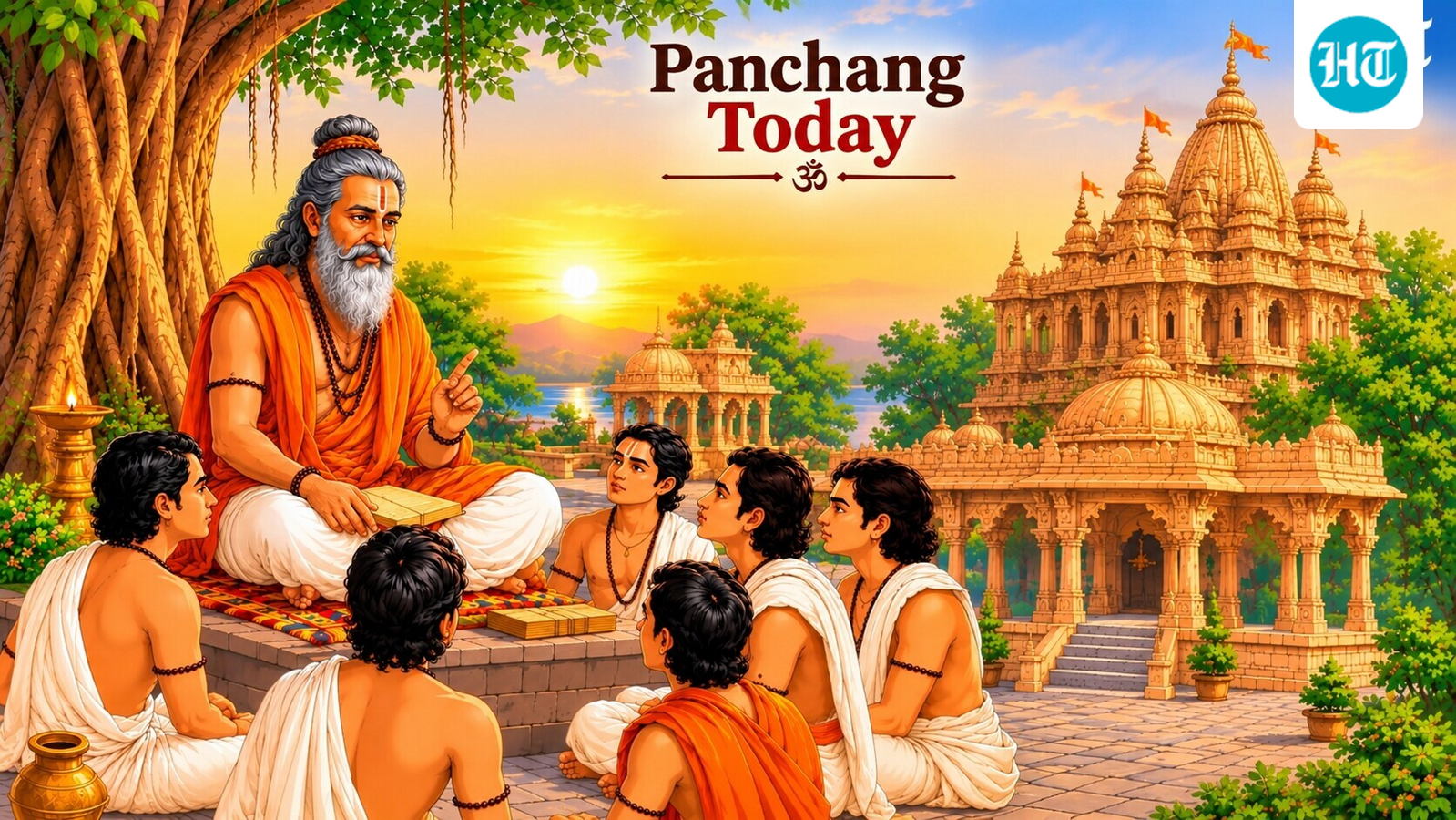
Panchang Today, November 21, 2026: Shukla Dwadashi under Uttara Bhadrapada Nakshatra
In traditional Panchang interpretation, November 21, 2026, in New Delhi favours a measured approach, with patient preparation, clear conversations and selective use of favourable timings offering a practical framework for work, relationships and personal reflection. How to use it: Prefer this period for important work, a submission or a considered decision. Avoid new beginnings during Rahu Kaal.What Today's Panchang MeansIn traditional Panchang interpretation, Shanivar provides a framework of patience, responsibility and steady effort rather than haste.
Read alongside Shukla Dwadashi, it suggests giving attention to commitments already made and bringing unfinished matters into better order. This is a useful daily theme for readers who prefer progress that can be checked rather than promises that are difficult to keep. Uttara Bhadrapada is traditionally associated with depth and a considered approach, while Revati adds an emphasis on care and thoughtful completion.
These associations can be used as prompts to listen fully, review details and avoid making a simple task unnecessarily complicated. With Pisces and Aries both represented in the day's Moon sign entries, the traditional reading brings reflection and initiative into the same picture. The practical balance is to consider the implications before acting, then take a manageable next step.
These are interpretive associations, not predictions about how the day must unfold, and they need not displace ordinary judgement or the needs of a particular situation.How to Use the DayWork and important decisionsThose who follow Panchang timings may use the day's traditional emphasis on deliberation to organise pending work before taking on something new. Identify the decision that genuinely needs attention, collect the relevant information and separate confirmed details from assumptions.
For a submission, check attachments, names and instructions before sending it. For a discussion, make the purpose clear and leave room for questions. A favourable period can serve as a scheduling preference, but it should not replace preparation, professional advice or a deadline. If circumstances require action outside a preferred window, proceed with the same practical checks rather than treating the timing as a verdict on the work.Relationships and communicationIn traditional Panchang interpretation, the day's reflective associations favour listening before offering a response.
In everyday relationships, that can mean asking what someone needs rather than assuming you already know. Keep requests specific, especially when discussing shared responsibilities or a change of plan. If a conversation becomes circular, agree on one issue to address instead of reopening every disagreement. Those using the Panchang as a personal guide may choose a patient, unhurried manner, while remembering that another person's availability matters more than a preferred time.
A modest commitment that you can keep is more useful than an expansive reassurance.Reflection and spiritual routineThose who follow Panchang guidance may treat the day as an opportunity to review how well their intentions match their daily choices. A familiar spiritual routine can remain simple, without adding practices merely because a timing is listed. If reflection is part of your day, consider one unfinished responsibility, one concern that needs clarification and one realistic next step.
There is no need to force an answer to every question. The traditional emphasis on patience can be used as a reminder to distinguish thoughtful attention from repeated worry. Keep the exercise brief enough to support, rather than crowd out, ordinary duties. Those who follow Panchang timings may use Abhijit Muhurta, from 11:45 am to 12:28 pm, for important work, a submission or a considered decision.
Prepare beforehand so that the interval is available for the actual task rather than a hurried search for documents or agreement. Choose one priority and allow enough time to check it properly. In traditional Panchang interpretation, Ravi Yog and Vidaal Yog carry simultaneous indications that are mixed, so the favourable label should not be read on its own. Readers may also note other listed favourable Yog periods without treating every entry as a separate appointment.
Use these timings as an optional organising aid, while keeping practical readiness, consent and the requirements of the task firmly in view. Those who follow Panchang timings may prefer to avoid beginning an optional, important undertaking during the listed caution periods, using the time instead for preparation or routine follow-through. Vidaal Yog ends at 6:50 am. Its simultaneous presence with Ravi Yog makes the indications mixed, rather than uniformly favourable or unfavourable.
Vyatipata Yog ends at 6:49 am, Sunday, so readers planning across the night should retain that next-day distinction. These caution labels are traditional scheduling guidance, not evidence that a mistake or setback will occur. If a commitment cannot reasonably be moved, focus on clear instructions, complete information and a final check. Essential duties should not be neglected because of a Panchang interval.
The practical aim is a considered start where there is genuine flexibility, not anxiety about activities already under way. Use the day's traditional Panchang guidance as a light framework: prepare carefully, speak clearly and choose a suitable window where convenient. Keep obligations and practical needs ahead of timing preferences. One well-considered decision and a few completed tasks can provide a sensible measure of the day, without expecting certainty from the calendar.This article presents traditional Panchang guidance for general information.
Timings vary by location.Dr. Achary Kalki Krishnan(Vastu consultant, Vedic astrologer, Researcher, Educator & Corporate mentor)