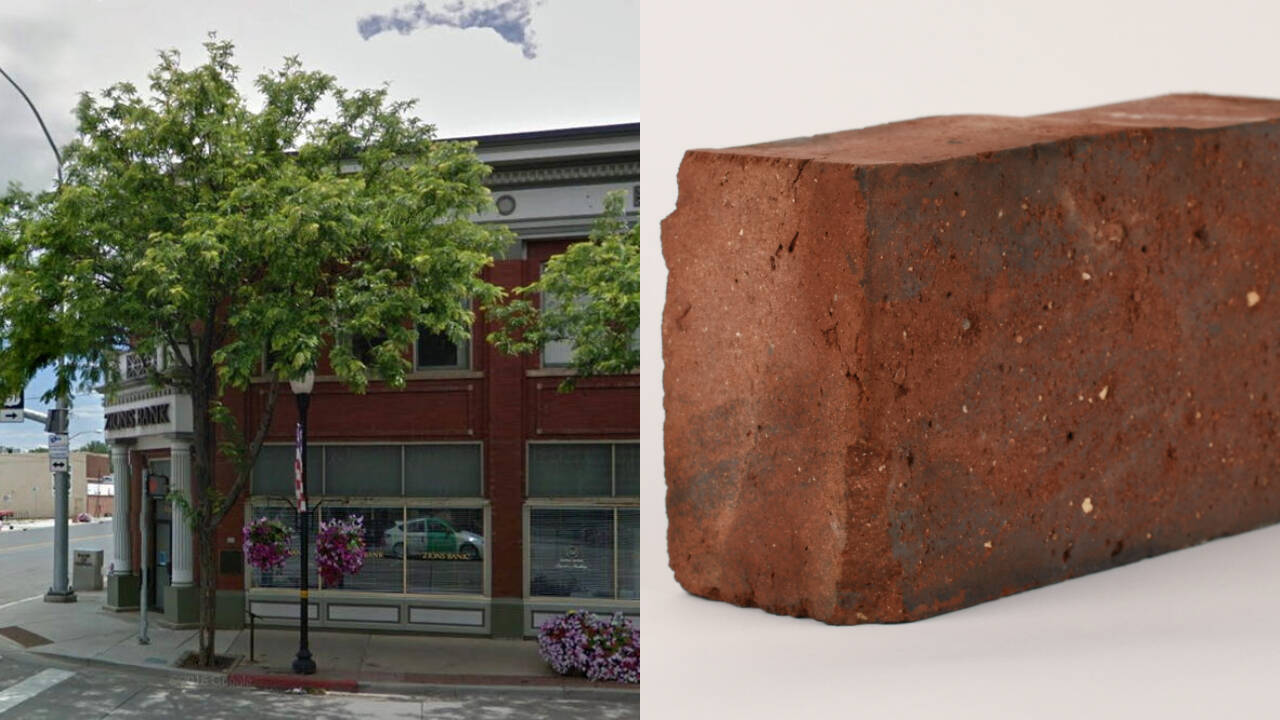
Utah banker mailed 37 tons of bricks to build a bank, forcing postal rule changes
When does it become financially viable to ship a whole building's worth of bricks by postal service, as opposed to trucking them in? In 1916 a Utah banker discovered an unconventional solution to an expensive construction problem by using the US mail system as an unlikely delivery service for almost 37 tons of building material. The extraordinary decision helped build a historic bank in a remote town but also forced postal authorities to rethink how far they could stretch parcel post.
It was a quirky episode, and it became one of the more memorable examples of the possibilities and the limits of America’s early parcel post.An expensive building challenge in rural UtahAccording to the United States Postal Service, the Bank of Vernal’s directors aimed to build a modern, fire-resistant building for their community in 1916. It was to be a two-storey structure 70 feet by 97 feet with pressed brick on the outside.But there was one big financial hurdle to buying the required materials.
The closest source of brick was the Salt Lake Pressed Brick Company in Salt Lake City. The cost of hauling the brick over bad roads was high.The Almanac reports the expected cost to truck in the 15,000 bricks was roughly $2,250, potentially putting the construction project in jeopardy. Rather than scrapping the idea, one of the bank’s directors, William Horace Coltharp, began exploring other transportation options.How the parcel post became the solutionColtharp found that the postal rules were a much cheaper option.
Parcel post, which had been established in 1913, had revolutionized the movement of merchandise throughout the United States by making it possible for ordinary customers to send heavier packages by the postal system.According to the National Postal Museum, before the parcel post, private express companies were the primary carriers of goods weighing more than four pounds. The introduction of the service made shipping much more readily available, especially for communities off the railroad networks.At first, the weight limit for parcel post was 11 pounds, but because of its popularity, it was expanded to 50 pounds within a year.Coltharp spotted the opportunity, and arranged to break the bricks into smaller shipments.
Each package contained about 10 bricks, carefully wrapped in paper and placed in wooden crates that weighed under 50 pounds. The entire order contained something like 1,500 separate parcels.A 390 mile journey via several routesThe postal shipment, which came from Vernal, only about 125 miles away by road, traveled nearly 390 miles on a complicated transportation network to get to Salt Lake City.According to the Almanac, the crates were shipped first by rail from Salt Lake City to Mack, Colorado.
They were then taken by narrow gage railroad to Watson, Co. The last leg was freight wagons to haul the packages approximately 65 miles to Vernal.The unusual route reflected the limitations of the transportation infrastructure in the region. Vernal did not lie directly on the rail network, making regular freight deliveries difficult and costly.By 1916, parcel post was already part of the fabric of everyday life in Vernal.
The National Postal Museum notes that the town was receiving about two tons of mail each day.Postal authorities move to change the rulesEventually the huge shipments of bricks attracted the attention of postal officials, who wondered whether the postal service should be used to deliver such large quantities of building material.The United States Postal Service says the rules limited shipments from a single sender to a single recipient to 200 pounds per day.The bank directors, however, found another way to complete the deliveries.
They recruited local farmers, ranchers and residents to each accept the packages. When the crates arrived, these volunteers carried them from the post office to the building site. The arrangement enabled the project to continue under the new restrictions.A curious postal legacy and a historic buildingThe Bank of Vernal was finished at last, the first brick building in town. The structure still exists today as a reminder of the extraordinary postal arrangement.The National Postal Museum has preserved one of the building’s original bricks to demonstrate the importance of the parcel post in linking America’s far-flung communities.
The episode also showed how cheap postal services could encourage rural commerce, construction and access to consumer goods.What started as a cost-saving move by a Utah banker eventually revealed a loophole in postal regulations and led to a change in shipping rules, leaving behind an unusual chapter in American postal history.Images Courtesy: Almanac and National Postal MuseumYou use AI every day.
Now get your AI Quotient. Take the AIQ test.