When women aren't safe on India's streets, who can be held legally responsible?
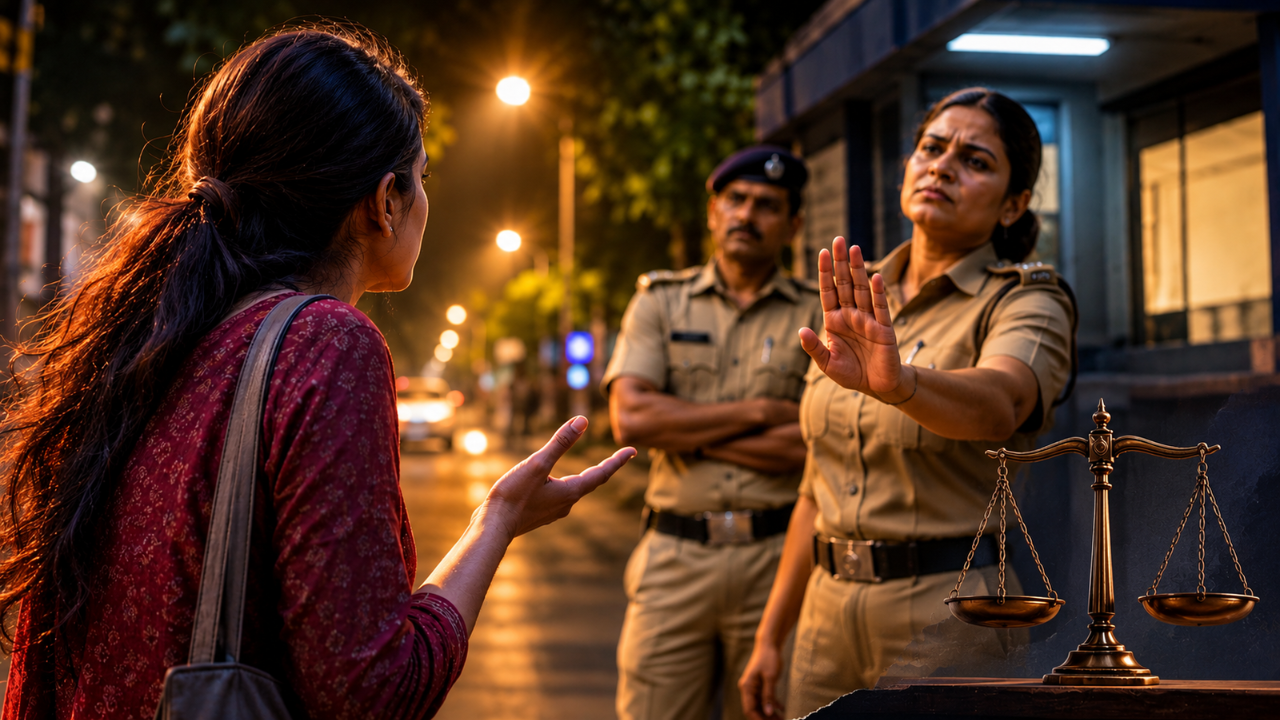
NEW DELHI: A woman is harassed on a poorly lit street. She approaches the police, but they refuse to register her complaint. Can she hold the authorities accountable for failing to protect her? And if unsafe public infrastructure or police inaction contributes to the harm she suffers, can she seek compensation from the government or a municipal body?Articles 14, 15 and 21 of the Constitution guarantee equality, protection against discrimination and the right to life and personal liberty.
The Supreme Court has interpreted the right to life to include living with dignity.Vishal Gehrana, partner at Karanjawala & Co, said these guarantees inform the State’s responsibilities but do not make the government an insurer against every criminal act. Police must respond to complaints and investigate offences, while agencies responsible for roads, parks, streetlights and public transport must discharge their assigned duties.“The distinction is between guaranteeing that no crime will occur and taking reasonable measures to prevent foreseeable risks.
The law cannot promise the former, but public authorities must discharge their lawful duties and respond appropriately when risks or complaints are brought to their attention,” Gehrana said.There is no universal requirement for a police officer or CCTV camera on every street. However, authorities cannot simply disregard an identifiable risk they are legally responsible for addressing.Police cannot turn away women reporting offencesSection 173 of the Bharatiya Nagarik Suraksha Sanhita (BNSS), 2023, governs information relating to cognizable offences.
Such information can be given irrespective of where the offence occurred, forming the basis of what is commonly known as a Zero FIR. Information may also be given electronically, provided the informant signs it within three days. A copy must be provided free of cost.For specified offences against women, the information must be recorded by a woman police officer or another woman officer.
The law also provides additional safeguards in specified cases involving persons with mental or physical disabilities.If the officer in charge refuses to record the information, Section 173(4) allows the complainant to send it in writing and by post to the Superintendent of Police concerned. If the matter remains unresolved, she may approach the jurisdictional magistrate under Section 175(3), following the prescribed procedure, including the requirement of a supporting affidavit.The Supreme Court’s judgment in Lalita Kumari v.
Government of Uttar Pradesh established that an FIR must be registered when information discloses a cognizable offence under the law then in force. Section 199 of the Bharatiya Nyaya Sanhita, 2023, also penalises failure to record information relating to certain specified offences.“The police station should be a gateway to justice, not a barrier to it. The law provides a route to challenge an unlawful refusal,” Gehrana said.However, access to these remedies can be affected by gender bias.
Aditi Singhal, advocate at the Supreme Court of India, said women reporting offences may be asked what they wore, why they were out late or be pushed towards a compromise. Stereotypes about how a victim should behave can also affect investigations and evidence handling.Poor lighting and missing CCTV do not automatically establish liabilityA public authority may be held responsible in an appropriate case, but a crime occurring in a poorly lit area or a place without CCTV does not, by itself, establish negligence.
The primary criminal responsibility rests with the offender.“The key questions are whether the authority owed a legally recognised duty, whether that duty was breached, and whether the breach had a sufficient legal connection with the harm suffered,” Gehrana said.For example, repeated complaints about a defective streetlight may help establish that the responsible authority knew of the problem and failed to act.
Relevant evidence could include complaint records, acknowledgment receipts, photographs and documents identifying the agency responsible for maintenance. Liability would still depend on the applicable law and the connection between the failure and the injury.Singhal said departmental action against police personnel and writ petitions seeking implementation of legal safeguards are also possible remedies.
She highlighted the need for accountability where officers fail to perform their statutory duties."So first, potential complainants are steered away by the threat of dehumanisation at the FIR stage itself. Second, entrenched patriarchy severely impacts investigation and evidence handling. Stereotypes such as the 'perfect victim', paternalistic influences, and critical skepticism further deepen the issue," she added.Women can seek compensation through different legal routesSection 395 of the BNSS empowers a criminal court, in circumstances specified by law, to order compensation to a person who has suffered loss or injury.
Section 396 provides for a victim compensation scheme for people who have suffered loss or injury through crime and require rehabilitation.The District Legal Services Authority or State Legal Services Authority determines compensation under the applicable scheme and procedure.These remedies are distinct from a claim against a government department or local authority. Eligibility for victim compensation does not establish that a public authority was negligent.In an appropriate case involving an established violation of fundamental rights attributable to the State, the high court under Article 226 or the Supreme Court under Article 32 may grant public-law relief, including compensation.
A civil proceeding may be appropriate where the claim concerns negligence and damages.Singhal cited Delhi Domestic Working Women’s Forum v. Union of India (1995) and Chairman, Railway Board v. Chandrima Das (2000), in which the Supreme Court recognised public-law compensation in cases involving fundamental-r…