Texas cliff reveals 3,000-year history of Indigenous bison hunting
Imagine standing on the edge of a cliff with an entire herd of bison thundering towards you. These enormous animals, some weighing close to a tonne, are not exactly the easiest creatures to persuade to change direction. Yet, thousands of years ago, Indigenous communities in what is now Texas found a way to do just that, using the landscape to turn a steep drop into a remarkably effective hunting ground.For decades, archaeologists questioned whether Indigenous communities in the Southern Plains used cliffs to hunt bison, a technique more commonly documented in the northern Great Plains.
Now, a discovery by Rice University at Caprock Canyons State Park in the Texas Panhandle has provided evidence that hunters repeatedly drove herds over the same cliff for around 3,000 years. The site, known as Nighthawk, is only the second scientifically verified bison jump in Texas, and suggests that a rather significant piece of Indigenous hunting history had been hiding in plain sight.How did a bison jump work?Before getting into the discovery, it helps to understand what archaeologists mean by a bison jump.
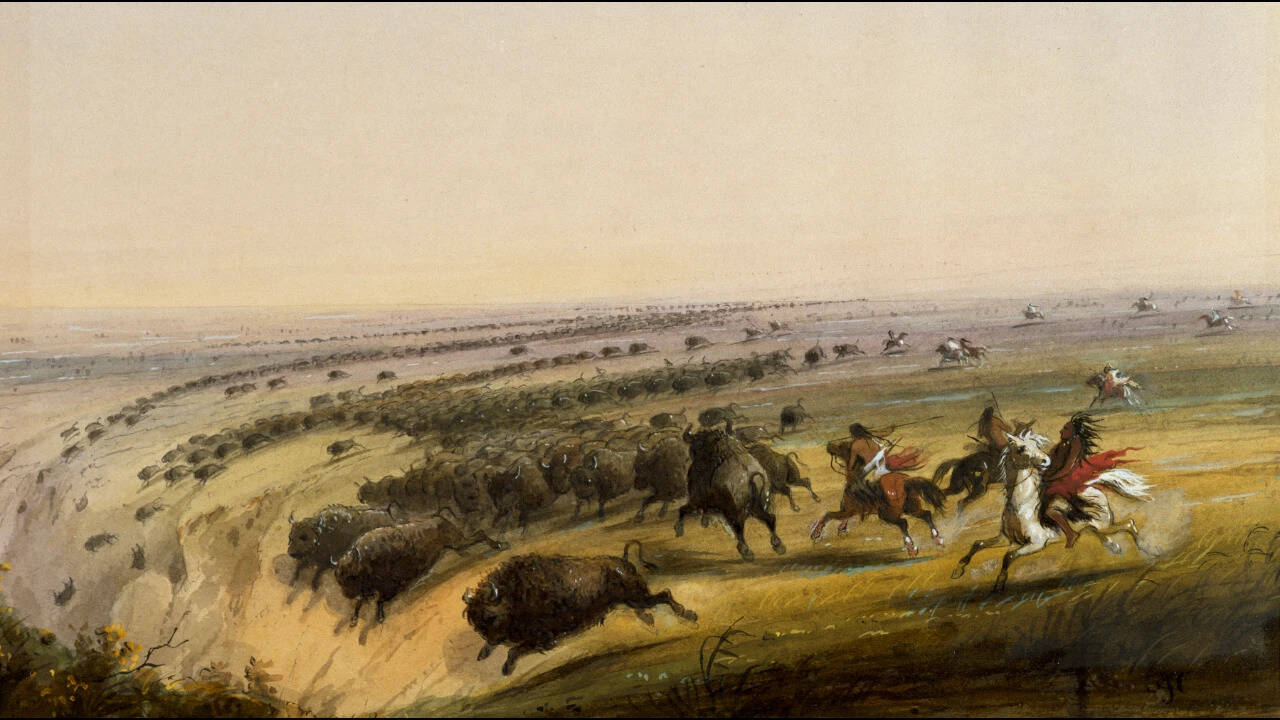
And no, it does not involve the animals voluntarily taking a leap of faith.According to Wikipedia, Bison jumps were a communal hunting technique in which groups of Indigenous hunters worked together to drive large herds towards a cliff edge. Rather than chasing individual animals with weapons, hunters used their knowledge of the landscape, animal behaviour and coordinated movements to guide an entire herd towards a steep drop.
Once the animals fell, many would die from their injuries, while others would be too badly hurt to escape.It was an enormous undertaking that required more than a few people waving their arms and hoping for the best. Different groups had specialised roles. Some hunters located the herds and gradually guided them towards the chosen area. Others waited along the route, emerging from hiding to steer the animals in the right direction.
Once the bison had fallen, additional members of the community would kill any surviving injured animals and begin processing the meat, hides, bones and other useful materials.The technique made it possible to secure a large amount of food and raw materials in a single hunting event. It also required considerable cooperation, planning and an understanding of the animals' movements.
As August Costa, the lead author of the study and an adjunct lecturer of anthropology at Rice University, explained to Phys.org, large-scale bison hunts were exciting precisely because they required so many people working together.Nighthawk’s geography presented a slightly different challenge from the more familiar bison jumps found further north. The cliff is not simply a straight, concealed drop.
It projects outwards like a spur, meaning the animals could potentially see the danger ahead.Researchers believe hunters may have used the shape of the land to guide the bison onto this narrow extension, gradually restricting their options. The team even suggests that people may have created a false barrier using materials such as bison hides, brush or logs to prevent the animals from turning back.
Instead of simply stampeding towards an unexpected cliff, the herd may have been funnelled along a route that left it with very few ways out. The researchers compare the arrangement to walking the plank.It is a fascinating possibility, although archaeologists have not yet established exactly how the hunters managed to guide the animals over the edge.What researchers discovered at NighthawkThe Nighthawk site is located beneath a roughly 20-metre-high cliff in Caprock Canyons State Park.
Researchers began investigating the area after bison bones started emerging from the eroding ground below the cliff. Alongside hundreds of bones, they found chipped stone tools, projectile points and arrowheads, some of which suggested that the animals had been butchered using stone implements.Initially, archaeologists thought the remains represented evidence of perhaps two separate hunting events.
However, the team went further, using radiocarbon dating to establish how old the bones were and whether they belonged to different periods.The findings, published in the journal American Antiquity, revealed at least seven distinct bison kill events spread across approximately 3,000 years. Researchers analysed 27 radiocarbon measurements taken from bison bone collagen and charcoal to establish the timeline.In other words, this was not a group of hunters who stumbled upon a useful cliff once and decided to try their luck again.
Different generations returned to the same hunting ground over thousands of years, even as their tools, technologies and ways of life changed.The evidence suggests that the technique survived the transition from stone-tipped spears to bows and arrows, as well as the introduction of pottery in the region. The landscape itself changed considerably, too. Erosion gradually shifted the cliff's jump-off point by approximately the length of a football field.
Yet, hunters continued to use the area.Costa told researchers that repeatedly returning to the same location over such an extended period suggested that communities had developed a significant connection with the Nighthawk hunting facility.There may also have been more to these hunts than simply securing the next meal. Costa suggested to Phys.org that large communal hunts could have brought different groups together for ceremonies, trade and celebrations, while strengthening relationships between communities.
The researchers believe these gatherings may have served important social and political purposes alongside their practical value.How has this discovery changed what we understand?For years, archaeologists believed that large-scale bison jumps were largely a feature of the northern Great Plains, where several well-documented hunting sites have been discovered. In the Southern Plains, however, the evidence was considerably thinner.
Bef…