Can the man Trump called a 'jihadist' become America's first Muslim senator?
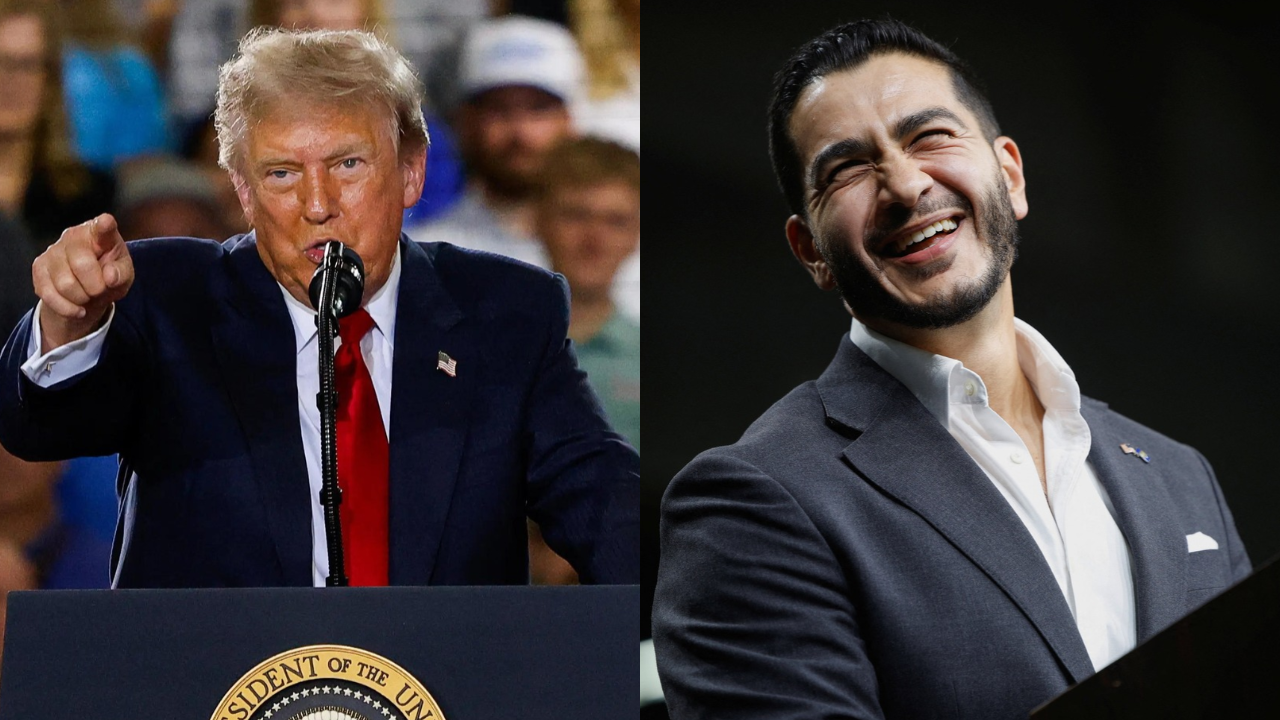
NEW DELHI: With just over a week left for the US midterm elections, a Senate race in Michigan has drawn national attention. US President Donald Trump unleashed a series of attacks on Democratic Senate candidate Abdul El-Sayed, calling him a "jihadist" and accusing him of having links to extremist groups. El-Sayed is seeking to become America's first Muslim senator in the November 3 midterm elections.At a campaign rally in Port Huron, Trump called El-Sayed a "jihadist" who was "on the side of the terrorists" and claimed he would "have to go through a metal detector before he's allowed to go into the Senate."Trump also referred to the September 11, 2001, terrorist attacks, comparing efforts to stop El-Sayed from entering the Senate with the passengers who fought back against hijackers aboard United Airlines Flight 93.The president accused El-Sayed of having links to the Muslim Brotherhood and wanting to impose sharia law.
However, no evidence has been presented linking El-Sayed to the organisation, and he has repeatedly denied the allegations.Who is Abdul El-Sayed?Born in the United States to Egyptian immigrant parents, El-Sayed is a physician and epidemiologist who previously served as Detroit's health director.He unsuccessfully contested Michigan's Democratic gubernatorial primary in 2018 before winning the party's Senate nomination in August 2026.His campaign focuses on healthcare, affordable housing and economic inequality.
He has also criticised US military assistance to Israel.What has El-Sayed said?Responding to Trump at a rally in Grand Rapids on Sunday, El-Sayed accused the president of using his name and religion to distract voters from economic concerns."They think that by pointing at my name and my faith, that somehow you're going to ignore the fact that you can't afford your gas or your groceries, can't see a doctor," he said.El-Sayed also responded to Trump's repeated use of his middle name."I don't even care that he remembers my whole name because he can just go on and call me 'senator' after November," he said.
"I will be Senator Muhammad to you, bro."His Republican opponent, Mike Rogers, has also questioned his loyalty to the United States."Are you for America, or are you for these terrorist groups overseas?" Rogers asked during a debate.El-Sayed called the question "shameful", adding: "I'm proud of our Constitution that guarantees all of us the right to pray as we choose to pray."Trump's remarks also drew criticism from Bishara Bahbah, a founder of Arab Americans for Trump, a group that supported the president's outreach to Arab American voters in 2024."The president's statements are out of line," Bahbah said.
"They are crossing a red line. They are racist."Can El-Sayed win the Michigan Senate race?El-Sayed faces Republican Mike Rogers, a former congressman, in the November 3 election for the seat being vacated by Democratic Senator Gary Peters.The contest is closely fought. According to the RealClearPolling average of surveys conducted between September 24 and October 22, El-Sayed was ahead of Rogers by 47.9% to 46%, a difference of 1.9 percentage points.Former President Barack Obama campaigned for El-Sayed in Michigan on Saturday, while Senator Bernie Sanders has also backed his candidacy.Michigan is an important state in the battle for control of the US Senate.
Republicans have not won a Senate election in the state for more than three decades.The state also has a large Arab American population, particularly in Dearborn, which Trump won in 2024 amid dissatisfaction with the Biden administration's handling of the Gaza war.If El-Sayed wins on November 3, he will become the first Muslim elected to the US Senate.You use AI every day. Now get your AI Quotient.
Take the AIQ test.